How to Compare Chest Freezer Energy Efficiency
Compare chest freezers by annual energy use first, then check capacity, placement and operating features. A lower number only helps if the freezer fits your food load and can run in its intended space.
On this page (11 sections)
- How to Compare Chest Freezer Energy Efficiency
- What should you compare on an energy label?
- How does capacity change the efficiency comparison?
- Which product has the clearest energy figure?
- How should you compare a 7 cu ft chest freezer?
- How should you compare a 3.5 cu ft convertible chest freezer?
- Does chest freezer design affect electricity use?
- How do placement and room temperature affect efficiency?
- How can you estimate running cost from energy use?
- What should you check before choosing an efficient freezer?
- What is the best way to compare chest freezers by energy efficiency?
How to Compare Chest Freezer Energy Efficiency
To compare chest freezers by energy efficiency, start with annual energy consumption, then compare capacity, cabinet placement, temperature controls and your expected use. The most efficient choice is the model that uses less electricity for the storage space you actually need.
An annual energy label gives you a common reference between models. It does not replace checking freezer size, operating environment or electrical setup.
That yearly figure is an estimate based on test conditions. Your own use can differ because of room temperature, how full the cabinet stays, how often you open the lid and how you set the thermostat.
This approach suits anyone choosing between similar models for the same job. It works less well when you compare a small compact appliance with a large chest freezer, because the storage roles are different.
Start by writing down how much frozen food you normally keep. That list will later help you judge whether a lower energy number is actually useful.
Also note where the freezer will live. A cool, stable room with space around the cabinet is a better starting point than a crowded corner near a heat source.
Check the electrical side before you settle on a model. You need a suitable outlet and voltage, and you should follow the clearance and ventilation guidance in the instructions.
For a broader comparison, read our guide to chest freezer vs upright freezer efficiency before choosing a cabinet style. That link helps you think about lid habits and cold air loss, but you should still compare the annual energy figure for the exact models you are considering.
Think of the label as the first filter, not the final answer. A model can look good on paper and still be a poor fit for your kitchen, garage or storage routine.
If the energy figure is missing, pause and look for the current label. Do not fill the gap with a guess based on size or voltage alone.
A careful comparison takes a little time at the start. It can save you from buying a freezer that is either too small for your food or too large for the space you have.
What should you compare on an energy label?
Compare annual energy consumption in kWh before looking at extra features. A lower annual figure generally means less estimated electricity use, but compare similar products so capacity does not distort the decision.
Use this order:
- Annual energy consumption
- Capacity in cubic feet
- Energy use per cubic foot, when the figures are available
- Intended operating environment
- Temperature controls and door or lid habits
- Electrical requirements
The annual figure is useful because it puts electricity use into a yearly format. It is still an estimate based on test conditions, so your results can change with room temperature, loading, frost, thermostat settings and how often you open the freezer.
A small freezer with very low annual use may be a poor fit if you quickly outgrow it and need a second appliance. A larger freezer may make sense when it replaces several smaller storage solutions, but only if you have a clear food-storage plan.
How does capacity change the efficiency comparison?
Compare energy use alongside usable storage capacity, not as a separate number. A freezer that uses slightly more electricity but stores your normal food load may be more practical than a smaller unit that stays overcrowded.
Capacity also affects how you organize food. A removable basket can keep smaller packages near the top, while large items can occupy the lower space.
Good organization can shorten lid-open time and reduce the need to search through cold air. The three products below show different comparison points, with one compact refrigerator and two chest freezers.
A 3.5 cu ft model suits a light load or a second freezer role. A 7 cu ft model suits bulk buying, meal prep and larger family stocks, provided the cabinet fits your room.
Neither size is automatically more efficient. The right choice depends on whether you will fill the space in a useful way or leave much of it empty.
An overfilled freezer can make access slow and messy, with the lid open while you move packages around. An underfilled freezer can waste the capacity you are paying to cool, so your busiest week is a better guide than an average week.
Think about food shape as well as volume. Long packages, bulky bags and flat packs all use space in different ways, and a basket takes up some main cabinet space while helping small items stay reachable.
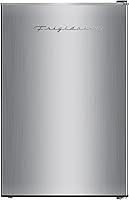
For the Frigidaire compact refrigerator, capacity is split between fresh food and a small internal freezer. That split makes it a mixed storage appliance rather than a dedicated chest freezer.
For a chest freezer, consider airflow around the food load. Tight packing can trap warm spots and make it harder to keep every item at a steady temperature.
Set up a simple system before the freezer arrives. Group meats, vegetables and ready meals, label packages clearly, and rotate stock so you can find food quickly and use older items first.
Which product has the clearest energy figure?
The Frigidaire 4.5 cu ft refrigerator has the clearest stated annual energy figure here: 5 kWh. Its Energy Star Certified specification gives you a direct reference when comparing its compact refrigerator and internal freezer setup with other small appliances.
The Frigidaire has 4.5 cu ft of total capacity, including a 0.3 cu ft internal freezer and 4.3 cu ft of fresh-food capacity. It is not a chest freezer, so it makes more sense when you need drinks, snacks and refrigerated food with a small frozen section.
Its reversible stainless steel door, glass shelves, 2L door basket, built-in can dispenser and chiller compartment support organized use in a dorm, office, apartment or bar area. The flush back design and leveling legs can help with placement in a compact room.
The freezer compartment uses manual defrost, and the unit has an adjustable thermostat. Its 21 x 22 x 32 in dimensions give you a smaller footprint than the chest freezers in this comparison.
Choose it when low stated energy use and mixed fresh-food storage matter more than chest-freezer capacity. If you need dedicated frozen storage, compare the annual energy figure of a chest freezer with its capacity rather than treating this refrigerator as a direct substitute.
For another appliance category, our best energy efficient top freezer refrigerator guide can help you compare refrigerator-freezer layouts.
How should you compare a 7 cu ft chest freezer?
The FRIGIDAIRE EFRF7003-BLACK suits a larger frozen-food load, but its supplied product information does not include an annual energy consumption figure. That means you should confirm the current energy label before ranking it against a model with a published kWh number.
This chest freezer has 7 cu ft of capacity and a top-opening door. Its removable vinyl-coated wire basket gives smaller or frequently used items a place near the top, while the main cabinet holds larger frozen packages.
An adjustable thermostat has 7 settings, and a power-on indicator light shows whether the unit is receiving power. The exterior defrost drain gives you a defined path for meltwater during manual maintenance.
The freezer measures 26 in deep, 37 in wide and 33 in high. It operates at 120 volts and is designed for freestanding installation.
Its black exterior and aluminum interior liner are part of the stated construction.
Choose it when 7 cu ft fits your normal food load and you can verify its energy information before buying. Do not assume that a larger capacity or chest design alone proves lower electricity use.
How should you compare a 3.5 cu ft convertible chest freezer?
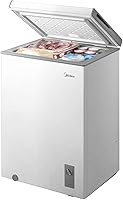
The Midea 3.5 Cu.ft Chest Freezer suits smaller households and changing storage needs, but its product information here does not include an annual energy consumption figure. Confirm that number when comparing it with models that publish yearly kWh use.
Midea describes this model as a convertible freezer that can switch between freezer and fridge modes. It has 3.5 cu ft of capacity, a removable plastic basket and adjustable legs.
Midea also describes it as garage ready, with a stated operating range of 0°F to 110°F in freezer mode and 38°F to 110°F in fridge mode. Treat those ranges as the brand's operating claim and check the current instructions for your intended location.
The white cabinet measures 17.6 in deep, 21.5 in wide and 33.5 in high. It uses 115 volts and is designed for freestanding installation.
Choose it when compact size and conversion flexibility matter more than a published annual energy comparison. Its smaller capacity may reduce wasted space for light storage, but it may not suit regular bulk buying.
Does chest freezer design affect electricity use?
Chest freezer design can affect how much cold air escapes during access, but the model's annual energy figure remains the better comparison. Cold air tends to stay lower when a top-opening chest freezer is opened, while an upright freezer may release more cold air through a front door.
Your habits still matter. Repeated long openings, warm food loads, poor seals and blocked airflow can increase the work required to maintain temperature.
Use these habits with any chest freezer:
- Open the lid only as long as needed.
- Group similar foods so you can find them quickly.
- Keep frequently used items in the basket or upper layer.
- Avoid packing food against areas that need airflow.
- Keep the freezer level and stable.
- Check that the lid seal closes evenly.
- Keep the required clearance around the cabinet.
- Let hot food cool according to safe food-handling guidance before freezing.
A basket can improve access, but it also takes some cabinet space. Judge it by how much searching it prevents, not by the basket alone.
How do placement and room temperature affect efficiency?
Place the freezer in a location that matches its approved operating conditions, with enough clearance for heat to leave the cabinet. A crowded corner, hot garage or cold unheated room can change energy use and may affect operation.
Before setup, measure the delivery route, floor space and lid-opening area. Check the distance from walls and nearby appliances against the manufacturer's instructions.
Keep the freezer away from direct heat sources when possible. Do not use a garage-ready claim as a substitute for checking the model's temperature range.
Electrical planning matters too. Confirm the voltage, outlet condition and circuit requirements before installation.
Our guides on how many amps a small chest freezer uses and how many watts a mini chest freezer uses explain the electrical terms used for smaller units.
How can you estimate running cost from energy use?
Use the annual kWh figure and your electricity rate to estimate yearly cost. Multiply the annual consumption by the price your utility charges per kWh.
For example:
annual energy use in kWh × electricity rate per kWh = estimated annual electricity cost
This calculation works only when the annual energy figure is available. If a product does not publish that number in the information you are comparing, do not invent an estimate from capacity or voltage.
Voltage alone does not tell you annual electricity use. A 120-volt or 115-volt appliance can cycle on and off, so its total yearly consumption depends on more than the outlet voltage.
For a fuller calculation, read how much does a chest freezer cost to run. Include your local electricity rate and allow for room temperature, loading and maintenance habits.
What should you check before choosing an efficient freezer?
Check annual kWh, capacity, placement and food access together. These four factors tell you more than a single efficiency label.
Use this final checklist:
- Is the annual energy figure published?
- Is the capacity large enough for your busiest storage week?
- Will the cabinet fit through the delivery route?
- Can the lid or door open fully?
- Does the location match the approved temperature range?
- Is the outlet and voltage suitable?
- Can you find food without leaving the lid open?
- Is manual defrost practical for your schedule?
- Do you need a freezer only, or a convertible appliance?
- Can you estimate running cost from a known kWh figure?
Work through each point in order and be honest about your answers. A single no does not always rule out a model, but it shows where care is needed.
If the annual figure is missing, treat that as an unresolved comparison point. Ask for the current energy information before deciding that a model is more efficient.
Capacity deserves a practical test. Picture your normal bulk shop, holiday food and leftovers, and check whether they would fit without tight packing.
Placement needs the same honest look. Measure the floor space, the delivery route and the area the lid needs when fully open.
Temperature range matters in garages and basements. A model that suits a heated room may not suit an unheated space in winter or summer.
Electrical checks are simple but important. Confirm the voltage and outlet condition, and follow the instructions for clearance around the cabinet.
Food access is often overlooked before purchase. If you cannot find items quickly, you will leave the lid open longer than you planned.
Manual defrost is a real care commitment. Make sure you have time to defrost, drain and reorganize the freezer when ice builds up.
A convertible appliance adds flexibility for changing needs. It also means you should think about which mode you will use most often.
Running cost can only be estimated when a known kWh figure exists. Without that number, avoid turning a guess into a promise.
Keep your notes together until you have compared similar models. That makes the final choice calmer and more useful.
What is the best way to compare chest freezers by energy efficiency?
The best method is to rank similar-capacity models by annual kWh, then remove any model that does not fit your space or storage habits. The Frigidaire compact refrigerator has the clearest stated energy figure here, but it is a mixed-storage appliance rather than a dedicated chest freezer.
Choose the 3.5 cu ft Midea when compact size and freezer-to-fridge conversion fit your routine. Choose the 7 cu ft Frigidaire when you need more dedicated frozen storage and can confirm its energy information.
That order keeps the decision grounded. Energy use comes first, then capacity, placement, controls and care, rather than the other way around.
It also stops a common mistake. A low energy number on a small or mixed appliance should not be compared directly with a larger chest freezer.
The Frigidaire 4.5 cu ft refrigerator has 4.3 cu ft of fresh food capacity and a 0.3 cu ft internal freezer. Its stated annual energy consumption is 5 kWh, and it is Energy Star Certified.
That makes it a useful reference for mixed storage in a dorm, office or apartment. It does not replace a chest freezer when you need bulk frozen storage.
The Midea 3.5 cu ft chest freezer can switch between freezer and fridge modes, with a removable basket and compact footprint for smaller loads. Its garage ready claim comes with stated temperature ranges for each mode, so check those ranges against your own room.
The FRIGIDAIRE 7 cu ft chest freezer offers more dedicated frozen space, with an adjustable thermostat with seven settings, a removable wire basket and an external defrost drain. Its supplied information does not include an annual energy consumption figure, so confirm the current energy label before you rank it on efficiency.
When you compare chest freezers, keep the same questions for every model. Look for annual kWh, usable capacity, approved placement, controls and how you will organize food, and keep the lid seal clean, allow required clearance, avoid long lid openings and defrost when ice affects storage.
Frequently asked questions
What is the most important energy-efficiency number on a chest freezer?
Annual energy consumption is the best starting number because it estimates electricity use over a year. Compare models with similar capacity and operating conditions, then check placement, temperature controls and electrical requirements before choosing the lower number.
Are chest freezers more energy efficient than upright freezers?
Chest freezers can limit cold-air loss when opened because cold air stays lower in the cabinet, but efficiency varies by model, size and use. Compare annual energy consumption for the specific models instead of assuming every chest freezer uses less electricity.
Does a larger chest freezer always use more electricity?
A larger cabinet often has more space to cool, but size alone does not determine annual energy use. Compare the annual energy figure for each model and consider whether you will use the extra capacity efficiently.
Can garage temperature affect chest freezer energy use?
Yes. Hot or cold surroundings can change how hard a freezer works and whether it operates within its intended range.
Check the model's approved environment before placing it in a garage, basement or other non-climate-controlled space.
How can I lower chest freezer electricity use?
Keep the freezer at its recommended setting, open the lid briefly, maintain the seal, avoid blocking required clearances and defrost it when ice buildup affects storage or operation. Use a separate freezer thermometer to check food temperature.