How Much Does a Chest Freezer Cost to Run?
A chest freezer’s running cost depends on its annual energy use and your electricity rate. Multiply kilowatt-hours (kWh) used by the price per kWh, then adjust your estimate for your home’s conditions.
On this page (7 sections)
- How do you calculate chest freezer running cost?
- Where can you find a freezer’s energy use?
- What can change the cost to run a chest freezer?
- How can you compare the cost of two freezers?
- Can you estimate running cost without an annual kWh figure?
- Will a freezer keep running during a power outage?
- How can you keep the estimate useful?
A chest freezer’s running cost depends on how much electricity it uses and what you pay per kilowatt-hour. Multiply its energy use in kWh by your utility rate to estimate the cost, then account for room temperature, settings, and lid openings.
For example, if a freezer uses 300 kWh in a year and your rate is 0 dollars.20 per kWh, the estimated annual cost is 60 dollars. That equals about 5 dollars per month, before any variation in actual use.
How do you calculate chest freezer running cost?
Multiply energy use in kWh by your electricity rate per kWh. Use the same time period for both numbers: monthly use with a monthly estimate, or annual use with an annual estimate.
Formula: kWh used × rate per kWh = estimated electricity cost
If your utility charges 0 dollars.18 per kWh and a freezer uses 25 kWh in one month, the estimate is 4 dollars.50 for that month. Your bill may include other fees, so this calculation estimates the freezer’s energy cost rather than the full bill.
How much does a chest freezer cost to run per day?
Divide the estimated annual cost by 365 for a daily average. A freezer that costs 73 dollars per year to run averages 0 dollars.20 per day, though its power use and cost can vary.
You can also divide the monthly cost by the number of days in that month. These averages make it easier to compare appliances, but they don’t predict every day’s use.
Where can you find a freezer’s energy use?
Check the energy label, manual, or manufacturer information for an annual kWh estimate. Use the figure for the exact model, since capacity alone doesn’t tell you how much electricity it will use.
If no clear figure is available, an electricity monitor can measure consumption at the outlet over time. A short reading may not represent normal use, so measure through a typical stretch that includes your usual room temperatures and lid openings.
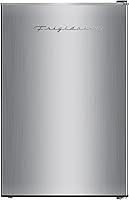
One compact refrigerator illustrates why it matters to check the appliance type: the Frigidaire has a stated annual energy consumption of 5 kWh, but it is a refrigerator with a small internal freezer compartment, not a chest freezer.
Use that figure only for this refrigerator. It is not a running-cost estimate for a chest freezer.
What can change the cost to run a chest freezer?
Room temperature, freezer settings, ventilation, and how often you open the lid can all affect energy use. The estimate from an energy label is a useful starting point, while your own conditions shape the actual cost.
A hot room can make an appliance work harder to remove heat. Very cold conditions can also fall outside the operating range of some models, so check the manual before placing a freezer in a garage or other unheated space.
Frequent or long lid openings let cold air escape. Leave room around the cabinet as the instructions direct, keep the seal clear, and avoid packing items in a way that prevents the lid from closing fully.
Does a larger chest freezer cost more to run?
A larger freezer may use more electricity, but capacity alone doesn’t determine its running cost. Compare annual kWh figures for the models you’re considering, then multiply each by your rate.
If you’re comparing sizes, our guides explain how much a small chest freezer costs and how much a large chest freezer costs. Those pages cover purchase cost; use each model’s energy figure for the operating-cost comparison.
For a model with a 7 cu. ft. capacity, the FRIGIDAIRE EFRF7003-BLACK includes an adjustable thermostat with seven settings and a removable wire basket. Its actual cost to run depends on its energy use and your electricity rate.
How can you compare the cost of two freezers?
Compare annual kWh at your own electricity rate, using figures for similar models and conditions. This keeps the comparison tied to energy use rather than just capacity or features.
- Find each model’s annual kWh estimate.
- Multiply each estimate by your rate per kWh.
- Compare the results, while checking capacity and features you need.
- Consider where each freezer will operate and how often you open it.
Our guide explains how to compare chest freezers by energy efficiency. If you’re deciding between cabinet styles, read chest freezer vs upright freezer efficiency for factors that affect the comparison.
A refrigerator can be another option if you need both fresh-food and freezer space. See our guide to the best energy efficient top freezer refrigerator for models in that category.
Can you estimate running cost without an annual kWh figure?
Yes, measure the freezer’s energy use over a representative period and apply your rate. This is more useful than guessing from the freezer’s size or rated voltage.
A plug-in energy monitor can show kWh used during the measurement period. Multiply that number by your rate to estimate the cost for that period; to estimate a year, repeat the measurement in different seasons or use a longer measurement and scale it cautiously.
The Midea 3.5 Cu.ft Chest Freezer is convertible between freezer and fridge modes. Because the selected mode changes how you use the appliance, measure the energy use in the mode you expect to run.
Will a freezer keep running during a power outage?
A freezer needs electricity to keep cooling, so its normal running-cost estimate doesn’t cover backup power. If outages are a concern, follow the freezer manual’s guidance for keeping the lid closed and protecting food.
The Midea 3.5 cu. ft. model is described as keeping items frozen for up to 48 hours after losing power. That stated period doesn’t replace safe food-handling guidance or guarantee the same result in every outage.
If you’re planning backup power, check the appliance’s electrical requirements and the power source’s capacity. Our guides cover what a Honda 2000 watt generator, a WEN inverter generator 6800, and a 1000 watt BLUETTI power station can run.
How can you keep the estimate useful?
Use the best energy figure you can find, your actual utility rate, and conditions close to where the freezer will operate. Recheck the estimate if you move the freezer, change its settings, or switch between fridge and freezer mode.
For a quick comparison, multiply annual kWh by your rate and divide by 12 for a monthly average. Choose the freezer that meets your capacity needs at a running cost you’re comfortable with, and compare measured or stated energy use before you buy.
Frequently asked questions
How much does it cost to run a chest freezer per month?
Multiply the freezer’s monthly energy use in kWh by your electricity rate per kWh. For example, a freezer using 30 kWh in a month costs 6 dollars at a rate of 0 dollars.20 per kWh.
Use the appliance’s measured energy use when available, since actual consumption varies with the model and conditions.
How many kWh does a chest freezer use?
There isn’t one kWh figure for every chest freezer. Size, insulation, room temperature, settings, lid openings, and condition all affect energy use.
Check the energy label or measure the freezer with an electricity monitor over a representative period, then use that kWh figure in your cost calculation.
Do chest freezers use less electricity than upright freezers?
Chest freezers can use less energy than similar upright models because cold air is less likely to spill out when the lid opens. The difference depends on the appliances and how you use them.
Compare their energy use and operating costs at your local rate before choosing.
Does a chest freezer use more electricity in a garage?
It can, especially when the garage is hotter or colder than the freezer’s recommended room conditions. Check the manual for the operating temperature range, leave space for ventilation as directed, and keep the lid closed.
A garage-ready model may suit a wider range of conditions.