How Many Watts Does a Medium Chest Freezer Use?
A medium chest freezer often uses about 100–250 watts while its compressor runs, but the exact draw depends on the model and conditions. Startup demand can briefly be higher, so check the freezer's label or manual before planning a circuit or backup power.
On this page (6 sections)
- What is typical medium chest freezer wattage?
- How do you estimate daily energy use?
- What electrical details should you check before choosing a circuit?
- Does a compact refrigerator help compare freezer power?
- How should you plan backup power?
- What is the practical wattage estimate for a medium chest freezer?
A medium chest freezer often draws about 100–250 watts while its compressor runs, with a brief higher demand when the compressor starts. The exact typical medium chest freezer wattage depends on the model, room conditions, and operating cycle, so use the appliance label or manual for electrical planning.
The running-watt figure is only part of the picture. A freezer cycles on and off, and its daily energy use depends on how long the compressor runs.
What is typical medium chest freezer wattage?
About 100–250 watts is a useful rough estimate for a medium chest freezer while running. Treat it as a planning range, not a rating for every freezer.
Capacity labels such as “medium” aren't standardized across brands. Two freezers with similar interior space can use different compressors, insulation, and controls.
For a better estimate, check the electrical label for amps and volts. If the label gives amps but not watts, multiply amps by volts for an approximate running wattage: a 2 amp appliance on a 120 volt supply is about 240 watts.
A freezer’s startup draw may exceed its running draw for a short time. This matters when sizing a generator, battery inverter, or other power source, because it needs to handle the initial surge as well as the continuing load.
For a broader explanation of compressor cycles and power labels, see Chest Freezer Wattage: What Really Happens.
How do you estimate daily energy use?
Multiply running watts by the hours the compressor runs, then divide by 1,000 to estimate kilowatt-hours. For example, 150 watts for 8 compressor-hours is about 1.2 kWh.
The compressor doesn't normally run continuously for a full day. The actual hours vary with the room temperature, thermostat setting, how often you open the lid, and how much warm food you add.
A plug-in energy monitor can help you measure energy use over several days. Choose a monitor rated for the freezer's electrical load and follow its instructions.
If you are comparing sizes, the power needs differ across models. See estimates for a 12 volt chest freezer's typical wattage, a large chest freezer's normal wattage, and how many watts a mini chest freezer uses.
What electrical details should you check before choosing a circuit?
Use the freezer's label and manual to confirm its voltage, current, and circuit requirements. Don't size a circuit from a generic wattage estimate alone.
A breaker protects the branch circuit from excessive current. The freezer's startup demand, other appliances on the circuit, and local electrical rules can all affect the right setup.
Read what size breaker a chest freezer needs and whether a chest freezer needs a dedicated circuit. For electrical work or uncertainty about the circuit, ask a qualified electrician.
Can an extension cord power a chest freezer?
Use a grounded wall outlet whenever possible, and follow the freezer manual if it discusses extension cords. A cord's wattage rating alone doesn't confirm that it is suitable for your appliance or installation.
The HUANCHAIN Indoor Outdoor Black Extension Cord is 25 ft long, uses 16/3 gauge wire, and is rated for 13 amps and 1,625 watts. Its maker describes it as waterproof and suitable for indoor or outdoor use.
Keep any permitted cord fully uncoiled and away from water, rugs, doorways, and sharp edges. Don't connect multiple cords together.
When might a heavier extension cord fit the situation?
Consider a heavier cord only when an extension cord is allowed and its rating suits the appliance and run. A larger wire gauge does not replace the freezer manual's instructions or a properly installed outlet.
The HUANCHAIN 12 Gauge Heavy Duty Outdoor Extension is 25 ft long and rated for 15 amps and 1,875 watts. Its maker says to use it fully extended and avoid coiling.
An extension cord is not a fix for an overloaded circuit, a damaged outlet, or a freezer that needs a different electrical setup. Ask an electrician if you aren't sure.
Does a compact refrigerator help compare freezer power?
A compact refrigerator can provide a separate reference point, but it isn't a substitute for a chest freezer's own rating. Refrigerators and freezers may have different cooling needs and usage patterns.
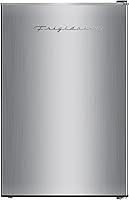
The Frigidaire 4.5 cu ft refrigerator has an annual energy consumption figure of 5 kWh and includes a 0.3 cu ft freezer compartment. Those figures describe that compact refrigerator, not the typical draw of a medium chest freezer.
Use the chest freezer's own label or manual when estimating circuit demand or backup power. Capacity and annual energy figures for a different appliance don't predict its wattage.
How should you plan backup power?
Choose backup power that can handle the freezer's running load and its brief startup demand. Check the freezer's label, then compare it with the continuous and surge ratings of the generator or inverter.
For battery systems, consider both the freezer's running draw and the energy it uses over time. A unit with enough peak watts may still run out of stored energy before the outage ends.
Measure the freezer over a typical day if you need a closer energy estimate. Keep the lid closed during an outage, and follow food-safety guidance for deciding whether food is still safe afterward.
What is the practical wattage estimate for a medium chest freezer?
For a first estimate, use 100–250 running watts, then confirm the actual rating on the freezer. Allow for higher startup demand when sizing backup equipment.
Choose backup power based on the freezer's label and measured energy use. For circuit choices, follow the manual and local electrical requirements, and use a qualified electrician when the wiring or breaker needs attention.
Frequently asked questions
How many watts does a medium chest freezer use?
A medium chest freezer may draw about 100–250 watts while its compressor runs, though the exact amount varies by model, room temperature, settings, and how often the lid opens. Check the appliance label or manual for its electrical rating, and remember that the compressor may briefly draw more power at startup.
Does a chest freezer use its rated watts all the time?
No. The compressor cycles on and off, so a freezer's energy use over a day is lower than multiplying its running watts by 24 hours.
Insulation, room temperature, lid openings, food load, and thermostat setting all affect how long the compressor runs.
How do I estimate chest freezer energy use?
If you know the freezer's running watts and average daily operating hours, multiply watts by hours and divide by 1,000 to estimate kilowatt-hours. For example, 150 watts running 8 hours per day is about 1.2 kWh daily.
A plug-in energy monitor can provide a more useful real-world estimate if it is rated for the appliance.
Can I use an extension cord with a chest freezer?
Use the outlet and cord guidance in the freezer manual, and plug directly into a properly grounded outlet when possible. If a cord is allowed, match its rating to the appliance, keep it fully uncoiled, and avoid running it where it can be pinched, wet, or damaged.