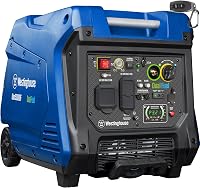
6 Best Champion Dual Fuel Inverter Generators (November 2026)
The best Champion dual fuel inverter generators include the Champion 4000-Watt Dual Fuel RV Ready Portable for RV camping and tailgating, the Champion 4500-Watt Electric Start Dual Fuel Portable for electric start and longer home backup, and the WEN Quiet and Lightweight 3600-Watt Dual Fuel (best lightweight alternative to champion).
On this page (8 sections)
- Champion dual fuel inverter generators compared for RV and home backup
- How do Champion dual fuel inverter generators compare on watts?
- Is propane or gasoline better for dual fuel inverter generators?
- How quiet are dual fuel inverter generators for camping?
- What outlets and safety features should you look for?
- Should you choose Champion or a WEN or PowerSmart alternative?
- How should you set up and care for a dual fuel inverter generator?
- Verdict: which Champion dual fuel inverter generator should you buy?
The best Champion inverter generator dual fuel pick for most buyers is the Champion 4000-Watt Dual Fuel RV Ready Portable, with 4000 starting watts, 3000 running watts on gasoline, and up to 25 hours on propane at 25% load. It weighs 51.8 lb, so it is far easier to carry than the 4500-watt Champion at 99.2 lb.
Our score weighs specs, features and buyer feedback against what you're shopping for. We compared starting watts, running watts, runtime, noise, weight, outlets and safety features across six dual fuel inverter generators.
If you want a broader view of dual fuel models, start with our best dual fuel generator guide. For inverter specific picks, our best dual fuel inverter generator guide compares quiet and clean power options.
Our picks at a glance
-
1
 Best for RV camping and tailgating
Champion 4000-Watt Dual Fuel RV Ready Portable
9.7/10 our score
See it on Amazon -
2
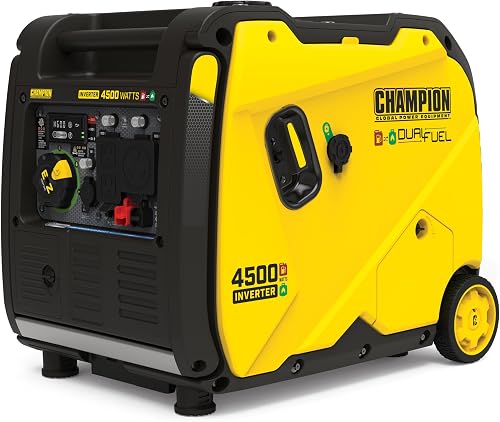 Best for electric start and longer home backup
Champion 4500-Watt Electric Start Dual Fuel Portable
9.6/10 our score
See it on Amazon -
3
 Best lightweight alternative to Champion
WEN Quiet and Lightweight 3600-Watt Dual Fuel
9.6/10 our score
See it on Amazon
- 4
 Check it
PowerSmart 3800 Watt Dual Fuel Inverter Generator
Best for quiet Eco Mode use - 5
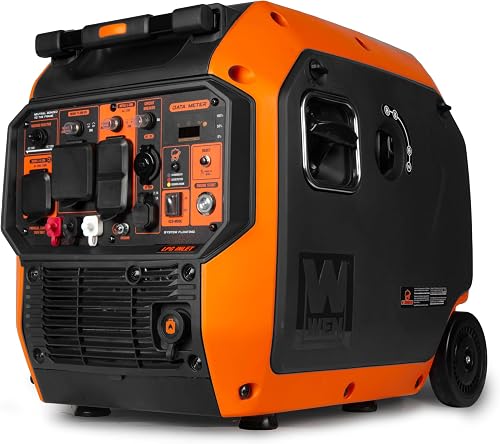 Check it
WEN 6800-Watt Dual Fuel RV-Ready Electric Start
Best for larger RV and vehicle charging loads - 6
 Check it
AIVOLT 8000W Dual Fuel Inverter Generator 50A
Best for high demand backup and job sites
Champion dual fuel inverter generators compared for RV and home backup
The Champion 4000-Watt is the best balance of weight, power and runtime for most RV and camping use. The Champion 4500-Watt adds electric start and more running watts for home backup.
How we compared these inverter generators
We checked watts on gasoline and on propane, because dual fuel output drops on propane. We also checked runtime at 25% load, noise at a stated distance, weight and outlet types.
We looked at safety features such as CO Shield, CO Watchdog, CO sensor and low oil shutdown. We also checked clean power claims, because inverter output matters for sensitive electronics.
We considered parallel readiness for buyers who may grow power later. We did not treat surge watts as running watts, since surge only matters for short motor starts.
We also compared engine size and fuel capacity where stated, because a larger 212cc or 224cc engine and a larger tank can change runtime, starting effort and transport size. Dimensions and included accessories were noted for storage, since a unit that fits in a truck bed or RV compartment is easier to use regularly.
Champion 2500 and 4500 sizing notes
If you are comparing smaller Champion models, our Champion 2500 Watt inverter guide helps you judge whether 2500 watts fits your load. For a closer look at the larger Champion, our Champion 4500 Watt inverter guide covers gas or dual fuel choice.
Champion 4000-Watt Dual Fuel RV Ready Portable: Best for RV camping and tailgating
- 4000 starting watts, 3000 running watts on gasoline
- 2700 running watts on propane with up to 25 hours at 25% load
- 64 dBA from 23 feet with CO Shield
- TT-30R, household duplex and 12V outlets
A light, quiet Champion inverter with RV outlets, clean power and flexible gasoline or propane running for camping and backup basics.
Pros
- Light at 51.8 lb for a 4000-watt inverter
- Long propane runtime at 25% load
- CO Shield and clean power under 3% THD
Cons
- Recoil start only
- Parallel kit sold separately
This Champion suits RV camping, tailgating and backup for a few basics at home. At 51.8 lb, it is one of the lightest 4000-watt inverters here, so it carries and stores easily in a truck bed.
On gasoline it gives 4000 starting watts and 3000 running watts, with up to 10 hours at 25% load from a 1.54-gallon tank. On a 20 lb propane tank it gives 2700 running watts and up to 25 hours at 25% load.
It runs at 64 dBA from 23 feet and produces clean power with less than 3% THD. The panel has a 120V 25A TT-30R outlet, a 120V 20A household duplex, a 12V automotive outlet and parallel outlets.
The trade-off is recoil start only. An optional parallel kit is sold separately, and the 4500-watt Champion adds electric start and a meter.
Champion 4500-Watt Electric Start Dual Fuel Portable: Best for electric start and longer home backup
- 4500 starting watts, 3500 running watts on gasoline
- 3150 running watts on propane with up to 21 hours at 25% load
- 61 dBA from 23 feet with CO Shield
- Intelligauge power meter
The stronger Champion pick for home essentials, with electric start, a meter for voltage and runtime, and parallel readiness.
Pros
- Electric start with EZ Start Dial
- Higher running watts than the 4000-watt pick
- Intelligauge shows voltage, frequency and hours
Cons
- Heavier at 99.2 lb
- Parallel kit sold separately
This Champion suits buyers who want more power and easier starts for home backup. Electric start and the EZ Start Dial simplify startup, and Cold Start Technology helps in cold weather.
Its 212cc four stroke engine matches the higher output and longer gasoline runtime.
On gasoline it gives 4500 starting watts and 3500 running watts, with up to 14 hours at 25% load from a 2.3-gallon tank. On propane it gives 3150 running watts and up to 21 hours at 25% load from a 20 lb tank.
It runs at 61 dBA from 23 feet, about as loud as normal speech. Clean power is stated at less than 3% THD, and CO Shield shuts down if carbon monoxide rises.
The Intelligauge meter shows voltage, frequency and operating hours. The trade-off is weight at 99.2 lb, though never flat tires and a fold down handle help move it.
WEN Quiet and Lightweight 3600-Watt Dual Fuel: Best lightweight alternative to Champion
- 3600 surge watts, 2900 rated watts on gasoline
- 3500 surge watts, 2600 rated watts on propane
- 49 lb with CO Watchdog sensor
- Fuel shut off and USB ports
A light WEN inverter for camping and sensitive electronics, with clean power, a fuel shut off and simple propane connection.
Pros
- Lightest pick at 49 lb
- Fuel shut off helps reduce carburetor buildup
- Clean power for laptops and phones
Cons
- Lower rated watts than the Champion picks
- Shorter gasoline runtime at higher load
This WEN suits campers who want the lightest inverter here and simple propane use. At 49 lb, it is easy to carry into a tent site or tailgate setup.
Its compact 18 by 11.63 by 19.68 inch size also aids storage.
On gasoline it gives 3600 surge watts and 2900 rated watts. On propane it gives 3500 surge watts and 2600 rated watts through a tool-free LPG quick connector.
WEN states clean power with total harmonic distortion under 0.3% at no load and under 1.2% at full load. That suits laptops, phones, tablets and monitors.
The panel adds two 5V USB ports, two 120V receptacles, a TT-30R RV receptacle and a 12V DC receptacle. The 1.5-gallon tank gives up to 5 hours at half load.
The WEN Watchdog CO shutdown sensor and fuel shut off add safety and maintenance benefits. The trade-off is lower rated watts than the Champion picks.
PowerSmart 3800 Watt Dual Fuel Inverter Generator: Best for quiet Eco Mode use
- 3800 starting watts, 3300 running watts on gasoline
- 3500 starting watts, 3100 running watts on propane
- 59 dBA at 25% load in Eco Mode
- Up to 24 hours on a 20 lb propane tank
A quiet PowerSmart inverter with strong propane runtime and a full panel for camping, tailgating and home backup basics.
Pros
- Very quiet at 59 dBA in Eco Mode
- Up to 24 hours on propane at 25% load
- CO sensor and low oil shutdown
Cons
- Smaller gasoline tank at 1.3 gallons
- 8 hours on gasoline at 25% load
This PowerSmart suits buyers who want quiet Eco Mode use for camping or home backup. It operates at 59 dBA at 25% load in Eco Mode, the lowest stated noise level in this group.
At 50.7 lb, it stays portable for campsite carry.
On gasoline it gives 3800 starting watts and 3300 running watts. On propane it gives 3500 starting watts and 3100 running watts, with up to 24 hours on a 20 lb propane tank at 25% load.
The 1.3-gallon gasoline tank gives 8 hours at 25% load and 4.5 hours at 50% load. Eco Mode can extend runtime by reducing engine speed at lighter loads.
The panel includes a 120V 30A L5-30R twist lock outlet, a 120V 20A duplex, a 12V 8A DC port and dual USB ports. Safety features include a CO sensor, overload, short circuit and low oil shutdown protection.
The trade-off is the smaller gasoline tank. Its warranty is 2 years rather than the 3 years on several rivals.
WEN 6800-Watt Dual Fuel RV-Ready Electric Start: Best for larger RV and vehicle charging loads
- 6800 surge watts, 5100 rated watts on gasoline
- 6000 surge watts, 4500 rated watts on propane
- 120V and 240V bonded neutral output
- Electric start with recoil backup
The high-output WEN pick for larger RV loads and low power Level 2 charging for battery and hybrid vehicles.
Pros
- Highest rated watts here on gasoline
- 240V output for larger loads
- Wheels and telescoping handle
Cons
- Heavier and larger than the compact picks
- Less suited to light camping loads
This WEN suits larger RV loads and buyers who need 240V power. Its 224cc dual fuel engine gives 6800 surge watts and 5100 rated watts on gasoline, the highest rated watts among the first five picks.
On propane it gives 6000 surge watts and 4500 rated watts. A bonded neutral 240V configuration supports low power Level 2 charging for battery and hybrid electric vehicles.
Electric start is keyless, with a recoil starter as backup. The panel includes an L14-30R 120V/240V receptacle, two 120V receptacles, a TT-30R RV receptacle, a 12V DC receptacle and two USB ports, plus a voltage selector switch.
Fuel shut off, the CO Watchdog sensor, wheels and a telescoping handle help with maintenance and transport. It runs at 64 decibels at quarter load, with clean power under 1.2% THD at full load.
The trade-off is 99.2 lb size for light camping, where the 49 lb WEN is far easier to carry.
AIVOLT 8000W Dual Fuel Inverter Generator 50A: Best for high demand backup and job sites
- 8000 starting watts, 6100 running watts on gasoline
- 7200 starting watts, 5500 running watts on LPG
- 62 dBA from 23 feet with CO Alert
- 5-in-1 LCD display and electric start
The largest inverter here for RVs, job sites and emergency backup, with wide temperature operation and a smart display panel.
Pros
- Most power in this group
- Wide -4°F to 140°F operating range
- LCD shows fuel, voltage and runtime
Cons
- Heaviest pick at 130.7 lb
- Largest footprint for transport
This AIVOLT suits high demand RV, job site and emergency backup use. Its 322cc four stroke OHV engine gives 8000 starting watts and 6100 running watts on gasoline, the most power in this group.
On LPG it gives 7200 starting watts and 5500 running watts. Eco Mode is stated to keep runtime over 10 hours at 25% load, and automatic fuel switching is stated for gas and propane use without manual adjustments.
It runs at 62 dBA from 23 feet and has CO Alert auto shutdown, plus low oil shutdown protection. A 5-in-1 LCD display shows fuel use, voltage and runtime.
The panel includes four outlets, a 12V DC cigarette outlet and a dual USB adapter. An upgraded low temperature lithium battery is stated for operation from -4°F to 140°F.
The trade-off is weight at 130.7 lb and the largest 25.1 by 19.6 by 21.3 inch footprint here, so wheels and the telescopic handle matter for transport.
How do Champion dual fuel inverter generators compare on watts?
Champion dual fuel inverter generators give higher watts on gasoline than on propane. The 4000-Watt Champion drops from 3000 running watts on gasoline to 2700 on propane.
The 4500-Watt Champion drops from 3500 running watts on gasoline to 3150 on propane. That gap is normal for dual fuel engines, and you should size your load by the propane rating if you plan to run propane most often.
Starting watts matter for motors such as air conditioners, pumps and power tools. Running watts are what you can sustain after startup, so add up your essential loads before you choose.
Which watt rating should you use for sizing?
Use running watts for your total load plan. Use starting watts only to check whether a motor can start.
Leave headroom for extra items such as lights, chargers and electronics.
For a freezer or refrigerator, check the motor load as well as the running load. A generator that meets running watts may still struggle if starting watts are too low.
Also check whether the load changes over time. Battery chargers, heaters and pumps can draw differently during startup and steady running, so a simple total can hide a short peak.
If you are close to the limit, removing a nonessential load before starting a motor can help.
Is propane or gasoline better for dual fuel inverter generators?
Propane is often better for storage and runtime, while gasoline often gives more power. The Champion 4000-Watt runs up to 25 hours on propane at 25% load, compared with 10 hours on gasoline.
The PowerSmart runs up to 24 hours on a 20 lb propane tank at 25% load, compared with 8 hours on its gasoline tank. That long propane runtime helps during camping trips and overnight outages.
Gasoline is easier to find in many areas and usually gives higher running watts. Dual fuel flexibility helps when one fuel is short or when you want to store propane for later use.
What should you check before connecting propane?
Check that the propane hose and regulator are included or required for your model. The Champion and WEN picks here include an LPG hose, and WEN uses a tool-free quick connector.
Our best dual fuel generator propane hose guide helps if you need a replacement or a longer hose. Use only a hose rated for your generator and propane tank.
Check the tank valve and connection for leaks before starting, and keep the hose away from hot surfaces. If you store propane tanks indoors, follow local rules and keep them upright and ventilated.
How quiet are dual fuel inverter generators for camping?
Dual fuel inverter generators are quieter than standard generators because inverter engines and enclosures reduce noise. The PowerSmart states 59 dBA at 25% load in Eco Mode.
The Champion 4500 states 61 dBA from 23 feet. The AIVOLT states 62 dBA from 23 feet, and the Champion 4000 states 64 dBA from 23 feet.
Noise rises with load, so Eco Mode and lower loads help at camp. Place the generator downwind and away from sleeping areas, and never use it indoors or in an enclosed space.
What noise level suits a campsite?
A level near 60 dBA is close to normal conversation at the stated distance. That is workable for many campgrounds, but rules vary by site.
Check campsite quiet hours and generator rules before you go. Some sites limit runtime or prohibit generators entirely after a set hour.
Distance also matters in real use. A unit at 23 feet can sound much louder at a tent or picnic table, so placing it behind a vehicle or barrier can reduce perceived noise without moving it far.
What outlets and safety features should you look for?
Look for a TT-30R RV outlet if you camp in an RV, plus household outlets for home backup. The Champion 4000 includes a 120V 25A TT-30R outlet and a household duplex.
The Champion 4500 includes a 120V 30A RV outlet, a household duplex and a 12V regulated outlet. The WEN 6800 adds an L14-30R 120V/240V outlet for larger loads.
CO safety matters because carbon monoxide is colorless and odorless. Champion uses CO Shield, WEN uses a CO Watchdog sensor, and PowerSmart and AIVOLT use CO sensors with auto shutdown.
How does clean power affect electronics?
Inverter generators produce cleaner power than standard generators, with lower harmonic distortion. Champion states less than 3% THD, and WEN states under 1.2% at full load.
Clean power helps protect laptops, phones and other sensitive electronics from voltage spikes. Even so, use a surge protector for valuable devices when you can.
Low oil shutdown also matters, because running with low oil can damage the engine. Check oil before first use, since some models ship with oil included but still need you to add it before starting.
Should you choose Champion or a WEN or PowerSmart alternative?
Champion is a strong choice if you want a matched brand, CO Shield and parallel options across models. The Champion 4000-Watt is light at 51.8 lb and strong for RV use.
WEN is a strong alternative if you want very light weight, fuel shut off or 240V output. Our best WEN dual fuel generator guide compares WEN models in more detail.
PowerSmart and AIVOLT suit buyers who prioritize quiet Eco Mode or maximum watts. The PowerSmart is quiet at 59 dBA, while the AIVOLT gives 6100 running watts on gasoline.
When is a battery power station a better fit?
A battery power station suits short, quiet loads without fuel or exhaust. Our best portable battery power station guide covers models for phones, lights and small appliances.
Choose a generator for longer runtime, larger motor loads or multi day backup. Choose a battery station for silent indoor use, short camping loads or backup for small electronics.
Weight and refueling also change the choice. A generator needs fuel and outdoor placement, while a battery station needs recharging and offers limited total energy for larger appliances.
How should you set up and care for a dual fuel inverter generator?
Set up the generator outdoors on level ground with clear space around it. Add the correct oil before first start, and check the fuel gauge and oil level before each use.
Use the EZ Start Dial or the model's start controls to switch fuel and start the engine. Let the engine warm up before connecting loads, then add loads one at a time.
For care, run the generator under load on a regular schedule, change oil as directed, and use fuel shut off where fitted. Store gasoline safely and follow the manual for propane storage and hose checks.
How often should you run it in storage?
Run a stored generator periodically so the engine, seals and battery where fitted stay in good condition. Follow the manual for interval and load guidance, and drain or stabilize fuel as directed.
If you use fuel shut off, let the carburetor run dry before shutdown where the model describes that process. That step can reduce buildup from stagnant gasoline during storage.
Verdict: which Champion dual fuel inverter generator should you buy?
The best Champion inverter generator dual fuel for most buyers is the Champion 4000-Watt Dual Fuel RV Ready Portable. It balances 3000 running watts on gasoline, long propane runtime and light weight at 51.8 lb.
Pick the Champion 4500-Watt if you want electric start, 3500 running watts on gasoline and a power meter for home backup. Pick the WEN 3600 if you want the lightest option at 49 lb.
Pick the PowerSmart if quiet Eco Mode at 59 dBA matters most. Pick the WEN 6800 or AIVOLT 8000W if you need 240V output or the highest running watts for larger loads.
Our score weighs specs, features and buyer feedback against what you're shopping for. For a wider Champion only view, see our best Champion dual fuel generator guide.
Our top 3 picks at a glance
-
1
Best for RV camping and tailgating
Champion 4000-Watt Dual Fuel RV Ready Portable
9.7/10 our score
See it on Amazon -
2
Best for electric start and longer home backup
Champion 4500-Watt Electric Start Dual Fuel Portable
9.6/10 our score
See it on Amazon -
3
Best lightweight alternative to Champion
WEN Quiet and Lightweight 3600-Watt Dual Fuel
9.6/10 our score
See it on Amazon
Frequently asked questions
What is the best Champion inverter generator dual fuel for an RV?
The Champion 4000-Watt Dual Fuel RV Ready Portable suits most RV camping loads. It has a TT-30R outlet, clean power and runs up to 25 hours on propane at 25% load.
Choose the 4500-Watt Champion if you want electric start and more running watts.
Is gasoline or propane better for a dual fuel inverter generator?
Propane often gives longer runtime and cleaner storage in these models. Gasoline usually gives higher running watts.
Many buyers run propane for camping and keep gasoline as a backup for higher loads or fuel shortages.
Can inverter generators run sensitive electronics?
Yes, when they produce clean inverter power with low harmonic distortion. The Champion picks state less than 3% THD, and the WEN picks state under 1.2% at full load.
Check each model's stated output before connecting laptops or phones.
How quiet is a dual fuel inverter generator?
The picks here range from 59 dBA to 65 dBA in stated conditions. That is close to normal conversation at the stated distance.
Place the unit away from sleeping areas and follow local campsite rules.
Do I need a parallel kit?
You only need a parallel kit if one generator cannot carry your planned load. Several picks here are parallel ready with a kit sold separately.
Joining two units adds power and can extend runtime, but it adds cost and space.