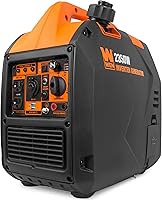
What Can a Jackery 3000 Power Station Run?
A Jackery power station 3000 class unit can run larger home and outdoor loads than small models, but what it actually runs depends on two separate numbers. Storage capacity (Wh) sets how long power lasts, while inverter output (W) sets how much power it can deliver at once.
On this page (9 sections)
- What does the 3000 in Jackery power station 3000 mean?
- How do storage capacity and inverter output work together?
- What can a Jackery 3000 class unit typically run at home?
- What can it run for camping, RVs, and road trips?
- How does the Explorer 1000 v2 compare to a 3000 class unit?
- Which BLUETTI option shows a different trade off?
- How should you plan loads before an outage?
- How do charging, solar, and care affect daily use?
- Which size should you choose for your needs?
A Jackery power station 3000 suits home backup when small portable units cannot handle the load. It is built for bigger loads, longer runtimes, or running several things at once.
It will not run every large appliance or last a full day.
Separate two specs before you plan. Wh is fuel in the tank and W is engine size.
A large tank with a small engine cannot pull a heavy load, and a powerful engine with a small tank will quit early.
We checked sizes, outputs, outlets, and charging across current models, including the best portable battery power station guide. Here we cover what the 3000 class is for, and when a smaller unit fits better.
What does the 3000 in Jackery power station 3000 mean?
The number names a size class, not a promise of a 3000 watt load all day. It marks a large home backup tier above the Explorer 300 and Explorer 1000 v2 below.
Start with your devices, not the badge. List each item and its watts from its label or manual.
Check continuous output against that total, with room for motor start draw.
Storage is the second check. A 100 watt device uses 100 Wh each hour before losses.
Even a large Wh number fades fast with a hair dryer, space heater, or water heater.
For the next size down, our note on the jackery power station 2000 shows whether it covers a fridge, lights, phones, and a TV for a few hours.
How do storage capacity and inverter output work together?
Wh tells you how long, and W tells you how much at once. High Wh but low W cannot start a compressor.
High W but low Wh can start it and quit early.
For rough planning, count usable Wh at about 85 to 90 percent of stated Wh. Divide by total watts for an hour estimate.
Motor loads need care. A fridge may run at modest watts when cold, but its compressor can draw several times that amount briefly.
Pure sine wave helps electronics, but does not erase start draw.
For freezer planning, read Can a Chest Freezer Run on a 20 Amp Circuit? to see start draw in home wiring terms.
What can a Jackery 3000 class unit typically run at home?
It can run core outage loads like a fridge or freezer, lights, phones, routers, and a TV, often together. Exact runtime depends on the model Wh and your appliance draw.
Start with the fridge or freezer to protect food. Next add low draw items like LED lights, chargers, a router, and a fan.
A TV or laptop can join if total watts stay within limits. Be careful with heat items, since space heaters, hair dryers, toasters, kettles, and stoves draw hundreds to thousands of watts.
Some may run briefly, but they drain energy fast and may exceed continuous output. Plan outlet count too, and test your layout before an outage.
For smaller loads, the jackery power station 500 page shows a mid size tier.
What can it run for camping, RVs, and road trips?
A 3000 class unit suits base camp backup, an RV stay, or a small cabin, rather than daily hiking. It can power lights, a portable fridge, fans, phones, cameras, and a laptop for extended periods.
For car camping, a fridge runs most of the time, lights run in the evening, and phones charge on return.
For an RV, it can support lights, fans, a TV, and device charging between shore power connections. It will not replace a built in generator for air conditioning, cooking, or water heating unless loads are closely matched.
Solar can extend off grid time with compatible panels and sun. Treat it as a daytime top up, not a replacement for wall charging.
For a lighter option, compare the best jackery power stations page.
Which small Jackery suits light camping loads?
The Jackery Explorer 300 Portable Power Station is a 292Wh unit with 300 watts rated output and 600 watts peak surge. It has 2 AC outlets, a 100W USB-C PD port, 2 USB-A ports, and a 120W car port.
Jackery lists it at 7.5 lbs in one bullet and 7.1 pounds in specs, with dimensions of 9.1 x 5.2 x 7.8 inches.
That size suits a phone, camera, drone, laptop, or CPAP battery for a night or two, not a large fridge for days. Its LiFePO4 battery is rated for over 4,000 charge cycles before reaching 70 percent capacity.
Jackery says a 100W solar panel reaches about 80 percent in 2.8 hours, while a 40W panel takes about 7.5 hours.
It is a poor pick as sole home backup for a freezer, because 292Wh drains quickly at freezer draw. It is a good grab and go unit for a tent, hunting camp, or small devices in a blackout.
How does the Explorer 1000 v2 compare to a 3000 class unit?
The Explorer 1000 v2 sits in the middle, with 1070Wh and 1500W output, while a 3000 class unit aims higher on both. That middle tier can run a fridge, several devices, and small appliances for shorter periods.
It is easier to move than a top tier unit, but it will not match long outage runtime.
Jackery lists the Explorer 1000 v2 at 23.8 lbs, with 3 AC outlets, 2 USB-C ports, 1 USB-A port, and 1 DC car port. It has a 1,500W AC output and 3,000W surge peak.
Jackery says it can power items including AC units, fridges, and electric pots, though runtime still depends on draw.
Charging is a key detail. Jackery says the Explorer 1000 v2 charges from 0 to 100 percent in 1 hour with emergency charging in the app, and defaults to 1.7 hours to protect battery health.
Its LFP battery is rated for over 4,000 cycles with over 70 percent capacity remaining.
For many households, this tier is the sweet spot. It can cover a freezer for some hours, plus lights and phones, without top tier size.
If your plan is a fridge and a few essentials, check the best 1000wh power station guide first.
Which BLUETTI option shows a different trade off?
The BLUETTI Elite 30 V2 shows the opposite trade off, with high output for its size. It has 288Wh capacity but 600 watts continuous output and 1500 watts surge with Power Lifting Mode.
That means it can start or run higher draw small items for a short time, even though its tank is small.
BLUETTI lists it at 9.4 lbs, with 9 total outlets in specs, 380W fast wall charge, and 0 to 80 percent in 45 minutes. It also has a 10ms UPS switch for devices like CPAP machines, laptops, and routers.
That UPS feature matters more at home than on a trail.
This unit fits storm prep where you need to keep a router, phone, or CPAP running through a short cut, not a freezer through a long night. BLUETTI says runtime can be estimated with 288Wh times 95 percent depth of discharge times 90 percent inverter efficiency, divided by device power plus self consumption.
That formula helps you see why small Wh numbers fade fast.
It is also a useful lesson for 3000 class planning. Never judge a station by output alone.
A small tank with strong output can run a kettle briefly, while a large tank with modest output may not start a compressor at all.
How should you plan loads before an outage?
Write down each device, its watts, and whether it has a motor. That list is your outage plan.
Check total watts, estimate runtime, then test the setup while the grid is on.
Start with food safety. A fridge cycles on and off, so average draw is lower than start draw.
A station that can start it may still lose food if runtime is short.
Next add phones, a router, lights, and a fan. A TV or laptop can join if the total stays within limits.
Rotate high draw items instead of running them together. Store the station charged, check charge before storm season, and test outlets.
For travel, see our guide to the best jackery power station case.
How do charging, solar, and care affect daily use?
Wall charging is usually fastest, solar is best for top ups, and storage habits affect battery life. A 3000 class unit can take many hours to refill from empty.
The Explorer 300 charges in about 3 hours with 100W USB-C, about 4 hours from a car port, and about 3.5 hours with a Jackery SolarSaga 100W panel.
The Explorer 1000 v2 is faster with app emergency charging, but that mode is not default.
Solar panels are not included with the units here. The Elite 30 V2 includes AC and car cables plus a manual.
Check compatibility before you buy. Keep vents clear, avoid extreme heat or cold, and recharge periodically if unused.
Watch for a best jackery power station on sale deal before buying a large unit.
Which size should you choose for your needs?
Choose a 3000 class Jackery for long home backup for a fridge or freezer plus several devices. Choose a 1000Wh class unit for a shorter or lighter outage plan.
Choose a sub 300Wh unit mainly for phones, lights, and small devices on the go.
For home backup, start with your fridge or freezer label. If start draw is high and runtime needs are long, the top tier is easier to plan with.
If you can rotate loads, a middle tier may be enough. For camping and RV use, a hiking unit fits in a pack, a 1000Wh unit fits in a car trunk, and a 3000 class unit suits base camp or an RV bay.
Confirm outlets, cord lengths, and panel compatibility. Then test at home, note real runtime, and adjust your outage list.
Frequently asked questions
Can a Jackery 3000 power station run a chest freezer?
It may run one if the freezer's running watts and starting watts stay within the station's output and the freezer's duty cycle fits the stored Wh. Check the freezer label first, because compressor start draw can exceed running draw.
A smaller station can also work for short outages, but runtime will be brief.
What is the difference between Wh and W on a power station?
Wh is total stored energy, like the size of the tank. W is how fast energy leaves the tank at any moment.
A station can have large Wh and still shut off if a device draws more W than the inverter allows.
You need both numbers to match your loads.
How long will a 3000 class station last?
Runtime depends on the real draw of each device, inverter losses, and how often motors cycle. Use the rule of thumb of usable Wh divided by total watts to get a rough hour estimate.
Small lights and fans last much longer than a fridge or kettle on the same station.