How to Defrost a Chest Freezer
To defrost a chest freezer, unplug it, move the food into cold storage, let the frost soften, and remove loose ice with an approved plastic tool. Drain and dry the cabinet before restarting it.
On this page (9 sections)
- How do you defrost a chest freezer step by step?
- What should you prepare before unplugging the freezer?
- How do you keep frozen food cold during defrosting?
- How can you loosen frost without damaging the liner?
- How do you control meltwater?
- What should you clean before restarting?
- How do you restart a chest freezer after defrosting?
- How can you slow frost buildup?
- What is the practical rule for defrosting a chest freezer?
To defrost a chest freezer, unplug it, move the food into cold storage, let the frost soften, and remove loose ice with an approved plastic tool. Drain and dry the cabinet before restarting it.
The safest routine takes longer than forcing ice loose, but it protects the liner, the drain, and the food. Read the freezer manual first for its drain instructions and approved cleaning method.
Plan the job for a day when you are home and can check it often. A chest freezer can hold melting water in the cabinet, so leaving it unattended can lead to spills and slips.
Keep towels and a shallow tray close by before you start. That way you can move loose ice out quickly and catch water as the frost begins to soften.
Do not rush the thawing stage with heat or sharp tools. A patient approach is easier on the interior and gives you time to keep the food cold.
Once the cabinet is dry, restart it and let it cool fully before returning food. This helps the freezer reach its temperature evenly and reduces the chance of warm food adding new moisture.
How do you defrost a chest freezer step by step?
Empty, unplug, thaw, drain, clean, dry, and cool is the correct basic order. Set aside several hours if the frost is thick.
- Prepare another freezer or an ice-packed cooler for the food.
- Turn off and unplug the chest freezer.
- Remove all food, baskets, and loose ice.
- Open the lid and let bonded frost soften.
- Remove loose pieces with an approved plastic scraper.
- Direct meltwater into the drain or a shallow container.
- Wipe and dry the interior completely.
- Replace drain plugs and restart the freezer.
- Wait until it reaches 0°F (-18°C) before refilling.
Plan the job before shopping or meal preparation fills the freezer. A nearly empty cabinet is easier to empty, clean, and inspect.
What should you prepare before unplugging the freezer?
Prepare cold storage, towels, a shallow tray, and a plastic scraper if the manual allows one. Keep the plug, cord, and outlet away from meltwater.
Move rugs, boxes, and other items away from the freezer. Check the lid clearance so it can stay open without hitting a wall or shelf.
If you use a container beneath an exterior drain, check it often. A full tray can spill before the ice has finished melting.
If water appears under the appliance outside defrosting, see why a freezer leaks from the bottom.
How do you keep frozen food cold during defrosting?
Move food into another running freezer when possible. If that isn't available, place the food in an insulated cooler with ice or frozen packs and keep it closed.
Pack similar items together so you can return them quickly later. Keep the cooler out of direct sun and away from heat sources.
Frozen food that still contains ice crystals may be usable, but food safety depends on time and temperature. The USDA explains safe handling in its freezing and food safety guidance.
Start with the food you plan to use soonest and keep everything else packed tight. Cold air escapes each time the lid opens, so a short, organised move works better than repeated sorting.
If you use ice, leave room for meltwater to stay in the bottom of the cooler. Packs are cleaner for this job, but either option needs a lid that closes well.
Keep a simple list of what went into storage and where. That makes refilling faster once the freezer is clean, dry, and cold again.
Do not leave food sitting on the counter while you scrape or clean. Small delays add up, and a cooler with a closed lid is safer than an open box.
If the defrost takes longer than expected, be ready to add more ice or packs. The goal is to keep food consistently cold until the cabinet is ready for it again.
How can you loosen frost without damaging the liner?
Leave the lid open and wait for the frost to soften before scraping. Remove pieces only when they release with light pressure.
Hold a plastic scraper nearly flat against the wall. Stop if you need to pry, bend the tool, or dig into a seam.
Never use a knife, screwdriver, ice pick, or metal scraper. A puncture can damage the cabinet and turn a routine cleaning job into a major repair.
Avoid hair dryers, heat guns, and electrical heaters near water. Use warm water only if the freezer manual specifically permits it and gives instructions.
Which freezer helps if you want an easier defrost routine?
Manual-defrost models need this routine, while an auto-defrost model reduces the need for scheduled ice removal. If you prefer an upright design, compare manual-defrost upright freezers.
Compare Manual Defrost vs Frost Free Chest Freezer before choosing between the two designs.
The FRIGIDAIRE EFRF7003-BLACK Chest Deep Freezer has a 7.0 cu. ft. capacity, an adjustable thermostat, a removable vinyl-coated wire basket, and an easy-access exterior defrosting drain.
Its aluminum interior liner, power-on indicator light, top door, and freestanding design suit households that want 7 cubic feet of storage with a dedicated drain. The removable basket can keep smaller items near the top while larger food stays below.
Choose it when a larger cabinet and an accessible defrost drain matter more than compact dimensions. For more options, see the best manual defrost chest freezer guide.
How do you control meltwater?
Use the freezer's drain if it has one, and catch the water before opening the drain. Keep towels nearby because frost can melt faster as the cabinet warms.
Check for an inner drain plug and an outer cap. Follow the manual before removing either part, and don't force a blocked plug.
If there is no usable drain, lift loose ice out with a plastic bowl and absorb water with towels. Don't tip a heavy chest freezer to pour water out.
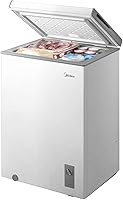
The Midea 3.5 Cu.ft Chest Freezer has a removable plastic basket and 3.5 cubic feet of storage. It converts between freezer and fridge modes and is designed for non-climate-controlled environments.
This model suits 1 to 3 people or a household that needs a second freezer. Its adjustable legs can help with placement, while the basket keeps smaller packages grouped during emptying and refilling.
If the freezer is in a garage, read how to defrost a chest freezer in a garage before starting. Location affects where you can safely place coolers, towels, and meltwater trays.
What should you clean before restarting?
Wipe the liner, corners, basket, drain area, and lid seal, then dry everything fully. Defrosting is the right time to remove spills before they freeze again.
Use only cleaners allowed by the manual, and avoid abrasive pads. A clean seal helps the lid close without crumbs or packaging trapped against it.
Wash and dry removable baskets separately if the manual allows it. For a broader routine, follow this guide to how to defrost a Hotpoint chest freezer, which covers the same key steps with brand-specific instructions.
How do you restart a chest freezer after defrosting?
Replace the drain plugs and caps, reconnect power, and wait for the cabinet to reach 0°F (-18°C) before refilling. Keep the lid closed while it cools.
The Midea 7.0 Cu.ft Chest Freezer offers 7 cubic feet of storage, freezer and fridge modes, a removable plastic basket, and adjustable legs. It is designed for non-climate-controlled environments.
Choose it when you need more capacity than the 3.5 cubic feet Midea model and want convertible storage. Its 22 in D x 30.3 in W x 33.5 in H dimensions also make measuring the intended space essential.
Before buying any replacement freezer, check the available floor area, lid clearance, and route through doorways. If you are comparing storage volume, see [How Many Cubic Feet is a Chest Freezer?
Tips That Work](/how-many-cubic-feet-is-a-chest-freezer/).
How can you slow frost buildup?
Keep the lid closed, seal food tightly, and inspect the lid seal regularly. Learn about common causes of freezer frost.
Warm food and repeated lid openings add moisture that can freeze on the walls.
Don't place warm food directly into the freezer. Let it cool safely first, and leave enough room to lift baskets and packages without scraping the liner.
If frost returns quickly around the lid, check for a dirty or poorly seated seal. For a model with automatic defrost, compare the best small freezer with auto defrost options.
What is the practical rule for defrosting a chest freezer?
Defrost when ice blocks storage space, prevents the lid from closing, or makes baskets difficult to remove. Schedule the job when you have safe cold storage and enough time to let the cabinet dry and cool.
Choose natural thawing over forced scraping. Use the drain when available, keep electrical connections dry, and return food only after the freezer reaches its target temperature.
If you need a smaller second freezer, compare How Much Does a Small Chest Freezer Cost? while considering capacity, placement, and defrost work together.
Frequently asked questions
How long does it take to defrost a chest freezer?
Allow several hours for a chest freezer to defrost, with extra time for thick frost and for the cabinet to cool again. The total depends on the ice buildup, room temperature, and the freezer's instructions.
Keep food in another freezer or an ice-packed cooler during the whole process.
Should I unplug a chest freezer before defrosting it?
Yes, unplug a chest freezer before manual defrosting and follow its manual for switches, drain plugs, and restart steps. Empty the cabinet, keep the lid open, collect meltwater safely, and reconnect power only after the interior is clean and dry.
What is the safest way to remove ice from a chest freezer?
Let the ice soften naturally, then remove loose pieces with the scraper supplied with the freezer or another plastic tool approved by the manual. Keep the tool nearly flat and use light pressure.
Never use knives, screwdrivers, ice picks, or metal scrapers.
Do I need to empty a chest freezer before defrosting it?
Yes, remove all food and removable baskets before defrosting so you can reach the walls, floor, drain, and corners. Another running freezer works best for temporary storage.
If you use a cooler, pack it with ice or frozen packs and keep the lid closed.