Champion 2500 Watt Inverter Generators: Gas or Dual Fuel?
For a champion inverter generator 2500, pick dual fuel if you want more run time on propane and fuel choice. Pick gas if you want the highest running watts and simplest warm weather use. Check running watts, not starting watts, first.
On this page (12 sections)
- How to read this guide
- What does 2500 watts actually run?
- Gas or dual fuel for a Champion inverter generator 2500?
- How quiet is a compact Champion inverter generator?
- Which outlets do you need?
- Electric start or recoil start?
- Can you link two Champion inverters in parallel?
- When should you step up in size?
- How do weight and size affect daily use?
- How do you set up and care for a dual fuel inverter?
- What covers and extras are worth buying?
- Which fuel should you pick in the end?
For a champion inverter generator 2500, the fuel choice matters more than the badge on the tank. Gas gives you more running watts on the same engine.
Propane gives you longer run time and cleaner storage between uses. We compared the compact Champion class around this size.
We checked specs for watts, run time, noise, weight and outlets. The rule stays simple: size the load first, then pick the fuel that fits how you will use it.
How to read this guide
This guide helps you choose a fuel type within the compact Champion output class. It also shows when a step up in size makes more sense.
Keep one number in mind through every section. That number is running watts, not starting watts.
What does 2500 watts actually run?
A 2500 watt class inverter runs essentials well, but it does not run a whole home. Think lights, phones, a television, a refrigerator and a fan.
Add up the running watts for each item you want on at once. Add a margin for motors that surge at start.
If the total gets close to the limit, you need a bigger unit.
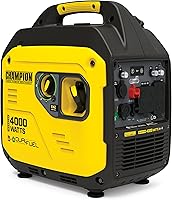
The Champion 4000-Watt Dual Fuel RV Ready Portable Inverter Generator gives 4000 starting watts and 3000 running watts on gas. On propane it gives 2700 running watts.
The 4000-watt model uses a 149cc 4-stroke engine. It runs at 60 hertz and draws 25 amps at the RV outlet.
Its 1.54-gallon gas tank gives up to 10 hours at 25 percent load.
Starting watts versus running watts
Starting watts help a motor turn on. Running watts keep it going.
A refrigerator needs both, but running watts set your real limit.
Many buyers shop by the first big number. That number can mislead you.
Always compare the running rating on the fuel you plan to use.
The drop from gas to propane is normal for dual fuel engines. The 4000-watt Champion drops 300 running watts on propane.
Rule: choose by running watts on your main fuel, then check starting watts second.
Gas or dual fuel for a Champion inverter generator 2500?
Dual fuel wins on choice and run time, while gas wins on power per gallon. Neither is better for every buyer.
Gas is easy to find and easy to refill. Propane tanks are clean to store and often last longer per fill.
Dual fuel lets you switch without buying a second machine.
The Champion 4500-Watt Electric Start Dual Fuel Portable Inverter Generator gives 3500 running watts on gas and 3150 on propane. Run time reaches 14 hours on gas and 21 hours on propane at 25 percent load.
The 4500-watt model uses a 212cc 4-stroke engine. Its 2.3-gallon gas tank gives up to 14 hours at 25 percent load.
Why propane run time is longer
Propane run time figures often use a 20 lb tank. A gas tank holds a smaller amount of energy in a compact frame.
That is why hours can double on propane.
Longer hours mean fewer night refills. That matters for backup power during an outage.
It also matters on a camping trip when you do not want to wake up to refuel.
On the 4000-watt Champion, propane stretches run time to up to 25 hours at 25 percent load. On the 4500-watt Champion, propane stretches run time to up to 21 hours.
Why gas gives more watts
Gasoline holds more energy per unit in this design. The engine makes more running watts on gas.
You get more headroom for a motor load or a second appliance.
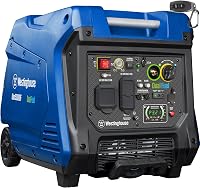
The Westinghouse tri-fuel model shows the same pattern at a larger scale. It gives 6600 running watts on gas and 5940 on propane.
Natural gas drops it further to 5280 running watts.
Rule: pick dual fuel for flexibility, and plan your load around the lower propane rating.
How quiet is a compact Champion inverter generator?
Noise drops a lot in the 2500 to 4500 watt inverter class compared with open frame units. Champion lists 64 dBA from 23 feet for the 4000-watt model.
The 4500-watt model lists 61 dBA from 23 feet. That level is close to a normal conversation in many settings.
Carbon monoxide safety matters more than noise. Champion includes CO Shield auto shutoff on both models here.
Never run any generator in an enclosed space.
Place the unit on dry, level ground with airflow on all sides. Point the exhaust away from people, pets, doors and windows.
The Westinghouse inverter lists around 60 dBA at 25 percent load. Its fully enclosed design helps limit sound.
Inverter engines also slow down when demand is low, which helps keep noise down.
Rule: use the decibel rating to compare models, and treat carbon monoxide shutoff as a must have.
Which outlets do you need?
You need at least one household duplex outlet and one RV or locking outlet for most uses. The 4000-watt Champion includes a 120V 25A TT-30R outlet, a 120V 20A household duplex outlet and a 12V automotive-style outlet.
The 4500-watt Champion includes a 120V 30A RV outlet, a 120V 20A household duplex outlet and a 12V regulated automotive outlet. That layout suits RV use and home basics at the same time.
Clean power matters for phones, laptops and televisions. Both Champion models here produce clean electricity with less than 3 percent THD.
The Westinghouse model adds a 120/240V 14-50R 50A outlet for home backup. It also includes a TT-30R 30A RV outlet and a GFCI 120V 20A duplex outlet.
A 12V automotive-style outlet helps charge small devices and accessories. It is not a substitute for a household outlet for larger loads.
Rule: match the outlet type to your RV plug and your home cords before you buy.
Electric start or recoil start?
Electric start suits frequent use and RV life, while recoil start suits light and simple use. The 4500-watt Champion uses electric start with an EZ Start Dial.
The 4000-watt Champion uses recoil start with the same dial and Cold Start Technology. Neither choice changes the fuel decision, so pick the start style you will enjoy using.
Weight also changes with frame size. The 4000-watt model weighs 51.8 lb.
The 4500-watt model weighs 99.2 lb.
The 4000-watt model uses a recoil start ignition system. The 4500-watt model uses an electronic ignition system for electric start.
Both use the EZ Start Dial to simplify fuel and choke steps.
Cold Start Technology appears on both Champion models. It helps the engine start in cold weather.
That feature matters for winter camping and cold outage mornings.
Rule: pick electric start if you start often, and recoil start if you want the lighter carry.
Can you link two Champion inverters in parallel?
Parallel use can double your power, but only on parallel ready models with the right kit. Champion sells the parallel kit separately.
The kit lets two compatible Champion inverters or power stations combine for more power and longer run time. That option helps when your load grows after you buy.
Our champion inverter generator parallel kit guide walks through fit and wiring in plain terms. Read it before you assume any two units will pair.
The 4000-watt Champion kit adds a standard 30A RV outlet and a 120V 30A locking outlet. The 4500-watt Champion kit adds a standard 50-amp RV outlet.
Check which kit matches your exact model number, 201050 or 201319. Parallel use does not remove the need to stay within each unit rating.
Rule: buy parallel ready only if you plan to grow, and confirm fit before you order the kit.
When should you step up in size?
Step up when your running load passes about 2000 watts in a 2500 class unit. At that point you have little margin for a motor surge.
The Westinghouse 8200 Peak Watt Tri-Fuel Portable Inverter Generator gives 6600 running watts on gas, 5940 on propane and 5280 on natural gas. It also offers a 50A outlet for home backup.
If you want to run an air conditioner, a well pump and a refrigerator together, size up now. If you want lights and phone charging during an outage, the compact class is enough.
Our best champion inverter generator for home backup guide helps you draw that line. The Westinghouse model uses a 298cc 4-stroke OHV engine with a cast iron sleeve.
It runs up to 17 hours at 25 percent load on a 3.9-gallon gas tank. It weighs 134.5 pounds, so it is a true step up in carry effort.
Rule: size up once, rather than struggling at the limit every outage.
How do weight and size affect daily use?
Weight decides where you can carry the unit and how often you will use it. The 4000-watt Champion at 51.8 lb is light for its class.
The 4500-watt Champion at 99.2 lb is much heavier and needs a handle and wheels for moves. Dimensions matter for storage too.
The 4000-watt model measures 17.9 by 11.7 by 19.7 inches. The 4500-watt model measures 23.2 by 17.7 by 20.1 inches.
Measure your storage space before you buy either one.
A wheel kit can help on longer moves, but it does not make a heavy unit light. Our champion inverter generator wheel kit guide explains fit and limits.
The Westinghouse model measures 27 by 20.9 by 21.7 inches. It uses never-flat wheels and a folding handle.
The 134.5-pound weight still needs two people for lifts.
Rule: choose the heaviest unit you can still carry safely to where you will run it.
How do you set up and care for a dual fuel inverter?
Set up takes a few minutes, and care focuses on oil, fuel and clean air. Add the included oil before first use.
Connect propane with the included hose if you run on propane. Let the engine warm up for a short time before you add load.
Run the unit outdoors with clear airflow on all sides. Keep exhaust away from doors and windows.
Check oil level before each use.
Store gas with a stabilizer if you will not use it for a while. Store propane tanks upright and closed.
Run the engine for a short period every few months.
Both Champion models include engine oil and an oil funnel. The 4500-watt model also includes a wrench, spark plug wrench and screwdriver.
The 4500-watt Champion has 0.5-quart oil capacity with a low oil shutoff sensor. It also has a no tool access panel and oil drain tube.
Our best portable battery power station guide is a useful contrast if you want silent power between generator runs. A battery station can handle phones and lights while the generator rests.
Rule: follow the oil and fuel steps in the manual, and run the unit outdoors every time.
What covers and extras are worth buying?
A cover, a parallel kit and a wheel kit are the three extras worth planning for. A cover protects the unit from dust and rain during storage.
Our best champion inverter generator cover guide compares fit and materials. A cover does not replace dry storage, but it helps in a garage or shed.
Extra fuel containers and a funnel help with refills. A long outdoor rated cord helps you place the unit away from your door.
Those low cost items make the generator easier to use every time.
Both Champion models here include a 3-year limited warranty with free lifetime technical support. The Westinghouse model also includes a 3-year limited warranty and lifetime technical support.
The 4500-watt Champion adds an Intelligauge with power meter. It shows voltage, frequency and operating hours.
The Westinghouse model adds an LED data center with voltage, frequency and lifetime hours.
If you want more power in the same brand, our champion inverter generator 11000 guide shows the top end of the line. Our champion inverter generator 4500 guide also breaks down gas versus dual fuel in that size.
Our best champion inverter generator with electric start guide covers start styles across the range.
Rule: buy a cover first, then add kits only for a use you can name.
Which fuel should you pick in the end?
Pick dual fuel if you camp, travel or face outages, and pick gas only if power is your top need. Dual fuel gives you a choice every trip and every outage.
Propane gives long hours for overnight use. Gas gives more running watts when you need them.
For a champion inverter generator 2500, dual fuel is the safer long term bet for most buyers.
Pick the 4000-watt Champion if weight is your top concern. Pick the 4500-watt Champion if electric start and longer gas run time matter more.
Pick the Westinghouse if you need true home backup with a 50A outlet.
The 4000-watt Champion suits camping, tailgating and RV basics at 51.8 pounds. The 4500-watt Champion suits RV and backup essentials with electric start at 99.2 pounds.
The Westinghouse suits home backup with 6600 running watts on gas at 134.5 pounds.
Each choice should start with a written load list. Write down must run items and their running watts.
Then match that list to the propane rating if you plan to use propane most.
Final rule: list your must run loads, size to running watts on propane, and buy dual fuel unless gas power alone decides it.
Frequently asked questions
What is the main difference between gas and dual fuel in a Champion inverter generator?
Gas usually gives higher running watts and fast refueling anywhere, while dual fuel adds propane for longer run time and a second fuel option. The propane running watts are often lower, so check both ratings before you decide which fuel you will use most.
Is a 2500 watt Champion inverter generator enough for home backup?
A 2500 watt class unit can cover lights, phones, a refrigerator and a few small loads, but it is limited for air conditioners and well pumps. Add up running watts for what must run at once, then leave headroom.
Larger models in this guide give more margin.
Can I run a Champion inverter generator in parallel?
Some Champion inverters are parallel ready with an optional kit sold separately, and that kit lets two compatible units combine output. Confirm the exact model numbers work together before you buy a kit.
Not every inverter in this class accepts parallel use.
Should I choose electric start or recoil start?
Electric start suits frequent use, RV trips and buyers who do not want to pull a cord. Recoil start is simpler and often lighter.
Both types in this guide offer dual fuel, so starting style and weight may matter more than fuel choice for your daily use.