Vacuum Sealers: The Complete Buying Guide
If you are asking which vacuum sealer should I buy, start with an external countertop model for most home kitchens. It handles meat, leftovers and freezer meals well, costs less than a chamber model, and works with roll bags you can cut to size. Choose a different style only when your food, space or budget points that way.
On this page (11 sections)
- Which vacuum sealer should I buy for a first time kitchen?
- What type of vacuum sealer should you buy?
- How strong should a vacuum sealer be for home use?
- Which name brand vacuum sealer is worth buying?
- What size bags and rolls should you buy first?
- Can a vacuum sealer handle meat, soups and delicate foods?
- Which vacuum sealer suits small counters and compact kitchens?
- How much should you pay for a vacuum sealer and bags?
- Which vacuum sealer should I buy based on my food habits?
- How should you learn a specific model before you buy?
- Final decision: which vacuum sealer should I buy today?
If you are wondering which vacuum sealer should I buy, match the system to the food you seal most often. Most home cooks do best with an external sealer that vacuums air from an open bag, then heat seals it shut.
A vacuum sealer does not make food last forever. It slows freezer burn by removing air and helps leftovers stay fresh longer, but freezer temperature, food quality and storage time still matter.
This guide compares main styles, seal modes and bag choices, and shows how four models fit different needs. Read how to use vacuum sealer machine first if you have never sealed food before.
Which vacuum sealer should I buy for a first time kitchen?
Most first time buyers should buy an external vacuum sealer with roll storage, a cutter and at least dry and moist modes. That setup covers common foods and lets you control bag size, without needing a chamber or commercial machine.
External sealers sit on the counter and use a seal bar to close the bag. You place the open end in the chamber, close the lid, and let the machine remove air and seal.
Counter space matters. Measure the machine length and leave room behind for the cord and in front to work.
Check the maximum bag width it accepts before you buy.
Our score weighs specs, features and buyer feedback against what you are shopping for. Start with the food you plan to freeze this month, as meat, soups, berries and cooked meals place different demands on sealing.
How to judge a vacuum sealer before you buy
Look for a clear lid or window so you can see bag placement. Misaligned bags cause weak seals, and an easy lock handle helps you close the lid with one hand.
Check seal modes next. Dry mode suits rice, nuts and frozen items with little liquid.
Moist mode adds heat or time for soups, marinated meat and juicy foods, and some models also offer a double seal.
Bag storage and a cutter save time. Built in storage keeps a roll neat, and a sliding cutter lets you make exact sizes for single portions.
Learn the full routine in how to use a vacuum sealer machine before your first session. Practice on an empty bag to learn the lid, vacuum cycle and seal bar without wasting food.
What type of vacuum sealer should you buy?
Choose the type by how you seal food, how often you seal it, and how much counter space you have. External models suit most homes, chamber models suit heavy liquid sealing, and upright and handheld models suit specific tasks.
An external sealer closes a textured bag from outside and works with cut to size rolls. It costs less and takes less room.
A chamber sealer puts the whole bag inside first, so liquids seal with fewer spills. Chamber models are larger and cost more.
An upright sealer stores bags vertically for small kitchens. Check bag types and widths before you buy.
A handheld sealer works with zipper bags, containers and canisters. It helps with stored food but is not a replacement for a main sealer.
If space is tight, compare the best vacuum sealer with bag storage options first.
External, chamber and upright models compared
External models are the best starting point for most buyers. They are lighter, easier to clean around the seal bar, and widely supported by bag rolls, but suction can pull liquid toward the seal.
Chamber models handle liquids better because the bag sits inside during vacuuming. Pressure changes help seal soups and marinades with less mess, though size, weight and price can be a lot for a first purchase.
Upright models can help if your counter is crowded. They often store the roll inside the body and stand in a smaller footprint, so check bag width, seal strength and cutter ease.
For a standard countertop choice, see our best external vacuum sealer guide. If you want a vertical design, read about best upright vacuum sealer models and measure height, depth and cord reach.
For a small kitchen, the best compact vacuum sealer category also deserves a look.
How strong should a vacuum sealer be for home use?
For home use, look for consistent vacuum and a clean heat seal rather than the highest suction number alone. A strong pump helps remove air from dense foods, but seal quality decides whether air stays out.
Suction is often shown in kPa. Higher numbers can mean faster air removal, but they do not show seal width or heat control.
A machine can pull air hard and still make a poor seal if the bag is wet or misaligned.
Double pumps can help remove air more evenly. The Nesco VS-12 uses a 130 watt double vacuum pump, according to the brand.
Seal width matters for freezer storage. A wider seal gives more margin if a bone, stem or liquid weakens one spot, and double seals add protection for moist foods and long storage.
Check best food sealer machine claims and ask what happens when juice is near the seal.
Dry, moist and double seal modes explained
Dry mode suits foods with little free liquid, such as rice, flour, nuts, coffee and already frozen items. The machine uses a shorter seal cycle because the bag edge stays clean.
Moist mode suits soups, sauces, marinated meat and fresh fruit. It uses more heat or a longer seal, and you may need to wipe the bag edge and leave extra space above the food.
A gentle vacuum option helps soft foods like bread, berries and chips. Gentle mode removes some air without pressing the food as hard.
Double seal mode adds a second seal line for liquids, sharp items and long storage. It takes a bit more time, but it can reduce leaks.
The FoodSaver V4400 uses automatic moisture detection to switch modes. Learn one brand in detail in how to use foodsaver preserve vacuum sealer, and read the manual for your exact model.
Which name brand vacuum sealer is worth buying?
A name brand vacuum sealer is worth buying when it gives you proven bag fit, steady sealing and support you can reach. FoodSaver and Nesco are widely known, which makes bags and parts easier to find.
Support matters after the first month, as gaskets wear and cutters dull. Check the bag width your machine accepts, since some work best with embossed bags from the same brand.
The Nesco VS-12 is compatible with any brand of vacuum sealer bags, according to the brand. FoodSaver works with 8 inch and 11 inch rolls, pre made bags, FreshSaver zipper bags, fresh containers and the Quick Marinator.
Read how to use nesco vacuum sealer vs-12 if the VS-12 is on your list, and see how to use foodsaver vacuum sealer vs2200 for another comparison.
FoodSaver, Nesco and Gasbye compared for home buyers
FoodSaver is a strong choice if you want a broad accessory system. The V4400 combines a standard sealer with a handheld unit for zipper bags and containers.
That 2-in-1 design can reduce the need for separate tools.
Nesco suits buyers who want manual control. The VS-12 offers Dry, Moist and Double modes with Normal or Gentle vacuum, which helps protect soft foods and seal wet foods with more care.
Gasbye suits buyers who want pulse control and replaceable parts. Its VS5166 offers Auto Vac & Seal and Pulse Mode, plus affordable replacement parts for gaskets, drip tray and cutter.
No brand wins for every kitchen. FoodSaver leads on accessories, Nesco on manual mode choice, and Gasbye on pulse control and part availability.
The anova precision vacuum sealer review is worth reading if you compare premium compact models.
What size bags and rolls should you buy first?
Buy rolls in the width your machine accepts, then cut bags to fit each food. Rolls give you control over size and reduce waste compared with pre cut bags alone.
Pre cut bags are faster for repeat portions, but rolls let you seal odd shapes.
An 11 inch roll is a common starting width for large meat cuts and family meals. An 8 inch roll can suit smaller portions and narrower machines, so measure your largest food first.
Leave space above the food inside the bag. That space helps the bag seal cleanly and keeps liquid away from the seal bar.
For soups, freeze the food flat first in a tray, then seal it.
The FoodSaver Custom Fit rolls come as three 11 x 16 foot rolls. You can cut each roll to suit your storage needs, and the multi layer design is BPA free for raw and cooked foods.
FoodSaver says these rolls are designed to work with FoodSaver vacuum sealing systems. The sealing strip heats to a precise temperature for FoodSaver material.
That match helps you get a secure airtight seal.
Check the best vacuum sealer rolls guide before you buy a bulk pack. Roll quality affects seal strength, puncture resistance and waste.
A cheap roll can cost more if it leaks or tears.
Compare best vacuum sealer bags for food if you prefer pre cut sizes. Pre cut bags save setup time for daily portions.
Rolls save money and fit odd shapes better.
How to cut bags and store sealed food
Cut the roll a few inches longer than the food. You need room for the seal bar and air removal, and a short bag can pull food into the seal area.
Smooth the bag flat and wipe the open edge clean. If liquid rises toward the seal, stop, adjust the bag or use moist mode.
Label each bag with food and date, and use the oldest first. Store meat in the coldest freezer spot, keep soups flat, and store dry goods in a cool dark pantry.
FoodSaver says meat preserved with its system in the freezer can last up to 3 years and still taste fresh. That is a maker claim, not a promise for every food, and fridge items are described as staying fresh up to weeks instead of days.
For long storage goals, read best vacuum sealer for long term food storage.
Can a vacuum sealer handle meat, soups and delicate foods?
Yes, a good home sealer can handle meat, soups and delicate foods if you use the right mode and bag prep. Meat is the easiest start, soups need more care, and berries and bread need gentle suction.
For meat, pat it dry and leave space at the top. Sharp bones can puncture bags, so wrap sharp ends or use a thicker bag, and double seals help with fatty or bone-in items.
For soups, freeze the food flat first. Chill cooked food quickly, then seal it flat so it stacks and thaws faster.
For berries and soft foods, use gentle vacuum or pulse mode. Remove air in short steps and seal before the food crushes.
The Gasbye VS5166 offers 95kPa suction with Pulse Mode control. Pulse mode lets you stop suction step by step for delicate foods.
Gasbye says its double seal helps reduce leaks during long water bath cooks for sous vide use. That claim matters if you seal for sous vide often.
For freezer use, the double seal also helps lock out air.
The Nesco VS-12 offers a Gentle Vacuum Option with Dry, Moist and Double modes. That mix helps you seal bread and berries without crushing them.
It also helps with marinated meats that can leak.
Its double heat seal technology aims to create stronger seals than a single seal machine. That can help prevent freezer burn and seal failures with soups and sauces.
The Easy-Lock Handle and viewing window help with bag placement.
For meat focused buying, see best vacuum sealer for meat. It covers bag thickness, bone protection and freezer habits.
Meat quality still matters more than any machine claim.
Sous vide, marinades and freezer meals
Sous vide needs a seal that holds in hot water for a long cook. A double seal and a clean bag edge help reduce leaks, so use bags rated for that method and follow food safety times.
Marinades can be sealed with the food for storage. Vacuum sealing can help a marinade coat meat more evenly, but do not leave raw meat at room temperature while you prep bags.
Freezer meals seal best when they are cool and flat. Cook, chill, portion, seal, label and freeze flat to reduce spills and save freezer space.
Handheld sealing has a place for containers and zipper bags. The FoodSaver V4400 includes a handheld sealer for FreshSaver bags, containers and canisters, which helps you access stored food without cutting a main bag.
For jar sealing, check best vacuum sealer for mason jars. Jar sealers use a different method from roll bags.
Which vacuum sealer suits small counters and compact kitchens?
A compact sealer should fit your counter, accept the bags you need, and still seal wet foods well. Small size alone is not enough, so check bag width, seal modes and roll storage.
The Nesco VS-12 measures 15.75 x 8 x 4.5 inches and weighs 6 pounds. It accepts bags up to 11.8 inches wide, which suits many smaller counters.
The Gasbye VS5166 measures 15.7 x 7.8 x 4.7 inches and weighs 6.5 pounds. It accepts 11 inch rolls, and built in storage and a cutter keep the area tidy.
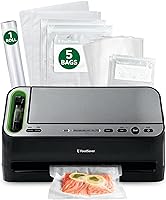
The FoodSaver V4400 measures 11 x 20 x 12 inches and weighs 10 pounds. It is larger, but adds a handheld sealer and starter kit, which can be hard to store in a small kitchen.
If you want a vertical footprint, read best upright vacuum sealer, and for a narrow counter see best compact vacuum sealer.
Setup and care for small kitchens
Unbox the sealer and check the seal bar, gasket and cutter. Wipe the seal area with a clean dry cloth, and place the machine where you can work in front of it without lifting it each time.
Store the roll inside the machine if it has built in storage. That keeps the roll clean and saves shelf space, and spare rolls should stay in a cool dry spot away from heat.
Clean the drip tray and seal area after wet foods. The V4400 has a patented removable drip tray that is dishwasher safe, and the Gasbye model also lists a removable drip tray.
Replace foam gaskets when they look worn or do not seal evenly. Keep the cutter blade clean and dry.
If you seal often, an best automatic vacuum sealer for food style may save time.
How much should you pay for a vacuum sealer and bags?
Plan for the machine, the bags you will use each month, and replacement parts over time. A cheaper machine can cost more if bags leak, and a dearer machine wastes money if you seal only a few items a year.
Bags are the ongoing cost. Rolls let you cut exact sizes and cut waste, while pre cut bags cost more per bag but save time.
Reusable zipper bags can look cheap at first, but Gasbye does not recommend them for food safety and cost reasons. Single use bags often seal tighter and reduce leak risk, as covered in best vacuum sealer bags for food.
Rolls can be more efficient still. The FoodSaver Custom Fit pack gives you three 11 x 16 foot rolls to cut as needed.
Chamber bags are smooth and a different category, so see best chamber vacuum sealer bags if you later choose a chamber model.
Bag cost, waste and seal failures
Bag waste comes from bad cuts and failed seals. Measure twice before you cut a roll, and leave length for the seal bar and for food that expands when frozen.
Failed seals often come from moisture on the bag edge. Wipe the edge, keep liquid below the seal line, and freeze soups flat first.
Sharp foods can puncture bags over time. Bones, shells and frozen edges can create slow leaks, so wrap sharp points or use a thicker bag.
Thinner low cost bags can be more prone to punctures, according to Gasbye, which recommends name brand or Gasbye bags for best results. Test a new roll with a small batch first, freeze it, and check the seals after a week.
For accessories see best vacuum sealer accessories, and for a step up compare best commercial vacuum sealer.
Which vacuum sealer should I buy based on my food habits?
Use this rule: pick the sealer that handles your most frequent food with the least waste. For weekly meat, pick strong seals and bone friendly bags.
For soups, pick moist modes and double seals. If you cook for one or two people, a compact external model may be enough, with built in storage and a cutter saving space and time.
If you prep family meals, bag width and seal speed matter more. An 11 inch roll seals larger cuts and flat meal bags, and a larger machine can fit if you have space.
If you seal garden produce, gentle vacuum matters, as berries crush under full suction. For sous vide, double seals and boil safe bags matter, and the FoodSaver rolls are described as freezer, refrigerator, microwave and boil safe.
The FoodSaver V4400 works with FreshSaver zipper bags, fresh containers, the Quick Marinator, optional mason jar sealers and bottle stoppers.
FoodSaver says the V4400 reaches an optimal vacuum level and an airtight seal, with automatic moisture detection and LED indicators. The built in roll storage and cutter help you make custom bags.
If you want handheld sealing for stored food, read best handheld vacuum sealer for food. A handheld tool is a helper, not a main sealer, so pair it with a full sealer for roll bags.
If you want chamber sealing for liquids, compare best chamber vacuum sealer for home use. Chamber models cost more and take more space, and they suit buyers who seal liquids very often.
A simple decision guide for first time buyers
First, list your top five foods to seal and rank them by frequency. That list shows which modes matter most.
Second, measure your counter and storage space and choose a model that fits. Leave room to work in front of the machine.
Third, pick a bag width, as an 11 inch roll suits most family meals and an 8 inch roll suits smaller portions.
Fourth, choose your control style. Automatic models are fastest for repeat tasks, and manual models with Dry, Moist and Double modes give more choice.
Fifth, count included bags and rolls, as starter bags help you learn fast.
Finally, check support and parts, as the Gasbye model lists replacement gaskets, drip tray and cutter, and the Nesco model accepts many bag brands. Read how to use anova precision vacuum sealer if you compare a precision compact model, and read instaseal vacuum sealer reviews for an upright style.
How should you learn a specific model before you buy?
Learn the controls for your short list model before you order. Each brand uses different buttons, modes and bag steps, and a guide for your exact model can save failed seals.
Start with the lid and lock and learn to align the bag. Then learn the vacuum cycle, including timing and when the seal starts, by practising with an empty bag.
Learn the seal modes for wet and dry foods. Moist mode often adds heat or time, gentle mode reduces suction for soft foods, and double mode adds a second seal line.
Read foodsaver fm2000 vacuum sealer reviews and foodsaver fm2100 vacuum sealer reviews if you compare older FoodSaver models. Read anova precision vacuum sealer review for a compact precision style.
For the V4400, place the bag in the chamber and let automatic bag detection work, with LED indicators guiding you. For the VS-12, use the viewing window and Easy-Lock Handle, and choose Dry, Moist or Double mode with Normal or Gentle vacuum.
For the Gasbye VS5166, use Auto Vac & Seal for daily tasks and Pulse Mode for delicate or moist foods.
Practice steps and first seals
Practice with dry rice first, as it is forgiving and shows you the seal cycle. Cut a bag from the roll, seal one end, add rice, and seal the open end.
Watch the bag tighten and check the seal line for a clean, even seal without thin spots. Next, practice with marinated meat, wipe the bag edge, leave space above the food, and use moist mode.
Next, practice with berries in gentle or pulse mode. Remove air in steps and seal before the berries crush, as a flat single layer works best.
Label and freeze your practice bags, then check them after a week for leaks or freezer burn. If you grind meat at home, a how to use kitchenaid sausage stuffer guide can pair well with sealing.
Final decision: which vacuum sealer should I buy today?
Buy the FoodSaver V4400 for a full system with handheld sealer and starter kit, the Nesco VS-12 for manual Dry, Moist and Double modes, the Gasbye VS5166 for pulse control and replaceable parts, or the FoodSaver Custom Fit rolls for 11 inch rolls to cut to size.
That keeps the choice tied to your foods and space. For most first time buyers, an external sealer remains the safest start, as it is smaller, cheaper and easier to learn.
Our score weighs specs, features and buyer feedback against what you are shopping for. Start with how to use vacuum sealer machine, practice with dry foods first, then move to moist and gentle modes, and label every bag by date.
Compare best vacuum sealer with bag storage for counter space, then check best external vacuum sealer for seal modes and included bags.
Frequently asked questions
Which vacuum sealer should I buy as a first time buyer?
Most first time buyers should get an external vacuum sealer with built in roll storage and a cutter. It seals dry and moist foods, lets you make custom bag sizes, and costs less to run than a chamber model.
Check the bag width it accepts before you buy.
What is a name brand vacuum sealer worth paying for?
A name brand vacuum sealer usually gives you consistent heat sealing, known bag compatibility and easier access to replacement parts. You pay for reliability and support, not just extra power.
Compare seal modes and included bags, not only suction claims.
Should I buy a vacuum seal bag machine or a chamber sealer?
An external vacuum seal bag machine suits most homes because it is smaller and cheaper. A chamber sealer suits frequent liquid sealing and very heavy use, but it takes more space and money.
Your food habits should decide, not the product name.
Do vacuum seal bags from different brands work together?
Many textured vacuum seal bags work across brands, but fit and seal quality vary. Check the width your sealer accepts and how the textured side aligns with the seal bar.
Test a small batch before you buy a large pack of rolls.