Vacuum Sealer vs Ziploc Bags: Which Protects Frozen Food? (November 2026)
A vacuum sealer protects frozen food longer, but Ziploc bags are simpler for short storage. In this vacuum sealer vs Ziploc bags comparison, choose vacuum sealing for months of freezer storage and Ziploc bags for quick, everyday freezing.
On this page (12 sections)
- Vacuum sealer vs Ziploc bags: the quick verdict
- Freezer burn and air exposure
- Storage time for frozen food
- How the FoodSaver V4400 works
- How the Chef Preserve compact sealer works
- How Ziploc slider and freezer bags work
- Cost, waste and bag reuse
- Best uses by food type
- Ease of use and kitchen space
- Care, cleaning and safety
- Who should buy which option
- Final verdict: vacuum sealer vs Ziploc bags
A vacuum sealer protects frozen food longer, but Ziploc bags are simpler for short storage. In this vacuum sealer vs Ziploc bags comparison, choose vacuum sealing for months of freezer storage and Ziploc bags for quick, everyday freezing.
Vacuum sealing removes air from the package. Ziploc bags close with a zipper or slider, so some air usually stays inside.
That difference drives freezer burn, flavor loss and storage time.
We compared the specs, features and included items for 2 vacuum sealers and 2 Ziploc bag options. Our score weighs specs, features and buyer feedback against what you want from frozen food storage.
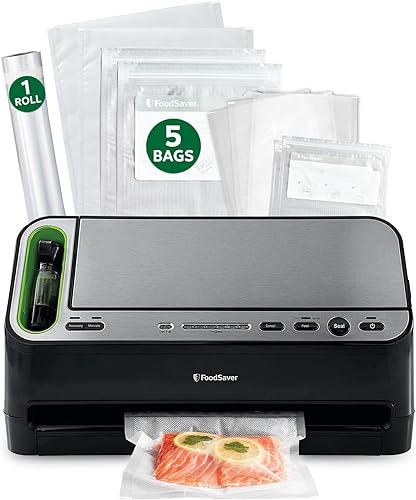 Best for long-term freezing
FoodSaver V4400 2-in-1 Vacuum Sealer Machine

Vacuum sealer vs Ziploc bags: the quick verdict
Vacuum sealing wins for long storage, and Ziploc bags win for simple, fast freezing. The FoodSaver V4400 and Chef Preserve remove air, while both Ziploc options rely on a zipper closure.
FoodSaver says meat preserved with its system in the freezer can last up to 3 years. Ziploc Gallon Freezer Bags help prevent freezer burn for up to 12 weeks in ground beef testing.
That time gap is the core trade-off.
If you freeze food for a few weeks, Ziploc bags may be enough. If you buy meat in bulk or prep meals for months, vacuum sealing protects better.
| Feature | Vacuum sealers | Ziploc bags |
|---|---|---|
| Air left in package | Very little | Some air remains |
| Longest freezer claim here | Up to 3 years for meat with FoodSaver system | Up to 12 weeks for ground beef with Ziploc Freezer Bags |
| Machine needed | Yes for FoodSaver, handheld unit for Chef Preserve | No |
| Bag reuse | Chef Preserve bags are reusable | Ziploc bags are reusable after hand-washing |
| Best use | Bulk meat and meal prep | Everyday freezing and portioning |
Freezer burn and air exposure
Vacuum sealing limits freezer burn better because it removes most of the air. Air inside a package helps dry food and dull flavor over time.
Ziploc Gallon Freezer Bags use 9 Point Protection and help prevent freezer burn for up to 12 weeks in ground beef testing. That is useful protection, but it is still a zipper seal, not a vacuum seal.
The FoodSaver V4400 is described as reaching an optimal vacuum level and an airtight seal. It also has automatic moisture detection, which switches to the correct mode for foods with liquid.
Chef Preserve seals a bag in 5 seconds and shuts off automatically. Its bags are described as odor-free and leak-proof, and they preserve flavor, nutrition and texture.
For fatty fish, ground meat and homemade sauces, removing air matters more. For bread, snacks and vegetables you will use soon, a Ziploc bag can do the job.
Storage time for frozen food
Vacuum sealed food can stay frozen far longer than food in zipper bags. FoodSaver says meat in its system can last up to 3 years in the freezer and stay freezer burn free.
That claim applies to meat preserved with the FoodSaver system. It does not mean every food keeps the same quality for 3 years.
Fatty foods, cooked dishes and produce each have their own limits.
Ziploc Gallon Freezer Bags help extend food life and protect your food investment. Their freezer burn protection figure comes from ground beef testing, so other foods may differ.
Use Ziploc bags for food you plan to eat within a few weeks. Use vacuum sealing for bulk purchases, hunting or fishing catches and batch-cooked meals.
Label every package with the food and date. Even a vacuum seal cannot help you use food you forgot you had.
How the FoodSaver V4400 works
The FoodSaver V4400 suits large batches because it makes custom bags and seals them automatically. It is a 2-in-1 system with a standard sealer and a handheld function.
Automatic bag detection means you put the bag in the vacuum chamber and the machine does the rest. LED light indicators guide you through the sealing process.
Built-in roll storage and a cutter let you make custom sized bags. That helps when you seal whole chickens, roasts or flat portions that do not fit a pre-made bag.
The starter kit includes an 11 inch by 10 foot vacuum seal roll, 3 quart vacuum seal bags and 2 gallon vacuum seal bags. It also includes 3 quart vacuum zipper bags and 2 gallon zipper bags.
Automatic moisture detection helps with juicy foods. The patented removable drip tray catches overflow liquid and is dishwasher safe.
This machine measures 11 x 20 x 12 inches and weighs 10 pounds. It needs counter space, so measure your kitchen before you buy.
How the Chef Preserve compact sealer works
The Chef Preserve suits small spaces and resealable bags because it is handheld and battery powered. It weighs 2.2 pounds and works like a pepper grinder in size.
You press the button to start, and it seals a bag in 5 seconds. It shuts off automatically when done, so you do not need to watch the cycle.
It comes with 30 vacuum bags in total. There are 15 small and 15 medium bags, grouped into 3 packs of 10 bags each.
The bags are dishwasher, freezer, refrigerator and microwave safe. They are BPA-free, odor-free and leak-proof, according to Chef Preserve.
One battery charge is enough to vacuum seal 1000 bags. That makes it useful for travel, RVs, camping and outdoor adventures.
For our guide to which vacuum sealer should i buy, this model is the compact option. It avoids heavy countertop machines and single-use rolls.
How Ziploc slider and freezer bags work
Ziploc bags are the simplest option because you fill, close and freeze with no machine. The slider bags and freezer bags use different film and closures for different jobs.
Ziploc Slider Storage Bags use Power Shield Technology. The gallon bags have tough, flexible film that is strong against punctures and tears.
The slider closure makes the bags easy to close and open. You can see the slider move across the seal, which helps you check that it is closed.
An expandable bottom makes filling easier. That helps with bulky items like frozen vegetables, snacks and sandwich portions.
Ziploc Gallon Freezer Bags use a Stay Open design. The stand-up bottom helps you fill them with less spills and less mess.
Both Ziploc options are reusable. Wash them by hand, air-dry them and reuse them, following the product usage instructions.
Do not reuse Ziploc bags after storing raw meat, fish, eggs or potentially allergy-triggering foods. Use a fresh bag for those foods.
Cost, waste and bag reuse
Ziploc bags cost less to start, but vacuum sealing can save more food over time. A machine adds upfront cost, while bags alone need no equipment.
FoodSaver uses vacuum seal rolls and pre-made bags. You can cut custom sizes from the roll, which can reduce waste for odd shapes.
You still pay for bags with each seal.
Chef Preserve includes 30 reusable bags. Reusable bags cut single-use waste and lower the cost per seal after the first uses.
Ziploc Slider bags come as 104 total bags in packs of 4. Ziploc Gallon Freezer Bags come as 132 total bags in a 2-pack.
Both Ziploc types are reusable after hand-washing and air-drying. That helps, but zipper bags still trap air each time you close them.
If you freeze small amounts, bags alone are cheaper. If you freeze bulk meat often, a sealer can pay for itself by preventing waste.
For bag choices, see our best vacuum sealer bags for food guide. It helps you match bag type to the sealer you own.
Best uses by food type
Vacuum sealing suits meat, fish and meal prep that you store for months. Ziploc bags suit produce, snacks and leftovers you will use sooner.
For meat, vacuum sealing is the stronger choice. Our best vacuum sealer for meat guide covers machines built for that job.
For fish, air removal helps protect delicate flesh. See our best vacuum sealer for fish guide if you freeze seafood often.
For sous vide cooking, you need bags made for that use. Our best vacuum sealer bags for sous vide guide explains those options.
Ziploc freezer bags work well for berries, vegetables and bread. Press out extra air before sealing to help limit freezer burn.
Ziploc slider bags work well for snacks, sandwiches and dry goods. Their puncture-resistant film helps with sharp edges.
For meat portions, our best vacuum sealer bags for meat guide helps you pick bags that fit your sealer. The right bag matters as much as the machine.
Ease of use and kitchen space
Ziploc bags are fastest, while vacuum sealers need a few more steps but seal tighter. Choose based on how often you freeze food and how much space you have.
With Ziploc bags, you fill the bag, press out air and close the zipper or slider. There is no warm-up, no sealing strip and no cleanup beyond washing the bag if you reuse it.
With the FoodSaver V4400, you cut or load a bag, place it in the chamber and let automatic bag detection run. LED indicators guide you through the process.
The FoodSaver also works with 8 inch and 11 inch vacuum seal rolls and all pre-made bag sizes. It works with FreshSaver zipper bags, fresh containers and a quick marinator.
Optional accessories include mason jar sealers and bottle stoppers. Those add uses beyond freezer storage, but they are extra purchases.
Chef Preserve is simpler: press the button and wait 5 seconds. It is wireless, so you can seal at a table, in an RV or outdoors.
The FoodSaver Mini is another handheld option. Check our FoodSaver Mini Handheld Vacuum Sealer review if you want a smaller handheld tool.
Care, cleaning and safety
Both options need clean bags, dry seals and a freezer at a safe temperature. Good habits matter more than the brand you choose.
For vacuum sealers, keep the sealing area clean and dry. Liquid on the seal can weaken it, so the FoodSaver drip tray and moisture detection help with juicy foods.
For chamber-style sealing, our best chamber vacuum sealer bags guide lists bags made for those machines. Do not use regular zipper bags in a chamber sealer unless the bag is made for it.
Wash reusable bags by hand and air-dry them fully before reuse. Discard any bag with tears, holes or a damaged seal.
Check the seal before freezing. If a vacuum bag looks loose after a few minutes, reseal it or use the food soon.
Keep your freezer at 0 degrees Fahrenheit or below. Label packages with contents and date, and rotate older food to the front.
Thaw frozen meat and fish in the refrigerator, not on the counter. Use thawed food promptly and do not refreeze it without cooking it first.
Who should buy which option
Buy a vacuum sealer if you freeze bulk food for months, and buy Ziploc bags if you freeze small amounts for weeks. Your habits decide the winner in this vacuum sealer vs Ziploc bags choice.
Choose the FoodSaver V4400 if you seal large batches and want custom bags. It suits hunters, bulk shoppers and meal preppers with counter space.
Choose Chef Preserve if you want portability and reusable bags. It suits small kitchens, RVs, camping and anyone who dislikes bulky machines.
Choose Ziploc Slider bags if you open and close packages often. They suit snacks, produce, sandwiches and dry goods.
Choose Ziploc Gallon Freezer Bags if you want simple freezer storage with no machine. They suit vegetables, berries, bread and short-term freezing.
Many households use both. Vacuum seal bulk meat for the back of the freezer, and keep Ziploc bags for daily produce and leftovers.
Final verdict: vacuum sealer vs Ziploc bags
Pick vacuum sealing for long-term protection and Ziploc bags for simple short-term freezing. FoodSaver says its system can keep meat frozen for up to 3 years, while Ziploc freezer bags help prevent freezer burn for up to 12 weeks in ground beef testing.
If you want the strongest protection, choose the FoodSaver V4400 for custom bags and batch sealing. If you want compact resealable sealing, choose Chef Preserve with its 30 reusable bags.
If you want no machine and fast freezing, choose Ziploc Gallon Freezer Bags. If you want easy opening and reuse, choose Ziploc Slider bags.
Start with the food you freeze most. Bulk meat and meal prep point to vacuum sealing, and everyday freezing points to Ziploc bags.
Frequently asked questions
Do Ziploc bags prevent freezer burn as well as vacuum sealing?
No. Ziploc Gallon Freezer Bags help prevent freezer burn for up to 12 weeks in ground beef testing, while vacuum sealing removes air for longer protection.
FoodSaver says meat preserved with its system in the freezer can last up to 3 years.
Choose based on how long you plan to store food.
Can you vacuum seal Ziploc bags?
That depends on the bag and sealer. The FoodSaver V4400 works with FoodSaver zipper bags and its handheld function, and Chef Preserve uses its own reusable vacuum bags.
Regular Ziploc slider and freezer bags are designed for zipper closure, not vacuum sealing, so use bags made for your sealer.
Which is cheaper, a vacuum sealer or Ziploc bags?
Ziploc bags cost less to start because you need no machine. A vacuum sealer adds upfront cost plus rolls or bags, but it can reduce waste over long storage.
Chef Preserve includes 30 reusable bags, while FoodSaver includes rolls and pre-made bags in its starter kit, so compare ongoing bag use.
How long can food stay frozen in each option?
Ziploc freezer bags are described for freezer burn protection up to 12 weeks in ground beef testing. FoodSaver says meat preserved with its system in the freezer can last up to 3 years and still taste fresh.
Actual time depends on food type, freezer temperature and how well the package is sealed.


