How to Defrost a Chest Freezer in a Garage
To defrost a chest freezer in a garage, unplug it, move food to cold storage, contain meltwater, and let frost soften before removing loose ice. Dry the interior, restart it, and confirm 0°F (-18°C) before refilling.
On this page (10 sections)
- When should you defrost a chest freezer in a garage?
- What supplies do you need before you unplug it?
- How do you stage food during a garage defrost?
- How do you contain meltwater on a garage floor?
- How do you loosen frost without damaging the freezer?
- Which freezer features make garage defrosting easier?
- How do you clean and dry the freezer before restarting?
- How do you know the garage freezer is ready to refill?
- How do you defrost a chest freezer in a garage without repeat frost?
- What is the safest order for a garage defrost?
To defrost a chest freezer in a garage, unplug it, protect the food, manage meltwater on the concrete, and let the frost soften naturally. You can handle the garage setup by keeping the cord dry, catching water in a shallow tray, and staging food in a cooler or another freezer.
This guide covers how to defrost a chest freezer in a garage from start to finish. It explains drainage, meltwater containment, and food staging, which are the parts that differ most from an indoor defrost.
Read your freezer manual first for its drain location, approved tools, and restart steps.
When should you defrost a chest freezer in a garage?
Defrost when frost thickness starts to crowd the walls, basket, or lid seal. Don't wait until you can't close the lid or reach the food at the bottom.
Garage temperature changes can speed up frost in some seasons. Warm, humid air enters every time you open the lid, and the moisture freezes on cold walls.
Summer heat can make meltwater flow faster once you start, while winter cold can slow the whole job.
Pick a day when you can keep food cold for several hours. A garage defrost is easier when no one needs to rush back into the freezer for dinner.
Plan around grocery runs so the cabinet is as empty as possible.
Check the manual for the frost limit it recommends. That guidance matters more than any general rule of thumb because models differ in wall design and drain placement.
What supplies do you need before you unplug it?
Gather cold storage, towels, a shallow tray, and a thermometer before opening the lid. Add a plastic scraper only if the manual allows one.
A basket helps carry packages, but it is not insulation. Keep coolers close to the freezer so food spends less time in garage air.
Lay towels where water might escape under the cabinet, since a sloped garage floor can spread a small puddle. Keep the cord, plug, and outlet away from the drain path.
Clear boxes, paint cans, and floor mats so you can reach the drain and walk around the open lid. Do not move a heavy, full freezer just to reach a drain unless you can do it safely with help.
How do you stage food during a garage defrost?
Move food into another running freezer when you can, or pack it tight in insulated coolers with ice. Keep cooler lids closed and open them as little as possible.
Label coolers by food type so you don't open each one to look. Put the most perishable items in first and plan to return those packets first when the freezer is cold again.
Keep coolers in the coolest part of the garage, out of direct sun.
Food that still has ice crystals, or stays at 40°F or below, can generally be refrozen, though quality may change. Discard perishable food held above 40°F for more than 2 hours, and never taste it to judge safety.
Use a thermometer in the cooler if you have one. A quick check during a long defrost tells you whether the ice is holding or whether you need to add more.
How do you contain meltwater on a garage floor?
Place a shallow tray under the drain, lay towels along the floor slope, and check the tray often. Meltwater may start slow, then speed up as the walls warm.
Find the inner plug and outer drain cap before melting begins. Follow the manual's order for opening them, and keep loose ice away from the opening so it does not block flow.
Without a drain, lift loose ice into a plastic bowl and absorb water with towels. Do not tip the cabinet to pour water out, as that can strain the compressor area and spill water onto the cord.
A garage floor drain is not a substitute for a tray. The tray keeps water from running under boxes, reaching the outlet, or spreading across the concrete.
How do you loosen frost without damaging the freezer?
Leave the lid open, let the frost soften, and remove only ice that moves easily. Use light pressure and stop if ice feels bonded to the wall.
If the manual allows it, keep a plastic scraper nearly flat and work from the top down. Put small chunks in the bowl you already have out for meltwater.
Never use a knife, screwdriver, ice pick, or metal scraper, since a puncture can damage the liner or a cooling line. Do not use a hair dryer, heat gun, or space heater aimed at the cabinet, and do not pour hot water inside unless the manual allows it.
Garage cold can slow this step in winter. Give it more time instead of forcing the ice.
How does a drain help with a garage defrost?
A drain lets meltwater leave the cabinet in a controlled path instead of pooling on the floor. It works best when you open it as instructed and watch the tray below.
The FRIGIDAIRE EFRF7003-BLACK Chest Deep Freezer has an easy access exterior defrosting drain, which can make cleanup simpler in a garage. It is a 7 cu. ft. freestanding chest freezer with a removable vinyl-coated wire basket and an adjustable thermostat with seven settings.
That size suits larger households and meal prep, but it also means more food to stage. Measure the space around it before you plan a defrost day, since a full 7 cu. ft. cabinet takes longer to empty and refill.
Which freezer features make garage defrosting easier?
Look for a reachable drain, a removable basket, and a cabinet that fits your garage layout. Those features reduce the time food spends out of storage.
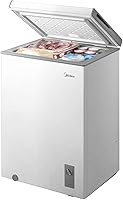
The Midea 3.5 Cu.ft Chest Freezer is built for non-climate-controlled spaces, with a stated operating range of 0°F to 110°F in freezer mode. It converts between freezer and fridge modes, and Frigidaire-style baskets are not the only option for organization, since this model has a removable plastic basket.
Its smaller footprint, at 21.5 inches wide, can leave more room to work around the cabinet. The maker says it keeps items frozen for up to 48 hours after losing power, which can help if a defrost runs long, though you should still stage food as if it won't.
Compare freezer types before your next defrost cycle with our guide to Manual Defrost vs Frost Free Chest Freezer. A manual defrost model will need this job, while a frost free model may not, so the trade-off matters at purchase time.
How do you clean and dry the freezer before restarting?
Wipe the walls, floor, corners, and drain area, then dry everything fully before you plug it back in. Defrosting is the best time to remove spilled food that can freeze in place later.
Use only cleaning products the manual allows, without abrasive pads. Remove the basket and wash it separately if needed, then dry it before it goes back in.
Check the lid seal for crumbs or packaging caught against it, and replace any drain plugs or caps.
Inspect the drain area once more while the cabinet is empty. A cap left off after restart can leak meltwater later and waste cooling.
Keep the spare caps described above in a dry spot, not on the floor where they can roll away.
Give the interior a final towel pass. Residual water can refreeze into a thin layer, which is exactly what you just removed.
How do you know the garage freezer is ready to refill?
Confirm the interior is at 0°F (-18°C) or below before you return food. Restart with the lid closed, then allow time for the cabinet to cool.
Follow the manual for the thermostat setting and any waiting period after plugging in. Place a thermometer where you can read it without digging through food, away from direct contact with the walls.
Give it time to settle after you place it.
Return the most perishable food first, since it has been out the longest. Keep the lid open for as short a time as possible during refilling, especially in a warm garage.
Arrange food so everyday items stay near the top.
For a broader look at models before you buy, see our Best Manual Defrost Chest Freezers guide. It helps you compare drain access and capacity against the defrost work you just did.
How do you defrost a chest freezer in a garage without repeat frost?
Limit lid-open time, close packages tight, and check the seal before frost builds up again. Small habits slow the moisture that causes the next defrost cycle.
Keep a simple food list on the lid so you open it once with a plan. Cool warm food safely before it goes in, since warm packages add moisture and heat.
Wipe spills soon, while the freezer is running.
Compare costs before you replace a freezer that needs frequent defrosting. Our guides to How Much Does a Small Chest Freezer Cost? and How Much Does a Large Chest Freezer Cost? break down what different sizes usually involve.
For model-specific steps, read How to Defrost a Hotpoint Chest Freezer if that is your brand, and keep How to Defrost a Chest Freezer as your general checklist.
What is the safest order for a garage defrost?
Stage food, unplug, let frost soften, contain meltwater, dry, restart, and refill only when cold. That order protects food, the garage floor, and the freezer itself.
Choose a freezer with a reachable drain if garage defrosting is a frequent chore. Choose a smaller cabinet if staging food is the hard part.
Either way, plan the defrost before frost crowds the walls, and keep the cord and outlet dry throughout.