How to Choose a 21 Cu Ft Chest Freezer
Choose a 21 cu ft chest freezer only if you have a clear need for extensive frozen storage and enough room for delivery, ventilation and lid access. Measure the full route and plan how you'll organize food before choosing this large capacity.
On this page (11 sections)
- Who should choose a chest freezer 21 cu ft?
- How much food should you plan to store?
- What should you measure before choosing a large freezer?
- How do you check the delivery route?
- How much lid and standing space do you need?
- How should you organize 21 cu ft of storage?
- Which smaller products help with freezer planning?
- What power and placement questions matter?
- How should you maintain a large chest freezer?
- How much does a large chest freezer cost?
- Is a 21 cu ft chest freezer right for you?
A 21 cu ft chest freezer makes sense when you regularly store a large food reserve and have a dedicated place for a wide, deep cabinet. It is not a good choice based on capacity alone.
You also need a clear delivery route, enough standing space, proper ventilation and a simple way to find food at the bottom.
Start by measuring the final location and the route to reach it. Then list the largest food load you expect to store at one time, including food already frozen when your next bulk shop or seasonal harvest arrives.
A 21 cu ft cabinet can reduce pressure on a refrigerator freezer, but it also creates a larger organizing task. If your needs are smaller, compare a chest freezer 17 cu ft option before committing to the largest size.
Who should choose a chest freezer 21 cu ft?
Choose a chest freezer 21 cu ft for large, regular storage needs, not for occasional overflow. This size is most useful when you can name the food that will fill it and have a routine for sorting, labeling and rotating that food.
A large chest freezer may suit you if you:
- Buy meat or other frozen food in large quantities.
- Prepare many meals ahead of time.
- Store a substantial garden harvest.
- Need separate zones for meat, vegetables, prepared meals and bread.
- Have enough room for the cabinet and its open-lid area.
- Can reach the bottom without unsafe lifting or repeated unloading.
A smaller freezer may be a better fit if you mainly need extra meals, a few bags of vegetables or occasional holiday storage. Our guide to the best medium size chest freezer options can help you compare a less demanding footprint.
The best capacity is the one that matches your busiest planned storage period. Do not count only the food you have today.
Count what will be inside when new groceries arrive before older food has been used.
How much food should you plan to store?
Plan around your largest expected food load, then leave working room for baskets, packages and safe access. Cubic feet describes cabinet volume, but it does not tell you exactly how many pounds, boxes or meal containers will fit.
Make a simple inventory before shopping:
- List the food categories you expect to freeze.
- Estimate the number of packages in each category.
- Identify the largest cartons, trays or cuts of meat.
- Note which foods need frequent access.
- Decide which foods can stay at the bottom for longer periods.
- Leave space to lift and move items without emptying the cabinet.
Package shape matters. Flat bags can stack differently from rigid cartons, and bulky items can leave unused gaps around them.
A full cabinet is also harder to sort, so a little spare room can make the freezer more useful.
Use bins or labeled bags to create zones. Keep everyday food near the top, seasonal items in a marked section and older packages where you will see them during the next loading session.
What should you measure before choosing a large freezer?
Measure the cabinet location, the full delivery route and the operating area. A freezer that fits the final wall may still fail at a doorway, tight corner or low-clearance passage.
Check these points before ordering:
- The narrowest exterior door.
- Hallways and turns.
- Stairs, thresholds and floor transitions.
- The height and width of the final location.
- Space above the cabinet for the open lid.
- Standing room in front of the freezer.
- Clearance around the cabinet for airflow.
- Access to the outlet and defrost drain.
- Nearby doors, shelves, vehicles or stored items.
Tape the planned cabinet outline onto the floor. Add a second outline for the space where you will stand with the lid open.
This makes it easier to spot conflicts with laundry equipment, shelving or a parked vehicle.
A chest freezer needs more than a rectangle on the floor. You need enough room to lift the lid fully, move food between zones and clean the cabinet without hitting nearby objects.
How do you check the delivery route?
Check every narrow point from the delivery entrance to the final position. Measure doors and turns with the same care you use for the installation area.
Compare the narrowest measurements with the cabinet's outside dimensions. Account for packaging, hand clearance and the way the cabinet may need to turn.
A straight hallway can still be a problem if the freezer cannot rotate at the next corner.
Plan how the freezer will move over thresholds or stairs. Large cabinets can be difficult to handle, so arrange suitable help before delivery rather than improvising after it arrives.
If moving the freezer may require tilting, review the guidance in can you lay a chest freezer on its side and follow the specific moving and restart instructions for the model you choose.
How much lid and standing space do you need?
Leave enough room to open the lid fully and reach the bottom without twisting around nearby objects. Measure the lid in its highest open position, not only the cabinet height with the lid closed.
Check for:
- Low shelves.
- Pipes or ducts.
- Cabinet doors.
- Garage storage above the freezer.
- Vehicles or tools in front of the cabinet.
- A wall that prevents you from standing squarely at the opening.
Your reach matters as much as the lid. A deep chest can hold a great deal of food, but items at the bottom become less useful if you cannot lift them out safely.
Consider how you will load and unload the freezer on a normal day. You may need to carry a heavy bag of meat from the kitchen or set a tray down while you sort through packages.
Small containers or labeled bags help keep categories together. This reduces the need to move unrelated packages every time you need one item.
Think about who will use the freezer most often. Taller users may reach the bottom with ease, while shorter users or anyone with limited reach may struggle with a deep cabinet.
A basket or top zone can help with this problem. Keeping everyday food higher up means fewer deep bends and less lifting from the lowest part of the cabinet.
Test the space before the freezer arrives if you can. Stand where you will load food, open your arms as if holding the lid, and check whether anything blocks your movement.
Leave space behind the cabinet as well. You may need room to clean the floor, check the outlet, or reach the defrost drain during routine care.
Planning for safe access makes a large freezer easier to use. It turns storage into a daily habit rather than a task you avoid because the cabinet is hard to open or reach into.
How should you organize 21 cu ft of storage?
Organize a 21 cu ft chest freezer by food category, access frequency and age. A simple zone plan is easier to maintain than a complicated system that depends on perfect loading.
A practical layout can include:
- A top zone for everyday meals.
- A meat zone for larger packages.
- A vegetable and fruit zone.
- A prepared-meal zone.
- A seasonal or backup zone.
- A clearly marked area for food that should be used first.
Write the month and contents on each bag or container. Place newer food behind older food when the cabinet shape allows it.
If you add a large quantity at once, record what went in and where it is located.
Avoid filling the cabinet so tightly that air cannot move around the stored food. Follow the freezer's instructions for loading and temperature control, especially after adding a large amount of unfrozen food.
A separate freezer thermometer can help you monitor the storage temperature. The thermostat setting itself is not a direct reading of the temperature around every package.
Which smaller products help with freezer planning?
These products are not 21 cu ft freezers, but they show how storage features change as capacity drops. They can help you decide whether your actual need is large storage or a more compact reserve.
Koolatron Deep Freezer
The Koolatron Deep Freezer suits light overflow storage when a 21 cu ft cabinet would take more room than you need. It has 3.5 cu ft, or 99 L, of capacity, measures 22.25 in D x 20.75 in W x 33.25 in H, and includes 1 removable wire basket.
Its manual-defrost design includes a front-mounted drain and leak-proof plug. The swing-top lid stays open, while the external control dial lets you adjust the temperature without opening the lid.
The freezer uses 120 volts and 125 watts. It is freestanding, white and designed for compact spaces such as an apartment, basement, dorm or cottage.
Choose it when your food load is modest and floor space is limited. It is not a substitute for a 21 cu ft freezer if you regularly store large meat orders, a harvest or several weeks of prepared food.
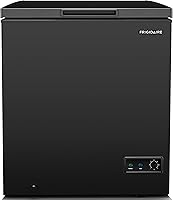
FRIGIDAIRE EFRF7003-BLACK Chest Deep Freezer
The FRIGIDAIRE EFRF7003-BLACK Chest Deep Freezer suits regular extra storage without moving to a very large cabinet. It has 7 cu ft of capacity and measures 26 in D x 37 in W x 33 in H.
The removable basket keeps smaller or frequently used items near the top. Its aluminum interior liner, adjustable thermostat and exterior defrost drain support routine storage and maintenance.
The freezer is black, freestanding and uses 120 volts. The box includes the freezer, basket, shelf and owner's manual.
Choose it when you want regular meal-prep or grocery overflow without dedicating a large room to frozen storage. If your peak load already exceeds this size, moving to 21 cu ft may reduce crowding and repeated unloading.
FRIGIDAIRE EFRF5003-BLACK Chest Deep Freezer-Garage-Ready
The FRIGIDAIRE EFRF5003-BLACK Chest Deep Freezer-Garage-Ready suits buyers who need 5 cu ft of storage in a smaller cabinet. It measures 23 in D x 28 in W x 35 in H and includes a removable vinyl-coated wire basket.
Its adjustable thermostat has 7 settings, and a power-on indicator light shows operating status. The aluminum interior liner and exterior defrost drain support storage and cleaning.
This black freezer is freestanding and uses 120 volts. The title identifies it as garage-ready, but you should still confirm the approved operating conditions for your location before installation.
Choose it for a smaller reserve or limited floor area. Compare it with the chest freezer 8 cu ft size if 5 cu ft seems too tight but a 21 cu ft cabinet would be excessive.
What power and placement questions matter?
Place the freezer where it can use the required outlet and maintain the clearances in its instructions. Do not assume that an available outlet or a garage location automatically makes the space suitable.
Before installation, check:
- The outlet location and accessibility.
- The voltage requirement.
- The model's ventilation instructions.
- Ambient temperature limits for the location.
- Whether the floor is level and strong enough.
- Whether the cord can remain clear of walkways.
- Whether the defrost drain can be reached during cleaning.
A garage-ready label can help narrow your choices, but it does not remove the need to check the conditions in your own garage. Temperature swings, poor airflow and blocked access can all affect how convenient the freezer is to use.
Keep the cabinet level and leave enough space to clean around it. A tidy installation also makes it easier to notice a power problem, water near the drain or a lid that no longer seals correctly.
How should you maintain a large chest freezer?
Maintain a large chest freezer by controlling ice buildup, keeping the lid seal clean and planning defrosting before the cabinet becomes difficult to use. Manual-defrost models need a routine that fits your storage schedule.
Use these habits:
- Keep the lid closed except when loading or retrieving food.
- Check the seal for dirt or food that prevents closure.
- Remove expired or unwanted food during regular inventory checks.
- Defrost when ice buildup reduces useful space or affects access.
- Use the drain as directed during cleaning.
- Dry the interior before reloading food.
- Keep the area around the cabinet clear.
Move food into another suitable frozen space before a planned defrost. Do not wait until the cabinet is packed so tightly that maintenance becomes a major unloading job.
A large freezer can hide older packages. Labeling and rotating food is part of maintenance because it helps you use the storage space instead of losing food beneath newer items.
How much does a large chest freezer cost?
The answer depends on the model, capacity, features and current sales conditions. Use our guides to compare the questions that matter before you shop for a large cabinet, including how much a large chest freezer costs and whether a smaller model offers enough space.
Focus on the full buying decision, not only the initial price. A 21 cu ft freezer also needs a suitable location, delivery planning, organization supplies and time for regular inventory and defrosting.
If your need is limited to occasional overflow, compare how much a small chest freezer costs before choosing a large cabinet. A smaller freezer may leave more floor space available and require less sorting.
Is a 21 cu ft chest freezer right for you?
Choose a chest freezer 21 cu ft when you have a repeatable need for extensive storage, a measured delivery route and enough open-lid space to use the cabinet safely. Plan zones before loading so the extra capacity remains practical.
Choose a smaller freezer if your food load is mainly meal overflow, a few bulk purchases or seasonal extras. The right decision rule is simple: pick 21 cu ft for a proven large storage habit, and pick a smaller size when your current need does not justify the footprint and organization work.
Look at your regular routine rather than a single busy week. If you buy in bulk every month, cook ahead for work, or store a harvest, the larger cabinet may earn its place.
If your freezer fills only at holidays, a smaller model may handle the peak without taking over a room all year. You can also use a well planned basket system to keep a modest load easy to find.
Measure the whole route before you commit. Delivery, ventilation, lid clearance and standing room all need to work together, not just the rectangle where the cabinet will sit.
Think about the work of keeping the cabinet tidy. Labels, rotation and monthly checks take time, and a large freezer can hide older food if you load it and forget about it.
Consider the daily reach as well. A deep cabinet is only useful if you can lift food from the bottom safely and without moving half the contents first.
Choose the size that fits your largest planned load with some working room left. That choice gives you storage you will actually use, in a space that suits how you shop, cook and clean.
Frequently asked questions
Is a 21 cu ft chest freezer good for a large family?
A 21 cu ft chest freezer can suit a large family with regular bulk shopping, batch cooking or seasonal food storage. Capacity alone does not decide the fit.
Measure the cabinet location, delivery route, open-lid area and standing space before choosing a freezer this large.
How much floor space does a 21 cu ft chest freezer need?
A 21 cu ft chest freezer needs more than its cabinet footprint because you also need ventilation space, room to open the lid and standing space for loading. Mark the proposed area on the floor, then add the clearances required by the model's instructions.
What should I store in a 21 cu ft chest freezer?
Use a 21 cu ft chest freezer for a planned mix of bulky and frequent frozen foods, such as meat, vegetables, prepared meals and seasonal storage. Divide the cabinet into zones so older food stays visible and frequently used items remain near the top.
Should I buy a 21 cu ft chest freezer or a smaller model?
Buy a 21 cu ft chest freezer when your peak food load regularly exceeds smaller cabinets and you have a suitable installation area. Choose a smaller model when your need is mainly meal overflow or occasional bulk buying, since unused capacity still takes up floor space.
How do I prepare for delivery of a large chest freezer?
Measure the narrowest doorway, hallway and turn on the route to the final location. Compare those measurements with the freezer's outside dimensions, then check stairs, floor strength, lid clearance and the space needed to move the cabinet into position.