What Wattage Does a Chest Freezer Use? Here’s What to Know
A chest freezer typically uses between 100 and 400 watts when it’s running, but this can vary. The wattage you see on the label is usually the maximum power draw. Most of the time, your chest freezer will use much less power than this maximum. It cycles on and off to maintain the cold temperature.
Understanding your chest freezer’s wattage is key for managing your electricity bill. It helps you figure out how much energy it uses over time. Think of it like a light bulb; some use more power than others. We found that older models often use more energy than newer, more efficient ones.
- Chest freezers use 100-400 watts when running.
- Wattage on the label is usually the maximum.
- They cycle on and off, using less power most of the time.
- Older freezers tend to use more energy.
Ready to get a clearer picture? Below, we’ll break down exactly what wattage means for your chest freezer and how to find the information you need.
So, you’re curious about how much power your chest freezer actually draws, right? It’s a smart question to ask. Knowing this can help you understand your electricity costs. We’ll break down exactly what wattage means for your chest freezer.
Understanding Your Chest Freezer’s Power Needs
The power your chest freezer uses is measured in watts. This tells you how much energy it consumes at any given moment. It’s like knowing how many horsepower a car engine has. A higher wattage means it needs more power to do its job.
Most chest freezers have a wattage rating on a label. This label is usually on the back or inside the lid. It shows the maximum power the freezer might pull. Think of it like the top speed of a car. Your freezer likely won’t always be running at its maximum power.
The Difference Between Running Watts and Starting Watts
When you look at a freezer’s specifications, you might see two different wattages. One is the running wattage. This is the power it uses when the motor is actively cooling. The other is the starting wattage, which is much higher.
The compressor motor needs a big burst of power to start up. This is called the starting wattage. It can be two or three times the running wattage. However, this high demand only lasts for a very short time. Your freezer cycles on and off, so it’s not constantly drawing that peak power.
How Wattage Affects Your Energy Bill
The wattage rating helps you estimate energy usage. But remember, it’s not just about the watts. It’s also about how long the freezer runs. A freezer with a high wattage that runs rarely might use less energy overall than a lower-wattage one that runs constantly.
We found that many common chest freezers use between 100 and 400 watts when their compressor is running. This is the figure you’ll see most often. A smaller, older freezer might be at the lower end of this. A larger, newer model could be closer to the higher end.
Typical Wattage Ranges
For most home chest freezers, you’ll see the following power usage patterns:
- Small chest freezers (5-10 cubic feet): These often use around 100-200 watts when running.
- Medium chest freezers (10-18 cubic feet): Expect them to use about 150-300 watts when running.
- Large chest freezers (18+ cubic feet): These might use 200-400 watts when running.
The Impact of Age and Efficiency
Older chest freezers are generally less energy-efficient. Their insulation might not be as good. They also might have older, less efficient compressors. This means they often need to run for longer periods to maintain a cold temperature.
We found research indicating that older appliances can use up to 50% more energy than their newer counterparts (U.S. Department of Energy). If your freezer is more than 10 years old, it’s likely using more electricity than you might think. Newer models often have Energy Star ratings, showing they meet strict energy efficiency guidelines.
Finding Your Freezer’s Wattage Information
Locating the wattage for your specific freezer is usually straightforward. You don’t need to be an electronics expert. Most of the information you need is right on the appliance itself.
Check the Manufacturer’s Label
The most reliable place to find wattage information is on the manufacturer’s data plate. This is a sticker or metal plate attached to your freezer. Look for details like:
- Model number
- Serial number
- Electrical ratings (Volts, Amps, Watts)
The label will often state the operating wattage or list the voltage and amperage. If it only lists volts and amps, you can calculate the wattage. You just multiply the voltage by the amperage. For example, 120 volts x 2 amps = 240 watts.
Consult Your Owner’s Manual
If you still have the owner’s manual for your chest freezer, it’s another great resource. The manual will typically detail the appliance’s electrical specifications. It might also offer tips on energy-efficient operation.
If you’ve lost the manual, don’t worry. You can often find digital copies online. Just search for your freezer’s brand and model number on the manufacturer’s website.
Using a Kill A Watt Meter for Accurate Readings
For the most precise measurement, you can use a plug-in energy meter, often called a “Kill A Watt” meter. These devices plug into the wall outlet, and then you plug your freezer into the meter. The meter will display the actual wattage being used in real-time.
This is particularly useful for understanding how much power your freezer uses throughout its cooling cycle. You can see the peak wattage when the compressor kicks on and the lower wattage when it’s idle. It gives you a much clearer picture than just the label alone.
Factors Influencing Wattage Consumption
Several things can make your chest freezer use more or less power. It’s not always just the age or size of the unit.
Temperature Settings
The temperature setting you choose plays a big role. Setting your freezer to an extremely cold temperature will make the compressor work harder and longer. This uses more energy. Most experts recommend setting your freezer to 0°F (-18°C).
You don’t need it to be colder than that. Research from the Environmental Protection Agency (EPA) suggests that 0°F is ideal for long-term food storage. Going much colder is usually just a waste of electricity.
Ambient Room Temperature
The temperature of the room where your freezer is located matters. If your freezer is in a hot garage or a poorly ventilated space, it will have to work harder to stay cold. This increases its power consumption.
We found that for every 10°F increase in ambient temperature, a freezer’s energy use can increase by as much as 10-20%. Keeping your freezer in a cooler, well-ventilated area is one of the easiest ways to save energy.
How Often You Open the Door
Every time you open the freezer door, cold air escapes. The warmer room air rushes in. This forces the compressor to run more often to bring the temperature back down. Try to open the door quickly and only when necessary.
Planning what you need before opening the door can make a big difference. Also, make sure the lid seal is tight. A worn-out seal lets cold air escape, causing the freezer to work harder.
Amount of Food Inside
Believe it or not, a full freezer is more energy-efficient than an empty one. The frozen food acts like ice blocks. It helps keep the inside temperature stable. When the compressor cycles off, the food helps maintain the cold.
If your freezer is mostly empty, consider filling any spare space with containers of water or bags of ice. This can help it run more efficiently. However, don’t overstuff it to the point where air can’t circulate.
Comparing Freezer Wattage: A Quick Look
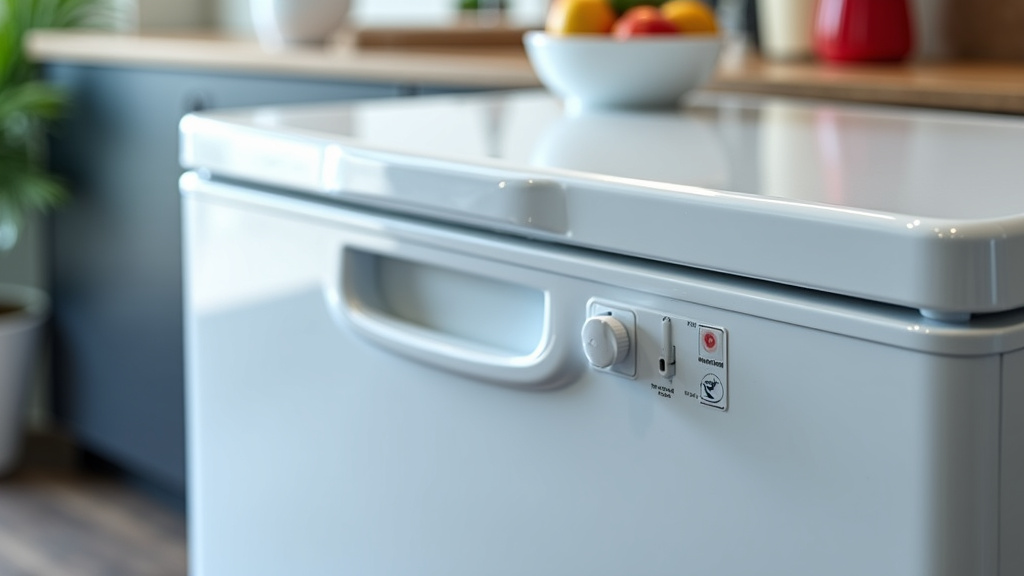
To give you a clearer idea, here’s a general comparison of how different types of freezers might stack up, keeping in mind these are estimates:
| Freezer Type | Typical Cubic Feet | Estimated Running Watts | Notes |
|---|---|---|---|
| Small Chest Freezer | 5-10 | 100-200 W | Ideal for limited space. |
| Medium Chest Freezer | 10-18 | 150-300 W | Good balance of capacity and efficiency. |
| Large Chest Freezer | 18+ | 200-400 W | Higher capacity, potentially higher wattage. |
| Chest Freezer (Older Model) | Any Size | +25-50% more than new | Likely less efficient. |
| Chest Freezer (Energy Star) | Any Size | Lower end of range | Designed for efficiency. |
This table gives you a snapshot. Your actual freezer’s wattage could be slightly different. Always check your specific model’s rating for the most accurate information.
Tips for Using Your Freezer Efficiently
Understanding your freezer’s wattage is the first step. Here are some quick tips to ensure you’re using it as efficiently as possible:
- Check the Door Seal: Make sure it’s tight and not damaged.
- Keep it Full: Fill empty space with water jugs or bags of ice.
- Optimal Temperature: Set it to 0°F (-18°C).
- Location Matters: Avoid hot, sunny, or poorly ventilated areas.
- Plan Your Access: Open the door quickly and less often.
- Defrost Regularly: If you don’t have a frost-free model, build-up slows it down.
Conclusion
Understanding your chest freezer’s wattage helps you manage electricity costs. Remember, the label shows maximum power, not constant use. Your freezer cycles on and off, using less power most of the time. Older models and hot environments mean higher usage. Newer, Energy Star-rated freezers are more efficient. By checking seals, settings, and location, you can optimize your freezer’s energy use. Take a moment to find your freezer’s specific wattage information on its label or in the manual to get a precise understanding of its power draw.
Frequently Asked Questions
Do I need a special outlet for my chest freezer?
Most standard chest freezers use a regular household outlet. The wattage they draw is typically well within the capacity of a 15-amp or 20-amp circuit. You generally won’t need a specialized outlet unless you have an unusually large or old commercial-grade model.
How can I tell if my chest freezer is using too much wattage?
If your electricity bills have suddenly increased, or if you notice your freezer running constantly, it might be using more energy than it should. An older freezer, poor door seals, or a location in a hot room can all contribute to higher wattage use.
Will a chest freezer use more wattage when it’s full or empty?
A full chest freezer is generally more energy-efficient. The frozen food inside acts like ice blocks, helping to maintain a stable, cold temperature. This means the compressor doesn’t have to cycle on as often as it would in an empty freezer.
Is a chest freezer more energy-efficient than an upright freezer?
Chest freezers tend to be more energy-efficient than upright models. This is because their lid is on top, so cold air, which is denser, stays inside. Upright freezers lose more cold air each time the door is opened.
What does it mean if my freezer’s label lists Volts and Amps, but not Watts?
If your freezer’s label only shows voltage (V) and amperage (A), you can easily calculate the wattage. Simply multiply the voltage by the amperage. For example, if it reads 120V and 3A, your freezer uses 360 watts when running (120 x 3 = 360).