How to Choose an 8 Cu Ft Upright Freezer
Choose an 8 cu ft upright freezer when you need organized vertical storage for regular meal prep or bulk groceries. Measure the cabinet route, door clearance and usable shelves before you buy.
On this page (7 sections)
- Is an upright freezer 8 cu ft right for your food load?
- What should you measure before choosing an 8 cu ft upright freezer?
- How do shelves change upright freezer storage?
- How should you compare an 8 cu ft freezer with smaller models?
- What door and shelf features matter most?
- How do you set up and maintain an upright freezer?
- Should you buy an 8 cu ft upright freezer?
Choose an upright freezer 8 cu ft when you need organized vertical storage for regular meal prep, grocery overflow or bulk frozen food. It suits people who cook ahead, buy in bulk or shop less often and want food sorted by type.
Before buying, measure the cabinet route, door clearance, shelf layout and ventilation space. A freezer that fits on paper can still block a hallway or fail to open fully if these points are missed.
An 8 cu ft cabinet can be a useful middle ground. It offers more room than compact models while keeping food at eye level instead of requiring you to dig through a chest freezer.
That height matters in daily use. You can see labels, reach the back of a shelf and take out one meal without moving several others.
It also suits a second freezer in a garage, utility room or basement. Your main kitchen freezer stays free for short term items while this one holds longer term stores.
Think in terms of your busiest week, not an average day. Holiday food, a large meat order or a freezer stock up will show whether the space is truly enough.
If your load is smaller, a compact model may be simpler and easier to place. The 8 cu ft size is best when several food groups need their own zones.
Plan how you will group food before it arrives. Meat, vegetables, baked goods and ready meals each need space that cold air can reach.
A short list of what you store most will make the choice clearer. Choose the size that fits that list with room left for the next shop.
Is an upright freezer 8 cu ft right for your food load?
An upright freezer 8 cu ft suits a household that stores several food categories at the same time. Use it for frozen meals, meat, vegetables, bread and ice cream when your refrigerator freezer cannot keep those groups organized.
Capacity is only one part of the decision. Bulky boxes can use space quickly, while flat bags and stackable containers make the same cabinet feel more efficient.
Make a quick inventory before shopping:
- Food already in your refrigerator freezer
- The largest grocery load you plan to add
- Seasonal foods, meal-prep containers or meat packages
- Items that need frequent access
- Packages that must stay upright or remain easy to see
If your load is modest, compare the best 7 cu ft freezer upright options before moving up to a larger cabinet. Buyers with very little floor space may prefer a best 5 cu ft freezer upright instead.
What should you measure before choosing an 8 cu ft upright freezer?
Measure the full installation area and delivery route, not only the open floor. The freezer must fit through doors and turns, sit with the required clearances and leave enough room for the door to open fully.
Check these measurements:
- The narrowest doorway and hallway
- Turns between the entrance and final location
- Cabinet width, depth and height
- Space beside the hinge side
- Room for the door handle and full swing
- Clearance behind and above the cabinet
- Standing space in front for loading and retrieval
Start at the entrance and walk the route with a tape measure. Note any fixed furniture, radiators or low shelves that could catch the cabinet on delivery day.
Measure height under counters and through door arches as well as width. An upright freezer is tall, so a tight turn can be harder than a narrow doorway.
Tape the cabinet outline on the floor. Open nearby doors and drawers to make sure they do not block the freezer.
Leave space to stand, kneel and pull out a full shelf or basket. You will use that space every time you load or clean the freezer.
Check the plug position and cable reach before the cabinet is in place. You need access for setup, moving and routine cleaning.
Door direction matters in a narrow kitchen, office or utility room. A reversible door can help, but you still need enough clearance to change the hinge position during setup.
Ask who else uses the room. A door that opens into a walkway may be a problem even if the cabinet itself fits well.
Measure again after taping the outline. Adjust the plan now rather than forcing the freezer into a poor spot later.
How do shelves change upright freezer storage?
Shelves divide vertical space into food zones, which can make an upright freezer easier to manage than a single open cavity. Removable shelves also help when you need to fit a taller container.
Plan zones before loading:
- Keep frequently used food at a comfortable height.
- Group meat, vegetables, prepared meals and desserts.
- Use flat containers where possible.
- Leave space around packages so cold air can circulate.
- Label containers with the food name and freezing date.
Do not assume that 8 cu ft gives you one large open area. Shelves, insulation and the compressor section affect the usable shape.
The compact products below show why capacity, shelf count and cabinet dimensions need to be considered together. They are smaller than a typical 8 cu ft target, but they can help if your actual food load or floor space is limited.
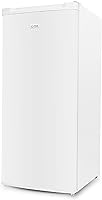
Kismile Small Freezer Upright
The Kismile measures 20.3 in D x 20.5 in W x 31.7 in H, so it needs less floor and vertical space than a full-size upright. Its 2 shelves can separate food groups, while the removable design gives you more flexibility for taller items.
The 7-setting dial runs from OFF through 7, with 1 as the warmest and 7 as the coldest. The stated temperature range is -7.6°F to 6.8°F.
Kismile also lists adjustable feet, a built-in top handle and a reversible door.
Choose it when you need supplementary frozen storage in a tight room. It is not the closest match for someone who has already measured an 8 cu ft food load and needs that full capacity.
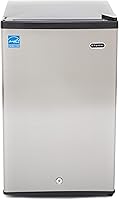
Whynter Upright Mini Freezer
The Whynter CUF-301SS measures 21 in D x 19.5 in W x 33.5 in H. Its stainless steel door and recessed handle can suit a kitchen, dorm room, home office or other small area where a projecting handle could be awkward.
The door can be hung from either side, which helps with corner placement. The keyed lock and 2 keys may matter when several people share the room and you want the freezer closed.
This model fits buyers who value compact storage and a lock. Its 3.1 cu ft capacity is far below 8 cu ft, so measure your food load before treating it as a substitute.
Whynter Upright Freezer 2.1 Cu Ft Lock
The Whynter CUF-210SS measures 20 in D x 17.25 in W x 27 in H. Its smaller cabinet can fit a kitchen, office, basement or garage when a taller or wider freezer would not work.
The mechanical temperature range is -10°F to 2°F. The stainless steel door has a recessed handle, and the freezer includes a cylinder lock with 2 keys.
Choose it for limited overflow storage or a compact dedicated freezer. It is the least suitable of these examples for a household specifically seeking the storage volume of an 8 cu ft upright.
How should you compare an 8 cu ft freezer with smaller models?
Compare the freezer's usable organization against your actual food load. A smaller upright can save floor space, but it may force you to stack packages or leave categories mixed together.
Use this rule:
- Pick 8 cu ft when you regularly store several food groups and need room for the next shop.
- Pick about 5 to 7 cu ft when your overflow is moderate and your installation area is limited.
- Pick under 5 cu ft when you need a compact second freezer for a few specific items.
Size is about shape as much as volume. Flat packs stack well on shelves, while bulky bags and boxes use space fast and limit where cold air can flow.
A smaller model can work well as a targeted second freezer. It suits a few meals, ice cream or baby food when your main freezer is full for a short period.
An 8 cu ft model suits a planned system. You can keep meat on one shelf, vegetables on another and ready meals within reach without mixing them.
Floor space is the trade off. A larger cabinet needs a wider footprint, more door swing and a delivery route that can take its height and depth.
Height also affects use. Taller cabinets can be harder to load at the top and clean inside, while shorter ones may require more bending.
Consider your shopping habit. If you buy little and often, a compact freezer may stay organized.
If you buy in bulk or cook in batches, extra zones help.
For more compact options, see the best small upright freezer guide. If your available area is especially tight, compare the best under 7 cubic feet upright freezer choices.
Do not buy extra capacity for food you rarely store. Empty space does not help if shelves are in the wrong places for your packages.
Count your largest load, then add a small margin for the next shop. That count is a better guide than household size alone.
Also think about access. A freezer you can see and reach will be used in rotation, while a packed one often leads to forgotten items.
The right size leaves room between packages. That gap helps cold air circulate and keeps food at a steady temperature.
What door and shelf features matter most?
The most useful features depend on how often you open the freezer and what you store. A reversible door helps with placement, while removable shelves help with package height and cleaning.
Check whether the shelves create usable sections for your food. A shelf count alone does not tell you the width, depth or spacing of each area.
Measure the inside height between shelves. Tall containers, upright bottles or large bags may need a shelf removed or moved.
Shelf material affects cleaning and use. A flat shelf supports small packs well, while a wire shelf can let small items slip or tip if they are not boxed.
A reversible door is useful in corners and narrow rooms. It lets you choose the side with more clearance, but you still need space for a full swing.
Handle shape matters too. A recessed or built in handle saves space, while a projecting handle needs more room beside walls and cabinets.
A lock can be useful in a shared apartment, dorm room or office. It matters less in a private kitchen, where access and cabinet fit may be higher priorities.
Think about who shares the space and what you store. A lock helps with privacy and keeps the door closed, but it adds keys to manage.
Also check how the temperature control works. A numbered dial is a setting control, not a direct measurement of the food temperature.
Use a separate freezer thermometer if you need to monitor actual temperature. Place it in the middle of the cabinet and check it after loading.
The dial position is a starting point for setup. You may need to adjust it after the freezer has run for a day and the shelves are loaded.
Front mounted controls are easier to reach than rear ones. They save you from moving the cabinet to make a small change.
Door seals and hinges affect daily use as much as controls. A door that closes firmly helps the freezer hold temperature with less effort.
Look for shelves that slide or lift out for cleaning. That makes it easier to wipe spills and reach the back corners.
Choose features that match your routine. Frequent access needs clear shelves and a smooth door, while occasional storage can accept simpler fittings.
How do you set up and maintain an upright freezer?
Set the cabinet on a stable, level surface with the clearances required by the manual. Keep the plug accessible, avoid blocking ventilation areas and allow the freezer to reach its operating temperature before filling it heavily.
Level the feet if the model has them. A wobbling cabinet can make the door sit unevenly and let cold air escape around the seal.
Leave air space at the back and sides as directed. Packed vents or a wall pushed tight against the cabinet can reduce cooling and make the compressor work harder.
Let the empty freezer run before a large load. Check that it feels cold inside and that the door closes fully before you add food.
Load food in groups so you can find older packages first. Leave some room between packages, avoid covering vents and do not pack food against the door seal.
Put items you use often at eye level. Keep heavier boxes on lower shelves so you do not need to lift them over other food.
Label containers with the food name and the date frozen. That simple step helps you use older food first and avoid long forgotten packs.
Do not overload shelves. Gaps between packs let cold air move, which helps keep temperatures steady across the cabinet.
Follow the model's defrost instructions. Manual-defrost freezers need periodic maintenance, and removing frost before it becomes thick can make cleaning easier.
Defrost when frost builds up on walls or shelves. Turn the freezer off, remove food to a cool place and let the ice melt before wiping the inside dry.
Check the door seal during routine cleaning. A door that does not close fully can waste energy and make it harder to hold a stable temperature.
Close the door on a banknote or strip of paper to test the seal. If it slides out with little resistance, the seal may need cleaning or adjustment.
Clean shelves and baskets as needed. Spills are easier to remove before they freeze hard and stick to the shelf.
Keep the outside clean and check the plug and cable from time to time. Basic care helps the freezer run well and last longer.
Should you buy an 8 cu ft upright freezer?
Buy an upright freezer 8 cu ft if your busiest food load needs several organized zones and you have measured enough room for the cabinet, door swing and ventilation. Choose a smaller model if your real need is a few extra meals or your installation route limits cabinet size.
The best choice is the one that fits both your food and your room. Measure first, plan the shelf layout and use the smallest capacity that gives you practical room for your next full grocery load.
Start with an honest count of what you freeze. List the meals, meat packs, vegetables and treats you want stored at the same time.
Add the items you buy in bulk or make in batches. Those are the foods that decide whether a smaller cabinet will feel crowded.
Check the delivery route with the same care as the final spot. A freezer that cannot reach its place is not a good buy, however well it fits the room.
Think about how you will use the shelves. Assign a zone to each food group so you can see what you have at a glance.
Leave room for air flow and for the next shop. A freezer packed tight on day one has nowhere to go when you come home with more food.
Consider who else will use it. Shared spaces may need a lock or a clear labeling system, while a private kitchen may focus on easy access.
Weigh the trade off between capacity and space. More room inside often means a larger footprint, more door swing and a harder delivery.
If you also package food for freezing, compare vacuum sealer bags or rolls before you organize the new freezer. Good packaging keeps food neat and helps it stack well on shelves.
Choose the model that matches your load, your room and your routine. That fit matters more than the largest capacity you can find.
Frequently asked questions
Is an 8 cu ft upright freezer large enough for a family?
An 8 cu ft upright freezer can suit a family that needs regular meal prep space, grocery overflow or organized frozen storage. The right size depends on your package sizes, shopping routine and existing freezer.
Count your busiest planned load instead of choosing by household size alone.
How much space should I leave around an upright freezer?
Leave the clearances required by the specific freezer manual, then add room for the door to open and for you to stand in front of it. Measure the plug, wall, nearby cabinets and door swing.
The cabinet footprint alone does not show the full operating space.
Are upright freezers easier to organize than chest freezers?
Upright freezers usually make food easier to see and reach because shelves divide the cabinet vertically. Chest freezers can hold bulky packages efficiently but often need more lifting and sorting.
Choose an upright when access and category-based organization matter most.
Should I buy an 8 cu ft freezer or a smaller upright?
Choose an 8 cu ft freezer if your current freezer regularly runs out of room or you store several food categories at once. Choose a smaller upright if you mainly need a few extra meals, have limited floor space or want a shorter cabinet.