How Much Space Does a Chest Freezer Take Up?
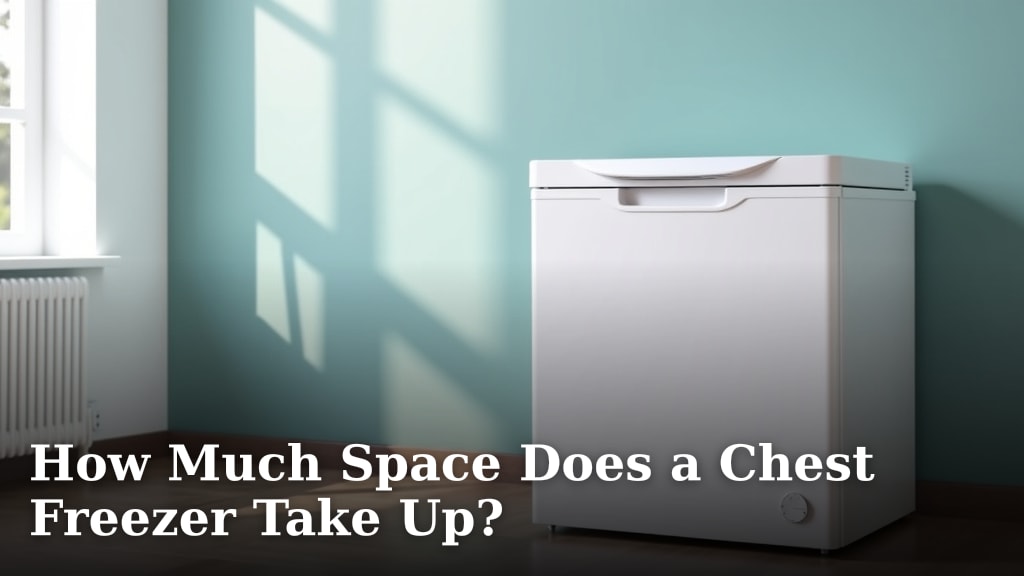
The space a chest freezer takes up depends on its capacity, usually measured in cubic feet. Smaller models might be around 5 cubic feet, while larger ones can reach 20 cubic feet or more. Think about your freezer’s dimensions and the room you have before buying.
When planning, remember to account for ventilation space around the freezer. Most manufacturers recommend at least 2-3 inches on the sides and back. You’ll also need room for the lid to open fully. We found that measuring your intended spot carefully prevents any surprises.
- Chest freezers vary widely in size.
- Capacity is measured in cubic feet.
- Consider the physical dimensions carefully.
- Don’t forget space for the lid and airflow.
Ready to figure out exactly how much room you’ll need? Let’s walk through the typical sizes and what to measure.
Understanding Chest Freezer Size Requirements
Figuring out how much space your chest freezer will occupy is a key step. It’s not just about the freezer itself. You need to think about how you’ll use it and where it will live. Let’s break down what dimensions and capacities mean for your home.
The good news is that chest freezers come in a wide range of sizes. This means you can likely find one that fits your needs and your available space. We’ve researched common sizes to give you a clearer picture.
Chest Freezer Capacity Explained (Cubic Feet)
Chest freezer capacity is measured in cubic feet. This tells you how much food it can hold. A larger cubic footage generally means a larger physical size. Think of it like comparing a small closet to a large walk-in.
We found that capacity often dictates the freezer’s footprint. A smaller capacity means a smaller unit. A larger capacity requires more room. It’s a direct relationship you can count on.
Small Chest Freezers (Under 7 Cubic Feet)
These are great for smaller households or for added storage. They might hold around 20-25 pounds of food per cubic foot. Think of a 5 cubic foot model. It’s roughly the size of a large cooler.
You could fit a few chickens, some steaks, and a few bags of vegetables. It’s a good starter size if you don’t buy in bulk very often. Many find this size perfect for apartments or as a secondary freezer.
Medium Chest Freezers (7 to 12 Cubic Feet)
This range offers a good balance for many families. A 10 cubic foot freezer can hold quite a bit more. You might be looking at 200-250 pounds of food. This is a popular choice for families who like to stock up.
Imagine fitting multiple roasts, turkeys, and plenty of frozen meals. It’s enough space to handle a good portion of your bulk buys. We see this size frequently in garages or basements.
Large Chest Freezers (Over 12 Cubic Feet)
If you’re feeding a crowd or a large family, these are for you. A 15 cubic foot freezer can hold around 300-375 pounds of food. Some models go up to 20 cubic feet or even more.
These units are substantial. They are best suited for spacious areas. Consider this size if you have a dedicated freezer room or a very large garage. You’ll have plenty of room for harvests or major grocery hauls.
Physical Dimensions: Beyond Cubic Feet
While capacity is important, the actual physical dimensions are what you need to measure. Chest freezers have three main measurements: width, depth, and height. You must know these numbers to ensure it fits.
We recommend writing down these dimensions. Compare them to the space you have available. Don’t just eyeball it! A few inches can make a big difference.
Width: The Longest Side
The width is usually the longest dimension. It’s the measurement from one side of the freezer to the other. This is often the most critical measurement for fitting it through doorways or into specific spots.
A 5 cubic foot freezer might be around 30-35 inches wide. A larger 15 cubic foot model could be 50-60 inches wide. Always check the product specifications for the exact width.
Depth: How Far It Extends Out
Depth is how far the freezer sticks out from the wall. This measurement is important for ensuring you can still walk around it. It also impacts how much space it takes up in a room.
Expect depths to range from about 20 inches for smaller units to 30 inches or more for larger ones. Make sure this doesn’t block pathways.
Height: From Floor to Lid Top
Height is measured from the floor to the very top of the lid when closed. This is important for fitting it under shelves or in specific cabinets, though chest freezers are rarely placed under counters.
Most chest freezers are around 30-35 inches tall. Some might be slightly shorter or taller. Consider if this height is comfortable for you to access easily.
Don’t Forget About Clearance Space
This is a crucial step many people overlook. Chest freezers need air circulation to work efficiently. They also need space for the lid to open. You cannot push them right up against a wall.
Manufacturers usually provide guidelines for clearance. Following these helps your freezer run cooler and last longer. It also prevents overheating, which can lead to repairs.
Ventilation Requirements
Most chest freezers need about 2 to 3 inches of space on the sides and back. This allows air to flow around the motor and compressor. Think of it like giving your freezer room to breathe.
Poor ventilation can make your freezer work harder. This uses more electricity and can shorten its lifespan. Many experts recommend this space for optimal performance (U.S. Department of Energy).
Lid Opening Space
The lid on a chest freezer lifts upwards. You need enough room for the lid to open fully. This allows you to access all your frozen goods easily.
Measure the height of the freezer plus the lid’s upward swing. You need at least that much clear space above it. If the lid hits a shelf or cabinet, you won’t be able to open it all the way. This can be quite frustrating!
| Capacity (Cubic Feet) | Approximate Width (Inches) | Approximate Depth (Inches) | Approximate Height (Inches) |
|---|---|---|---|
| 5 | 30-35 | 20-25 | 30-33 |
| 7 | 35-40 | 22-27 | 32-35 |
| 10 | 40-45 | 25-29 | 33-36 |
| 15 | 50-55 | 27-30 | 34-37 |
| 20 | 60-65 | 30-32 | 35-38 |
Please note: These are approximate dimensions. Always check the specific model’s specifications for exact measurements.
Planning Your Freezer’s Location
Where will your chest freezer live? This decision impacts the space you need. A garage offers more flexibility than a kitchen or a small laundry room.
Think about accessibility too. You’ll want to be able to get to it easily. Also, consider temperature and moisture. Extreme heat can make any appliance work harder.
Garage or Basement Considerations
These are common spots because they often have more space. They also tend to be cooler. Make sure the floor is level and can support the weight. A full chest freezer is very heavy!
Also, consider if the area is prone to extreme temperature swings or high humidity. Some freezers might not perform optimally in very hot or very damp conditions. Check your manual for recommended operating temperatures.
Kitchen or Living Area Placement
If you must place it in a living space, consider noise. Chest freezers can hum. Also, the aesthetic might not fit your decor. You’ll need to ensure good ventilation, which might be harder in a finished room.
You’ll also want to measure very carefully. Doorways and hallways become more critical. Ensure you can get the freezer into the room without issues. Measure twice, buy once is the motto here!
Your Chest Freezer Space Checklist
Before you buy, run through this quick checklist. It helps ensure you’ve thought of everything:
- Measure your intended space: Width, depth, and height available.
- Check freezer dimensions: Get the exact W x D x H for the model you like.
- Add clearance: Factor in 2-3 inches for ventilation on sides and back.
- Account for lid opening: Ensure enough vertical space for the lid to lift fully.
- Consider pathways: Can you get it through doors and to its final spot?
- Think about usage: Will you need to stand in front of it often?
By carefully measuring and planning, you can find a chest freezer that not only fits but also functions perfectly in your home. It’s all about knowing your space and the appliance’s needs.
Conclusion
You’ve learned that finding the right chest freezer size involves more than just looking at capacity. You need to consider the freezer’s physical width, depth, and height. Remember to always add space for essential ventilation and lid clearance. This planning prevents surprises and ensures your freezer runs efficiently.
By carefully measuring your space and checking the freezer’s specs, you can confidently choose a model that fits perfectly. Your next step is to grab your tape measure and start planning where your new chest freezer will go!
Frequently Asked Questions
How much space does a 5 cubic foot chest freezer typically need?
A 5 cubic foot chest freezer usually needs about 30-35 inches in width, 20-25 inches in depth, and 30-33 inches in height. You’ll also want to add 2-3 inches of clearance on the sides and back for airflow, plus space for the lid to open fully.
Can I place a chest freezer right against the wall?
No, you should not place a chest freezer directly against the wall. Manufacturers typically recommend at least 2 to 3 inches of space on the sides and back. This allows for proper air circulation, which is vital for the freezer’s efficient operation and longevity.
What is the biggest chest freezer size commonly available?
The largest chest freezers commonly available can reach up to 20 cubic feet or even more. These large units can be around 60-65 inches wide and 30-32 inches deep, requiring substantial floor space and clearance for their lids.
Does the lid opening affect the space needed?
Yes, the lid opening absolutely affects the space needed. You must account for the full height the lid opens upwards. If the lid hits a shelf or cabinet, you won’t be able to access the contents easily, so measure the vertical clearance required.
How much food can a medium-sized chest freezer hold?
A medium-sized chest freezer, often around 10 cubic feet, can typically hold between 200 to 250 pounds of food. This size offers a good balance for families who like to stock up on groceries or preserve seasonal produce.