How to Choose a Chest Freezer
Compare chest freezers by features that affect your routine: capacity, item access, temperature control, defrosting and placement. Choose the mix that fits your food load and available space.
On this page (7 sections)
- Which chest freezer features matter most?
- How should capacity and dimensions compare?
- What access features help with everyday storage?
- Which controls and maintenance details should you compare?
- How do placement needs affect your choice?
- How can you compare models without overvaluing one feature?
- Which chest freezer features should you choose?
Compare chest freezers by capacity, access, controls and placement needs before choosing a model. The right combination depends on what you freeze, how often you retrieve it and where the cabinet will sit.
A basket can help keep small items near the top, while a larger capacity may suit bulkier food packages. Measure the space and check the door or lid clearance as carefully as the features.
Which chest freezer features matter most?
The most useful features are the ones that fit your food and your space. Start with capacity and access, then compare temperature controls, defrosting and setup needs.
| Feature | What to compare | Why it matters |
|---|---|---|
| Capacity | Cubic feet and the shape of the cabinet | Helps you judge storage volume, but not the fit of every package |
| Access | Top lid, baskets and storage layout | Affects how easily you can reach everyday food |
| Temperature control | Control type and stated temperature range | Helps you set the freezer for its intended use |
| Defrosting | Manual or other defrost method, plus drain access | Affects the steps involved in maintenance |
| Placement | Outside dimensions, clearances and setup instructions | Helps confirm the freezer fits and can be used in its location |
A feature list cannot tell you which model will suit every household. Match each feature to a real job, such as storing large meat packages, keeping small items within reach or fitting through a narrow doorway.
For a broader look at models and their features, start with our best chest freezers.
How should capacity and dimensions compare?
Compare capacity alongside outside dimensions, because cubic feet alone does not show how much floor space a cabinet needs. For a size-specific example, see the 8 cu ft chest freezer guide.
Also consider whether the interior shape suits the packages you plan to store.
Make an inventory of the food you expect to keep frozen at the same time. Include your usual groceries and any larger seasonal or bulk purchases.
Then measure the proposed spot and the route to it. Check hallways and doorways, nearby appliances, the space you need to stand, and any overhead obstructions that could affect access.
A compact unit can still be awkward if the lid opens into a shelf or cabinet. If you need a size-focused comparison, our chest freezer capacity and size guide can help you estimate what to look for.
What access features help with everyday storage?
A removable basket can keep small, frequently used items near the top of a chest freezer. Without a storage plan, food below the basket may take more effort to find.
Think about how often you retrieve each food group. Put items you reach for often in the most accessible area, and use a simple inventory or labeled containers to track what sits deeper in the cabinet.
A top-opening freezer also needs room for the lid to lift and for you to reach down into the cabinet. If bending or moving packages would be a problem, compare the layout with a front-opening unit.
Our guide to chest freezer or upright freezer: which should you choose? explains that access tradeoff.
Which controls and maintenance details should you compare?
Compare the temperature control range and defrost method, then follow each model's instructions for use. A numbered thermostat setting is not a live temperature reading.
Some models use a manual defrost design with a drain for water. Consider whether you can reach the drain and manage the maintenance steps in the planned location.
WANAI 3.5 cu ft: basket and adjustable temperature settings
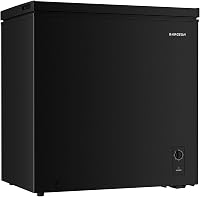
The WANAI Chest Freezer 3.5 cu.ft Small Deep has a removable hanging basket and a 7-grade temperature control. Its stated dimensions are 20.7 in deep, 16.3 in wide and 29.5 in high.
This model may suit you if you want a small chest cabinet and a basket for items you reach for more often. Check its dimensions against your floor space and delivery route, and follow the setup instructions before use.
WANAI Black Chest Freezer: removable basket and manual defrost
The WANAI Black Chest Freezer also has 3.5 cu ft capacity, a removable basket and a 7-grade temperature control. It includes a manual defrost design with a drain hole.
Its dimensions are 20.7 in deep, 16.3 in wide and 29.5 in high. Compare those measurements with the available spot, and make sure you can reach the drain when maintenance is needed.
Whynter 2.1 cu ft upright: shelf and lock
The Whynter Upright Freezer 2.1 Cu Ft Lock has a removable slide-out wire shelf, a mechanical temperature control and a cylinder lock with 2 keys. Its listed control range is -10°F to 2°F.
Its reversible door and front-opening design may suit a small space where you prefer a shelf layout. Check the door swing and the cabinet's dimensions against the spot before choosing it over a chest freezer.
How do placement needs affect your choice?
Choose a freezer only after checking the cabinet, its access space and the route to the spot. A measured footprint does not include room for opening the lid or standing in front of the freezer.
Measure the narrowest doorway and turn along the route. Compare those measurements with the freezer's dimensions and its setup instructions, allowing for any handling or clearance needs the instructions describe.
Check the floor area, overhead space and nearby doors. Keep the controls and any defrost drain reachable, and leave the clearance the manufacturer requires.
For more detailed comparisons, see our guides to chest freezer durability and chest freezer noise levels. Sound and construction can matter in a shared living area, but use the model's stated details and your placement needs to guide the choice.
How can you compare models without overvaluing one feature?
Use the same checklist for every freezer you consider. This keeps one appealing feature, such as a basket or lock, from outweighing capacity or access problems.
- Write down the food you need to store at once.
- Measure the freezer location and delivery route.
- Compare capacity and outside dimensions.
- Check the storage layout, controls and defrost method.
- Confirm the setup instructions and placement requirements.
- Decide which tradeoffs you can accept.
A chest freezer may fit better if you need a top-opening cabinet and can reach food stored below. An upright may be easier to organize around a shelf and front door, depending on the space.
The WANAI models above share the same stated capacity and outside dimensions, while their included details differ. The Whynter is an upright with a shelf and lock, so compare its layout against your access needs rather than treating capacity as the only deciding factor.
Which chest freezer features should you choose?
Choose the capacity and layout that suit your food load, then confirm the cabinet fits the route and location. A basket helps with small-item access; a shelf and front door offer a different way to organize food.
If you plan to store larger packages, prioritize usable space and a way to keep track of food below the top layer. If you have a tight location, prioritize measured dimensions, opening clearance and setup requirements.
For the final choice, compare the specific features that solve your storage problem. Our guides on chest freezer durability and chest freezer noise levels can help you assess two other practical tradeoffs.
Frequently asked questions
What features should I compare in a chest freezer?
Compare capacity, outside dimensions, temperature control, baskets, defrost method and placement needs. Then check whether the freezer's access style fits your routine: a chest lid needs overhead and standing room, while an upright door and shelves can make stored items easier to see.
Confirm electrical details and operating guidance for the intended spot.
Is a removable basket useful in a chest freezer?
A removable basket helps keep small, frequently used items near the top, where you can reach them without searching as deeply. It does not create more capacity, and large packages may need the deeper space below.
Compare basket size and number with the kinds of food you plan to store.
Should I choose a chest or upright freezer?
Choose based on how you store and retrieve food, along with the space available. Chest freezers open from the top and often need room for a lifted lid and standing access; upright freezers use a front door and shelves.
Compare the exact dimensions and storage features of each model before deciding.
How do I compare freezer placement needs?
Measure the cabinet's route to its location, the floor area, door or lid clearance and space to stand. Read the model's setup and operating instructions for required clearances and suitable conditions.
A freezer that fits the floor can still be awkward if you cannot open it fully or reach the controls.
Do numbered thermostat settings show the freezer temperature?
Not necessarily. Numbered settings describe a control range, but they do not show the current temperature inside the cabinet.
Follow the freezer's instructions for selecting a setting, and use a separate freezer thermometer if you need to monitor the food compartment.