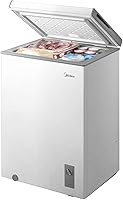
Can You Put a Chest Freezer Outside?
You can put a chest freezer outside only when the manufacturer allows that location and the freezer stays protected from rain, snow, sun, and temperature extremes. An exposed patio or yard is usually a poor choice.
On this page (9 sections)
- Can you put a chest freezer outside in a yard?
- Is a covered porch or shed safe for a chest freezer?
- What weather protection does a chest freezer need?
- Can cold weather stop a chest freezer from working?
- Which chest freezers suit a protected outdoor location?
- How should you prepare a garage for a chest freezer?
- Should you put a chest freezer in a basement instead?
- What should you check before buying for outside storage?
- What is the safest answer for outdoor chest freezer storage?
You can put a chest freezer outside only when the manufacturer permits that placement and the freezer stays dry, shaded, ventilated, and within its operating temperature limits. An uncovered patio, porch, or yard exposes the cabinet and electrical parts to weather that can shorten service life or create a safety risk.
A covered garage, basement, utility room, or enclosed outbuilding is usually easier to control than an outdoor location. Before moving a freezer, check the manual for approved placement, temperature limits, ventilation space, and electrical requirements.
Can you put a chest freezer outside in a yard?
An exposed yard is not a suitable place for most chest freezers. Rain, snow, humidity, direct sunlight, dust, insects, and standing water can reach areas that are meant for indoor use.
A waterproof tarp does not turn an indoor freezer into an outdoor appliance. Wind can lift the cover, trap moisture underneath, and drive water toward the cord, controls, lid seal, or compressor area.
Outdoor temperatures also change quickly. A freezer may face strong afternoon heat, freezing nights, and condensation as the weather shifts.
If you need extra capacity near the house, compare a best garage ready chest freezer guide and check the exact placement rules for each model. “Garage ready” does not automatically mean weatherproof or safe in an uncovered location.
Is a covered porch or shed safe for a chest freezer?
A covered porch or shed can be safer than an open yard, but the location still needs to meet the freezer's instructions. A roof protects against direct precipitation, while walls can reduce wind and sun, but neither solves extreme heat, freezing temperatures, flooding, or poor ventilation.
Keep the freezer on a firm, level, dry surface. Do not place it where water can pool after storms or where melting snow can reach the cord and outlet.
Leave enough room to open the lid fully and clean around the cabinet. Avoid storing cardboard, fuel, paint, or other flammable materials directly against the compressor area.
A shed can become much hotter than the outdoor air. Measure the space during the hottest part of the day if possible, then compare that condition with the freezer's stated operating range.
What weather protection does a chest freezer need?
A chest freezer needs a dry enclosure, shade, airflow, and protection from flooding. The enclosure should block rain and snow without sealing the compressor into a hot, stagnant space.
Do not wrap the cabinet tightly in plastic while it is running. A sealed cover can hold moisture against the metal and restrict heat release.
Keep direct sunlight off the lid and cabinet. Sunlight can heat the exterior, raise the temperature around the appliance, and make cooling harder.
Raise the freezer only if the base remains stable and the setup follows the manufacturer's instructions. Never place it on an unstable platform or where lifting the lid could make the unit tip.
Can cold weather stop a chest freezer from working?
Very cold weather can affect a chest freezer if the surrounding temperature falls below its approved range. The compressor and thermostat are designed to operate within limits, and a freezer may not behave normally in an unheated garage, shed, or porch during winter.
A freezer in a cold room may appear to work while its controls respond poorly to changes inside the cabinet. Frozen food can still be at risk if the appliance stops cycling correctly or loses power during a storm.
Do not rely on the outdoor air as proof that food is safe. A freezer thermometer gives you a clearer check of the cabinet temperature, and USDA guidance on freezing and food safety explains why temperature control matters.
Which chest freezers suit a protected outdoor location?
A freezer for a garage or enclosed outbuilding should have a size that fits the space, a control you can use easily, and a setup that leaves room around the cabinet. These three compact models can help when the location is protected and the operating limits match your climate.
The Koolatron Deep Freezer has 3.5 cu ft (99 L) of capacity, a removable wire basket, a front drain, manual defrost, an external temperature dial, and a stay-open lid. Its 120-volt, 125-watt design and narrow footprint suit a protected garage, basement, cottage, or other space where compact storage matters.
The WANAI Black Chest Freezer has 3.5 cu ft of capacity, a removable basket, adjustable thermostat control, adjustable feet, and manual defrost with a drain hole. Its 20.7 x 16.3 x 29.5 in size fits a small protected area, but it still needs an approved indoor or garage location.
The DEMULLER Chest Freezer Small Deep Freeezer has 3.5 cu ft of capacity, 2 removable stainless steel baskets, a digital control panel accurate to 1°F, and a temperature range from -15°F to 41°F. Its controls can help you monitor a sheltered setup, but digital control does not make the cabinet weatherproof.
How should you prepare a garage for a chest freezer?
Prepare the garage before bringing in the freezer. Check the floor, outlet, airflow, temperature range, lid clearance, and path for carrying the unit.
The floor should be level and strong enough to support the freezer and its contents. Keep the cabinet away from garage doors, leaking roofs, windows, and areas where water can enter during storms.
Use the correct outlet and avoid unsafe extension-cord setups. Follow the freezer's electrical instructions, keep the plug dry, and do not share an overloaded circuit with high-power tools or appliances.
Leave space around the cabinet as instructed. Do not block vents or press the back against stored boxes, walls, or insulation.
If your garage has limited space, compare a best small garage ready chest freezer guide before choosing a cabinet. For bulk storage, a best large garage ready chest freezer guide can help you plan floor space and lid clearance.
Should you put a chest freezer in a basement instead?
A dry basement is often a better location than outside because it gives the freezer more stable temperatures and weather protection. It still needs a level floor, a suitable outlet, ventilation, and protection from plumbing leaks or flooding.
Measure the doorway, stairs, and final location before delivery. A chest freezer can be difficult to move after it is full, especially if the route includes tight turns.
Basements can have high humidity. Keep the surrounding area dry, inspect the lid seal, and leave enough room to defrost without directing meltwater toward electrical equipment.
Our guide to the best chest freezer for basement can help if your main alternatives are a garage, basement, or utility room. The right location is the one that stays within the freezer's limits throughout the year.
What should you check before buying for outside storage?
Check the approved location and temperature range first, then check size, power, drainage, and lid clearance. Outdoor storage is only practical when the environment can stay dry and stable.
Look for a freezer that fits the available footprint without blocking walkways. Manual defrost models need a drain plan, especially in a shed or garage where meltwater could damage the floor.
Think about how you will use the freezer in poor weather. If rain or snow makes the location hard to reach, daily food access may become inconvenient.
Plan the total space before you buy. You can use our guides to how much a small chest freezer costs and how much a large chest freezer costs while comparing capacity and installation needs.
What is the safest answer for outdoor chest freezer storage?
Keep a chest freezer indoors or in a dry, enclosed garage whenever possible. Use an outdoor shed or covered space only when the freezer instructions allow it, the area stays within the operating limits, and rain, snow, sunlight, flooding, and unsafe power connections are controlled.
Pick the Koolatron if you want a compact freezer with a front drain and external dial. Pick the WANAI if adjustable feet and seven thermostat levels fit your setup.
Pick the DEMULLER if two baskets and digital temperature control are more useful.
For any model, confirm the location before moving the freezer. Outdoor storage should be judged by the appliance's approved conditions, not by the fact that it can produce cold air.
Frequently asked questions
Can a chest freezer be kept outside?
A chest freezer can be kept outside only if its instructions allow outdoor or suitable garage placement. It still needs a dry, covered location with protection from rain, snow, direct sun, flooding, pests, and unsafe electrical connections.
An ordinary indoor freezer should not sit exposed in a yard or on an uncovered patio.
What temperature is too cold for a chest freezer?
The safe low-temperature limit depends on the freezer's design and manual. A cold garage or shed can fall outside the operating range, causing the compressor or thermostat to work improperly.
Check the exact operating limits before choosing a location, and do not assume that a freezer labeled garage ready works in every winter climate.
Can rain damage a chest freezer?
Yes, rain can damage a chest freezer by reaching electrical parts, controls, the cord, or the cabinet seams. A cover alone may not provide enough protection because wind can push water underneath it.
Use a dry, roofed space with good airflow and keep the freezer away from standing water.
Is a garage better than outside for a chest freezer?
A covered garage is usually better than an exposed outdoor location because it reduces rain, snow, sunlight, and wind. It still may become too hot or cold for the freezer, so check the operating limits and leave room around the cabinet for ventilation, lid access, and safe maintenance.