9 Best Portable Solar Panels for Power Stations (November 2026)
The best portable solar panels for power stations include the Renogy 200W Portable Solar Panel for Power for efficient general use, the ZOUPW 100W Portable Solar Panel for Power for connector flexibility, and the SOKIOVOLA N-Type 16BB 200W Portable Solar Panel for rugged 200W camping use.
On this page (8 sections)
- How we chose the best portable solar panel for power station use
- The best portable solar panels for power stations
- How many watts should a portable solar panel have?
- What connector does a portable power station solar panel need?
- How do you set up a portable solar panel?
- Portable solar panel versus other backup choices
- Which portable solar panel should you choose?
- In short, match the panel to your station first. Then weigh output, carry weight, weather protection and storage size against how you actually plan to use it.
The best portable solar panel for power station use is the Renogy 200W Portable Solar Panel for Power because it combines 200W output, 25% efficiency, a 13.9 lb folded weight and direct USB charging. A 100W panel is easier to carry, while a 480W panel makes sense only when your station accepts its higher voltage and input.
A portable panel is useful for camping, RV trips, outages and off-grid charging. Before choosing one, match its connector, voltage and maximum power with the solar input on your station.
If you still need the battery unit itself, start with this guide to the best portable battery power station. For a complete paired system, compare the best solar portable power station.
Our picks at a glance
-
1
 Best for efficient general use
Renogy 200W Portable Solar Panel for Power
9.7/10 our score
See it on Amazon -
2
 Best for connector flexibility
ZOUPW 100W Portable Solar Panel for Power
9.6/10 our score
See it on Amazon -
3
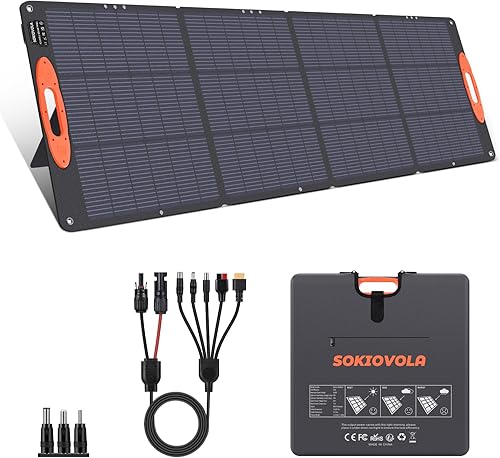 Best for rugged 200W camping use
SOKIOVOLA N-Type 16BB 200W Portable Solar Panel
9.5/10 our score
See it on Amazon
- 4
 Check it
EBL 200W Portable Solar Panel for Power
Best for broad outdoor compatibility - 5
 Check it
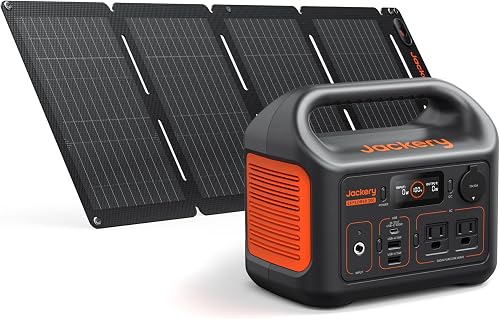
Jackery Solar Generator 300 and 40W Solar
Best for a matched starter kit - 6
 Check it
Anker SOLIX C200 DC Portable Power Station
Best for USB-C device charging - 7
 Check it
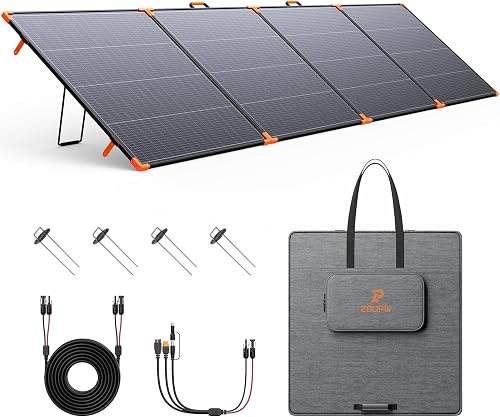
ZOUPW 480W Bifacial Portable Solar Panel N-Type
Best for large high-input stations - 8
 Check it
Ecosonique Technology 100W Portable Solar Panel with USB-C/A
Best for lightweight direct charging - 9
 Check it
SOKIOVOLA 100W Portable Solar Panel for Power
Best for compact MC4 setups
How we chose the best portable solar panel for power station use
The best portable solar panel for a power station needs more than high wattage. It must match your station, fit your storage space and handle outdoor use.
We compared input compatibility, rated output, efficiency, folded size, weight, connectors, weather protection and setup features. We also checked which cables and adapters are included, since a missing adapter can add cost or leave a panel unused at home.
A panel is a poor match if its connector or voltage falls outside your station input range. Extra wattage will not fix that, and a larger panel will not charge faster if your station cannot accept its output.
Folded size and weight decide who each panel suits. Light panels fit hiking and small cars, while heavier 200W panels suit RV storage and campsite use.
Weather protection needs context too. A waterproof panel body helps in rain, but cables, hubs and connected devices still need shelter where required.
Setup features such as kickstands, brackets and handles also affect how quickly you can position and pack the panel.
Efficiency helps in limited sun, but it is not a promise of constant speed. Cloud, shade, angle and station limits change the power you receive.
Our scores weigh specs, features and buyer feedback for this specific use case, treating bundles, light panels and high input panels as different tools.
| Product | Best for | Power | Folded size | Connector | Our score |
|---|---|---|---|---|---|
| Renogy 200W Portable Solar Panel for Power | efficient general use | 200W | 23.72 x 22.99 x 1.97 in | MC4 and USB | 9.7 |
| ZOUPW 100W Portable Solar Panel for Power | connector flexibility | 100W | 24.13 x 21.06 x 1.77 in | 9.6 | |
| SOKIOVOLA N-Type 16BB 200W Portable Solar Panel | rugged 200W camping use | 200W | 21 x 23 in | 9.5 | |
| EBL 200W Portable Solar Panel for Power | broad outdoor compatibility | 200W | 25.31 x 20.87 x 2.17 in | 9.4 | |
| Jackery Solar Generator 300 and 40W Solar | a matched starter kit | 9.3 | |||
| Anker SOLIX C200 DC Portable Power Station | USB-C device charging | 9.2 | |||
| ZOUPW 480W Bifacial Portable Solar Panel N-Type | large high-input stations | 480W | 8.9 | ||
| Ecosonique Technology 100W Portable Solar Panel with USB-C/A | lightweight direct charging | 100W | 16.34 x 11.42 x 3.54 in | 8.6 | |
| SOKIOVOLA 100W Portable Solar Panel for Power | compact MC4 setups | 100W | 21 x 23 in | 8.3 |
The best portable solar panels for power stations
Renogy is the strongest all-around panel here, while the other picks serve different needs such as connector flexibility, low carry weight, matched bundles and high-voltage charging.
Renogy 200W Portable Solar Panel for Power: Best for efficient general use
- 200W maximum power
- 25% efficiency
- 13.9 lb folded panel
- USB-C and dual USB-A ports
Renogy combines 200W output, 25% efficiency and a relatively light folded design. USB-C and dual USB-A ports also let you charge smaller devices directly.
Pros
- 25% efficiency
- Direct USB charging
- Four positioning angles
Cons
- 4-in-1 adapter sold separately
- Heavier than the 100W options
Renogy is the best fit when you want a 200W panel without moving up to the heaviest option. Its 25% efficiency comes from 16BB N-Type cells, and the panel folds to 23.72 x 22.99 x 1.97 in for storage in an SUV, RV or campsite kit.
The 13.89 lb weight is still a load, but it is easier to move between a vehicle and a pitch than the larger 200W choices. The magnetic closure helps the folded panel stay shut during transport and storage.
Four kickstands support 40°, 50° and 60° positioning. That matters because the panel angle affects how much sunlight reaches its surface during the day, especially in morning and late afternoon light.
USB-C PD 45W and dual USB-A ports let you charge 3 devices directly, including phones, tablets, laptops, GPS units and cameras. That direct charging is useful when you want small devices topped up without routing everything through the station.
The main solar output is MC4, and the 4-in-1 adapter is sold separately. Factor that into the total cost and packing list if your station does not use MC4 directly.
Choose Renogy when you want a high efficiency 200W panel with direct device charging. Check your station solar input before ordering because the panel 200W rating does not override the station maximum input.
ZOUPW 100W Portable Solar Panel for Power: Best for connector flexibility
- 100W maximum power
- 23.5% efficiency
- 5-in-1 connector cable
- IP67 waterproof panel body
ZOUPW is a practical match for buyers who need several common power-station connectors in one kit. Its 100W output and 9.5 lb weight suit smaller stations and mobile setups.
Pros
- 5-in-1 cable included
- IP67 panel body
- Built-in USB charging hub
Cons
- USB hub and cables need protection from water
- Lower output than 200W panels
ZOUPW is the most flexible 100W choice for stations with different connector styles. Its 5-in-1 cable includes DC8020, XT60, Anderson, DC7909 and DC5521 connections, so you can match the cable to many Jackery, EcoFlow, Anker and Bluetti inputs.
That cable range is the main reason to pick this panel over a basic MC4 only option. It reduces the chance that you need another adapter before the first trip or outage.
The panel reaches 23.5% efficiency and folds to 24.13 x 21.06 x 1.77 in. At 9.5 lb, it is easier to carry than the 200W panels, though the folded size is still close to some larger models.
Its 2 adjustable kickstands allow a 45° angle for catching more sunlight than a flat position. That small adjustment can help when you set up on a campsite and want the station charging sooner.
Its panel body has an IP67 waterproof rating and ETFE coating. The USB hub and connection cables need to stay dry, so place those parts under cover during rain and avoid low puddles.
The built-in ports include one USB-C and 2 USB-A ports for direct charging. Pick this model when the included cable range matters more than maximum wattage.
SOKIOVOLA N-Type 16BB 200W Portable Solar Panel: Best for rugged 200W camping use
- 200W maximum power
- 25% efficiency
- IP68 waterproof rating
- 5-in-1 connector cable
This SOKIOVOLA panel brings 200W output, 25% efficiency and IP68 protection to a foldable format. It suits RV and campsite use better than long backpacking trips because it weighs 16.3 lb.
Pros
- 25% efficiency
- IP68 waterproof panel
- Multiple station connectors
Cons
- Heavier than the Renogy 200W panel
- Check the station's input limit
SOKIOVOLA suits RV owners and campers who want 200W output with IP68 protection. The panel uses 16BB monocrystalline cells with a stated 25% efficiency and folds to 21 x 23 in.
The ETFE coating and IP68 rating make this a strong pick for campsites where rain, dust and rough handling are likely. It is still a portable panel, so store it folded and avoid pressure on the cells in transit.
Its 16.3 lb weight is reasonable for vehicle based use but less appealing for long backpacking trips. Four attachment holes can help secure it to an RV setup, while the magnetic handle helps with carrying.
The package includes an MC4 connector cable with XT60, DC5521, DC7909, DC8020 and Anderson connections, plus a panel bag and user guide. That cable range gives it broad practical coverage for common stations.
Your station still needs a compatible voltage and input limit. A station with a lower maximum input will limit how much power it draws, even in strong sun.
Choose it when weather protection and 200W capacity matter more than the lowest carry weight. Keep the panel aimed toward the sun and clear of nearby obstructions.
EBL 200W Portable Solar Panel for Power: Best for broad outdoor compatibility
- 200W maximum power
- 23.5% conversion rate
- IP65 waterproof protection
- MC4 to 4-in-1 cable
EBL offers a 200W panel with a supplied 4-in-1 cable for several outdoor generator connector types. Its 18 lb weight and larger folded thickness make it a better vehicle-camping choice than a hiking panel.
Pros
- 200W output
- 4-in-1 cable included
- Four kickstands
Cons
- Heaviest 200W panel here
- IP65 is below the IP68-rated picks
EBL is a useful vehicle camping pick for buyers who want a 200W panel and a 4-in-1 cable in the box. The panel uses monocrystalline silicon, PET lamination and an 840D Oxford cloth outer layer.
That construction is aimed at outdoor wear and water resistance rather than ultralight hiking use. The cloth outer layer and lamination should be handled with the same care as other foldable panels that are opened and closed often.
It folds to 25.31 x 20.87 x 2.17 in and weighs 18 lb. That makes it the heaviest 200W panel here, so plan for storage space if you keep it with other outage or RV equipment.
The extra folded thickness is worth measuring against your storage bay before you buy. A panel that fits in one vehicle may crowd out food, tools or backup gear in another.
The panel has IP65 waterproof protection and four kickstands. Its included cable supports XT60, Anderson, DC7909 and Aviation connections through the MC4 output.
EBL fits buyers who want a broad connector set and 200W output for outdoor generators. Compare its folded thickness with your storage compartment before choosing it over Renogy or SOKIOVOLA.
Jackery Solar Generator 300 and 40W Solar: Best for a matched starter kit
- 292Wh power station
- 300W AC output
- 40W SolarSage panel
- 2 AC outlets and USB ports
This Jackery bundle pairs the Explorer 300 with a 40W solar panel, AC adapter, car charger cable and user guide. It is a simple entry point when you need both a station and a panel rather than a panel alone.
Pros
- Power station and panel together
- 300W output
- 292Wh capacity
Cons
- Included panel is only 40W
- Generator and panel may ship separately
This Jackery bundle is the simplest choice when you need a power station and a solar panel together. It includes the Explorer 300, a 40W SolarSage Air panel, an AC adapter, a car charger cable and a user guide.
That matched setup suits first time buyers who do not want to research separate panels and cables. You get a station and a starting panel in one purchase, even though the two parts may arrive separately.
The station has 292Wh of capacity, 300W rated output and 600W starting output. It offers 2 AC outlets, a 100W USB-C PD port, 2 USB-A ports and a 120W car port.
Those ports cover laptops, phones, cameras and small camping devices within the station limits. Check each device rating before running several loads at once, because total output still matters.
The included 40W panel is designed more for steady top up charging than fast recovery. Jackery also describes faster charging with a 100W panel, which is sold separately.
Choose this kit if you value a matched starting setup over the highest solar input. The Explorer 300 and panel may ship separately, so plan your setup around both pieces arriving.
Anker SOLIX C200 DC Portable Power Station: Best for USB-C device charging
- 192Wh battery
- 200W output
- 60W solar panel included
- Five device-charging ports
The Anker SOLIX C200 DC bundle focuses on phones, laptops, cameras and other USB devices. Its 192Wh station includes a 60W panel, but compatibility is limited to 11–28V solar panels with an XT60 connector.
Pros
- 140W two-way USB-C port
- 60W panel included
- 1.9 kg station
Cons
- Not compatible with several Anker USB-C panels
- Should not use panels over 100W
The Anker SOLIX C200 DC is best for people who mainly charge USB devices from a compact station and included 60W panel. Its 192Wh battery delivers 200W output and includes 5 device charging ports.
The port layout includes USB-C outputs rated at 100W, 140W and 15W, plus 2 USB-A ports rated at 12W. That layout is well suited to phones, laptops, tablets, cameras and other USB powered gear.
The station weighs 1.9 kg and measures 7.28 x 3.94 x 4.33 in. Its compact size makes it easier to carry between rooms, a car and a campsite than a larger battery unit.
This bundle includes a 60W solar panel, solar to XT60 charging cable, extension cable and 140W USB-C cable. The included panel supports off grid top up charging when you cannot reach a wall outlet.
Solar input compatibility is specific: use an 11 to 28V panel with an XT60 connector. Anker says the C200 DC is not compatible with PS30, PS200 or PS400 panels, and panels over 100W can cause a malfunction.
Pick this bundle when its USB focused design matches your devices. It is a device charging kit first, with solar as a supporting input rather than the main attraction.
ZOUPW 480W Bifacial Portable Solar Panel N-Type: Best for large high-input stations
- 480W maximum power
- 25% efficiency
- Bifacial design
- IP68 waterproof rating
This ZOUPW panel is for large stations that support high-voltage solar input. Its 480W rating, bifacial design and 22.5 lb weight make it a powerful but more specialized choice.
Pros
- Highest power here
- Bifacial panel design
- Ground stakes included
Cons
- Requires a compatible high-input station
- Not recommended for permanent fixed use
The ZOUPW 480W is the high-output choice for large power stations with compatible solar input. Its 42.5V maximum voltage and 480W rating need a station designed for that range, so this is not a universal upgrade for a small battery pack.
The bifacial panel uses N-Type 16BB cells and has a stated 25% efficiency. Its second-side design can use reflected light, with the greatest claimed gain on bright surfaces such as snow or sand.
At 22.5 lb, it is heavier than the other portable panels here, but the composite coating avoids the weight of a traditional glass panel. The package includes a storage bag, ground stakes, a 2 ft connector cable and a 13 ft extension cable.
Choose it for large backup systems, RV use or high-input stations. It is not recommended for long-term fixed use, and the panel should not be stepped on or covered by heavy objects.
Ecosonique Technology 100W Portable Solar Panel with USB-C/A: Best for lightweight direct charging
- 100W maximum power
- 6 lb weight
- USB-C and USB-A outputs
- Six adjustable kickstands
Ecosonique is the lightest panel in this roundup at 6 lb. Its USB-C, USB-A and connector cables suit hiking, fishing and emergency kits where carrying weight matters.
Pros
- Lightest panel
- USB-C output up to 45W
- Six kickstands
Cons
- 100W output
- IP65 protection needs sensible outdoor care
Ecosonique is the easiest panel to carry because it weighs 6 lb and folds to 16.34 x 11.42 x 3.54 in. That makes it a strong choice for hiking, fishing and emergency kits where every pound matters.
The small folded size also helps in a car boot or a household storage cupboard. You can keep it with a power station without giving up as much space as the 200W panels require.
The 100W panel includes USB-C output up to 45W, USB-A output up to 24W and a 20V DC XT60 port. Its cables also include Anderson, DC7909, DC5525 and DC35135 connectors.
That mix lets you charge small devices directly or connect to a compatible station. It is a practical setup for a phone, tablet, camera or GPS when you are away from a wall outlet.
Six kickstands give you more angle options than most panels in this group. Built-in grommets also support hanging the panel on a tent, RV or other suitable surface.
Its IP65 protection and Oxford cloth with PET lamination suit outdoor use, but keep the connectors and devices protected from standing water. Pick Ecosonique when portability and direct USB charging matter more than 200W output.
SOKIOVOLA 100W Portable Solar Panel for Power: Best for compact MC4 setups
- 100W maximum power
- 25% conversion efficiency
- ETFE material
- MC4 to 4-in-1 connector cable
This SOKIOVOLA panel is a 100W foldable option with ETFE material and several adapters. It fits buyers who want a basic MC4-based panel for camping, RV use or backup charging.
Pros
- 25% conversion claim
- ETFE construction
- Several adapters included
Cons
- Heavier than the Ecosonique 100W panel
- Power output falls with shade
This SOKIOVOLA 100W panel suits a basic MC4 setup with several adapter options. It uses ETFE material, 16BB monocrystalline cells and a stated conversion efficiency of up to 25%.
The ETFE surface is meant for outdoor durability, while the foldable format keeps the panel portable for camping and RV use. The stated efficiency helps in bright sun, but real output still depends on angle, shade and weather.
The panel folds to 21 x 23 in and has 2 built-in brackets for positioning on a flat surface. Those brackets are simple to use, though a windy pitch may need extra care to keep the panel steady.
Its 5.15 kg weight is higher than the 6 lb Ecosonique panel, so compare carry weight carefully. That difference matters most if you walk a long distance from a vehicle to your camping spot.
The package includes a 2 m MC4 cable with XT60, DC5521, DC7909 and Anderson connectors, plus 9 adapters and a user guide. It also includes a DC8020 adapter for wider station coverage.
Choose this model when you want a 100W panel with a wide adapter set and ETFE construction. Shade, clouds and nearby obstacles can reduce charging speed, so allow room for clear sun exposure.
How many watts should a portable solar panel have?
Choose a 100W panel for smaller stations, direct USB charging and lighter travel. It is usually easiest to carry, store and set up on a short trip.
Choose 200W when your station accepts that input and you want faster charging in good sunlight. The extra output can shorten recovery after running lights, a laptop or a fridge.
A 480W panel suits a large station with compatible high voltage input, such as home backup or RV setups. It can be wasteful or unsafe if your station cannot accept its voltage or power.
Your station maximum input sets the practical ceiling. A 100W panel on a station limited to 60W will not make the station draw 100W.
That is why equal wattage panels can charge at different speeds. The station decides how much input it takes, and the panel supplies up to its rating in good conditions.
Think about your usual recharging needs. A smaller panel may suit phones and occasional top ups, while a larger panel fits heavier daily use.
Weather changes the value of extra watts. Bright days let larger panels recover a battery sooner, but cloudy days reduce every panel below its rating.
Storage also matters. Larger panels may charge faster, but they take more room in a car, RV or cupboard.
Check your input range first, then choose a size that fits your carry weight and storage space.
What connector does a portable power station solar panel need?
The connector must match your station solar input, and panel voltage must stay within the allowed range. Connector shape alone is not enough for a safe match.
Common connectors here include MC4, XT60, Anderson, DC5521, DC7909 and DC8020. Each suits different station inputs, so the right choice depends on your model.
A multi connector cable makes setup easier, but it does not make every panel fit every station. Voltage, wattage and polarity must also be within range.
Confirm your station model, input voltage, maximum solar wattage and polarity before connecting. These details are usually in the manual or on the solar input label.
MC4 is common on larger panels and often needs an adapter for a portable station. Other panels use XT60 or barrel plugs that fit some stations directly.
A wrong or loose adapter can waste power, create heat or damage equipment. Our guide to portable power station solar charging explains how panel output, weather and station limits affect charging.
It also helps you read input specs in plain terms before you buy. When in doubt, match the exact station model and input range to avoid cables that still will not solve compatibility.
How do you set up a portable solar panel?
Place the panel in direct, unshaded sunlight, unfold it fully and use kickstands or brackets to face the sun. A stable position helps it stay aimed as light changes.
Keep the station and sensitive connectors in a dry, shaded place. That protects them from heat and rain while the panel works in the sun.
Adjust the angle as the sun moves if practical. Small changes help most in the morning and late afternoon, when sunlight comes in low.
Keep the surface clean and clear of dust, grass and leaves. Avoid spots where a tent flap or branch will cast a shadow, since partial shade can reduce output.
Use only the cable and adapter that match your station. Do not connect panels in series or parallel unless both instructions specifically allow it.
Check that every plug is fully seated before you leave the setup. A loose connection can reduce charging and may warm up during long sun exposure.
Give the station a flat, dry spot away from foot traffic. That lowers the risk of tripping on the cable or knocking the station at camp.
When you finish, fold the panel fully and secure its closure. Store it where heavy gear will not bend or press the cells.
A few minutes spent positioning it well will help charging all day.
Portable solar panel versus other backup choices
A portable solar panel slowly replenishes a battery station when sunlight is available. A fuel generator can provide power in different weather, but it needs fuel, produces exhaust and creates engine noise.
Read our comparison of portable power station vs solar generator if you're deciding whether those terms describe different equipment. For a non-solar backup option, see the best quiet inverter generator.
Brand-specific compatibility can also narrow your choice. Jackery owners can compare the best Jackery power station with solar panel, while BLUETTI owners may prefer the best BLUETTI power stations with solar panels.
For EcoFlow users, the best solar panel for EcoFlow DELTA 2 focuses on a specific station input rather than general panel matching.
Which portable solar panel should you choose?
Choose the Renogy 200W Portable Solar Panel for Power for the best balance of output, efficiency, weight and direct charging. It suits buyers who want one panel for camping, RV trips and backup use.
Pick ZOUPW 100W when connector flexibility is your main concern. Its 5-in-1 cable covers more station styles, which can make setup simpler if you own a less common input.
Pick SOKIOVOLA 200W when IP68 protection fits your RV or campsite setup. It is a better match for wet conditions and vehicle based storage than for long hikes.
Choose the Jackery or Anker bundle when you need the battery station as well as the panel. Those kits suit buyers who want a matched starting point rather than a panel alone.
Pick Ecosonique for the lowest carry weight. At 6 lb, it is the panel to consider when you will carry it on foot or keep it in a small emergency kit.
Pick EBL for a broad 200W outdoor setup with a cable in the box. Its main trade off is weight, so check your storage space before you choose it.
Pick ZOUPW 480W only when your station supports its high voltage input. It is the high output choice for large stations, not a simple upgrade for a small battery pack.
In short, match the panel to your station first. Then weigh output, carry weight, weather protection and storage size against how you actually plan to use it.
Our top 3 picks at a glance
-
1
Best for efficient general use
Renogy 200W Portable Solar Panel for Power
9.7/10 our score
See it on Amazon -
2
Best for connector flexibility
ZOUPW 100W Portable Solar Panel for Power
9.6/10 our score
See it on Amazon -
3
Best for rugged 200W camping use
SOKIOVOLA N-Type 16BB 200W Portable Solar Panel
9.5/10 our score
See it on Amazon


