Are Souper Cubes Oven Safe?
Souper Cubes trays are made for freezing and reheating, but you should check the tray and lid heat limits before using an oven. If the limit does not cover your oven temperature, transfer the food to an oven-safe dish.
On this page (9 sections)
- Are Souper Cubes Oven Safe for the Tray Itself?
- Can Souper Cubes Lids Go in the Oven?
- What Temperatures Do People Usually Use for Reheating?
- How Do You Reheat Souper Cubes Safely Without an Oven?
- When Should You Move Food to a Different Oven-Safe Container?
- Is Plastic Safe for Oven Reheating?
- What Should You Check Before You Buy a Replacement Tray?
- How Do You Clean and Store Trays After Oven Use?
- Are Souper Cubes Oven Safe: What Should You Decide First?
Souper Cubes trays are for freezing and reheating, but are souper cubes oven safe only within the printed heat limit for your tray and lid. If you cannot confirm that limit, transfer the food to an oven-safe dish before heating.
Souper Cubes were built around portioned freezing. The tray gives neat blocks you can pop out, stack, and store.
That design does not make every part safe at oven heat. The tray, lid, and sealing strip can have different limits.
Are Souper Cubes Oven Safe for the Tray Itself?
Check the heat limit printed on the tray before you use an oven. That limit must cover your oven setting, including broiler use.
Many silicone trays handle freezer cold and microwave heat better than sustained oven heat. A tray can soften or warp if it gets too hot, so check whether it is rated for direct oven heat.
Look for a temperature in Fahrenheit or Celsius on the tray, lid, or packaging. If no number is printed, treat oven use as unconfirmed.
If your oven runs hotter than the limit, move the block to a glass, metal, or ceramic dish with a higher rating.
Can Souper Cubes Lids Go in the Oven?
Do not put a lid in the oven unless its own heat limit allows it. Lids often have a lower limit than the tray, and some are freezer only.
Plastic lids can warp fast, and a warped lid may not seal again. Melted plastic can also stick to food or the tray, while a poor seal can let soup spill or dry out.
Check any silicone sealing strip under the lid too, as it can fail at oven heat. When in doubt, keep the lid off and use foil if you need cover.
For microwave reheating, follow the same rule. The limit printed on the lid controls, not the limit on the tray.
What Temperatures Do People Usually Use for Reheating?
Use the lowest oven temperature that reheats the food through, and stay under the tray limit. A moderate oven around 350°F is common for casseroles, but only use it if your tray allows it.
Frozen soup blocks need time to thaw in the middle. A lower temperature with a longer bake often works better than a hot oven that cooks the edges while the center stays cold.
Cover the dish to hold moisture, and stir halfway if the food allows it.
Check the center temperature for leftovers and soups. USDA guidance for reheating leftovers calls for 165°F.
Use a food thermometer, not the clock alone, when you reheat frozen portions.
If the tray limit is below your planned temperature, thaw first in the fridge. Food that starts thawed needs less oven time, and you can finish it in a dish that is clearly oven rated.
How Do You Reheat Souper Cubes Safely Without an Oven?
Thaw in the fridge, then reheat in a microwave-safe container or on the stove. That path avoids the oven question for the tray and lid.
Pop the frozen block out once it is firm. Put it in a microwave-safe bowl or container, cover loosely, and heat in short bursts.
Stir between bursts so heat spreads through the soup or sauce.
You can also move the block to a saucepan and warm it over low to medium heat. Add a spoon or two of water or broth if the food is thick.
Low heat protects rice, grains, and vegetables from breaking apart.
For rice in souper cubes, thawing first helps rice reheat with better texture. Dry rice reheats unevenly, and a partly frozen block can stay cold in the center.
A fridge thaw plus a covered microwave burst works well.
When Should You Move Food to a Different Oven-Safe Container?
Move food when the oven is hotter than the tray limit, the lid is not oven rated, or the tray shows wear. These are the three clear signals.
Trays with cuts, tears, sticky spots, or warping may not heat evenly. A damaged tray can also hold bacteria in cracks that are hard to clean, so replace it.
Move food if you want to brown a top or use the broiler. Those steps need high direct heat that most storage trays are not built for, while a glass baking dish handles them with less worry.
If you reheat in the oven often, a freezer to oven set saves repeat transfers. Our guide to best freezer to oven containers explains what to check for glass, ceramic, and metal options.
What Does the Razab Glass Set Offer for Oven Reheating?
The Razab set is borosilicate glass containers with plastic lids, made for freezer, microwave, and oven use for the glass. The glass is rated from -40°F to 980°F, and the lids are not microwave or oven safe.
That split matters. You can freeze a portion in the glass, move it straight to the oven without the lid, and serve from the same dish.
Keep the plastic lid off during oven heat.
The set has 12 containers and 12 lids in rectangular, square, and round shapes, from 320 ml to 1040 ml. That range fits single portions of soup, rice, and sauce.
Four-tab locking lids use silicone seals for airtight storage.
Let a frozen dish warm a bit before the oven to avoid sudden temperature swings. The set is heavier than plastic, so check weight if you carry meals to work.
Is Plastic Safe for Oven Reheating?
Plastic meal-prep containers are usually microwave and freezer safe, not oven safe. Even a plastic tub that reheats well in a microwave can soften or melt in an oven.
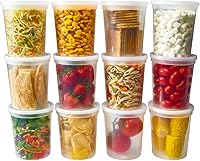
The PROMOZE 28 oz containers are single-compartment plastic boxes for freezing and microwave warming. They are BPA free and dishwasher safe, with snap lids for leak-proof storage.
That makes them handy for takeout and work lunches, not for oven baking.
Use these for freezing, stacking, and microwave reheating at home or the office. Keep them out of the oven and away from broilers.
If you need oven heat, move food to glass or metal first.
Plastic also stains and holds odors over time, especially with tomato sauce and curry. A 50-pack suits bulk prep and sharing, but it is a short-term container, not a bakeware replacement.
Rinse soon after use and check for warping before reuse.
How Does the Rubbermaid Brilliance Set Compare?
The Rubbermaid Brilliance set is Tritan plastic, BPA free, with airtight lids and built-in vents for microwave use. It is dishwasher, microwave, and freezer safe, with no oven rating in its specs.
The set has five 3.2-cup containers and matching lids. Clear Tritan resists stains and odors better than basic plastic, so it suits soups and sauces you reheat often.
Latches give a tight seal for fridge and freezer storage.
Built-in vents let you microwave with the lid on, which cuts spills. That helps for office reheating.
It does not make the container oven safe, so keep oven reheating in glass or metal.
Choose this set if you want light, clear containers for meal prep and leftovers. Choose glass if oven use is the main need.
Our full freezer meal containers guide covers sizes, lids, and stacking for both options.
What Should You Check Before You Buy a Replacement Tray?
Check heat limit, lid limit, freezer rating, and shape before you buy. A tray that freezes well may still fail at oven heat.
Measure your freezer shelf before choosing a tray to stack. A tray that is too deep can block cold air and make stacking hard.
Our best freezer meal prep containers guide walks through sizes that fit common freezers.
Check whether the lid seals for liquid. Soup and sauce need a tighter seal than dry rice or beans, and a loose lid can leak or let freezer air dry the surface.
Consider material as well. Silicone pops blocks out easily but can hold odors, glass gives clear oven ratings but adds weight, and Tritan is light but stays a microwave, not oven, option.
If Souper Cubes do not fit your routine, a best souper cubes alternative may suit your shape or portion size better.
How Do You Clean and Store Trays After Oven Use?
Wash trays by hand when heat has warped them, and store lids flat and separate from trays. Heat can change how a tray fits its lid.
Check the tray after each oven use. Warping, discoloration, or a lid that no longer seals are signs to retire it, as a poor seal can leak soup and dry out food.
Clean silicone with warm water and mild soap, and scrub gently so you do not cut the surface. For glass, wash dish and lid apart and let the seal dry fully to prevent trapped moisture and odors.
Store frozen blocks in a freezer bag or airtight container after you pop them out to save space and protect against freezer burn. Note the date and contents on each bag, and use the oldest portions first.
Our souper cubes recipes ideas pair well with this routine.
Are Souper Cubes Oven Safe: What Should You Decide First?
Decide by the printed heat limit on your tray and lid, not by how the tray looks or feels. That one check answers are souper cubes oven safe for your kitchen.
If the limit covers your oven temperature and the lid is rated for the same heat, you can use the tray as directed. If either part lacks a limit or falls short, move food to glass or metal.
That transfer takes a minute and removes the main risk.
For repeat oven reheating, glass containers with clear ratings are the simplest fix. For microwave and freezer use, light plastic containers with vented lids are handy and stack well.
For portioned freezing, the Souper Cubes tray still does its main job, as long as you keep oven heat within its limit. Check your tray and lid labels today, then pick the dish that matches your next meal.
Frequently asked questions
Are Souper Cubes oven safe?
Souper Cubes trays are designed for freezing and reheating, but oven use depends on the heat limit printed on your tray and lid. Check that limit before heating, keep lids off if they are not oven rated, and transfer food to a glass or metal dish if your oven is hotter.
Can Souper Cubes lids go in the oven?
Do not assume lids can go in the oven. Many storage lids are for freezer and fridge use only, and heat can warp or melt them.
Check the heat limit for your lid, and keep it off the tray in the oven unless the limit allows it.
What is safer than putting a Souper Cubes tray in the oven?
Thaw the frozen portion in the fridge, then move it to a glass baking dish or the glass containers described below. You can also reheat in a microwave in a microwave-safe container, keeping the lid vented or off as directed.