How Much Meat Can a 7 Cubic Foot Freezer Hold?
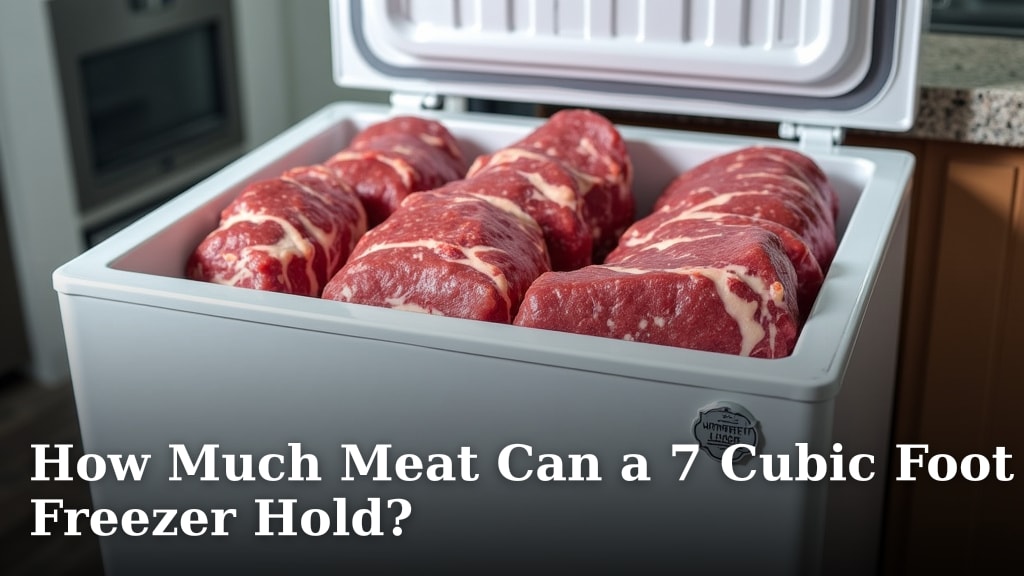
A 7 cubic foot freezer A 7 cubic foot freezer can hold about 245 pounds of food, but understanding freezer sizes is key. can hold roughly 245 pounds of food. This is a good estimate for most upright or chest freezers of this size. The actual amount can vary based on how you pack it. Think about dense items like whole chickens versus bulky things like bags of frozen vegetables.
When you’re figuring out freezer capacity, it’s helpful to consider the type of food you’ll store. Boneless cuts of meat will pack more densely than bone-in options. Understanding this helps you maximize your storage space effectively. It’s all about smart packing!
- A 7 cubic foot freezer holds about 245 pounds of food.
- Packing density varies by food type.
- Boneless meat packs tighter than bone-in.
- Upright and chest freezers of this size are similar.
- Plan your packing for best results.
Let’s take a closer look at how much different types of meat you can fit into your 7 cubic foot freezer.
Filling Your 7 Cubic Foot Freezer: A Practical Guide
So, you’ve got a 7 cubic foot freezer. That’s a fantastic size for many households! It offers a good balance between storage capacity and the freezer’s physical footprint. But how much meat can you actually cram into it? We’re going to break that down for you. It’s not just about the numbers; it’s about how you pack and what kind of meat you’re storing. Think of it like packing a suitcase – you can fit more if you fold things smartly!
A general rule of thumb is that a 7 cubic foot freezer can hold about 245 pounds of food. This is a solid estimate from many appliance manufacturers. Keep in mind this is for general food items, and meat can pack differently. We’ll look at the specifics for different cuts of meat. This will help you make the most of every cubic inch you have available. Let’s get to it!
Understanding Freezer Capacity and Meat Density
When we talk about freezer capacity, it’s often measured in cubic feet. This refers to the internal volume of the freezer. However, how much *weight* of food you can fit depends on how densely packed that food is. Different types of meat have different densities. For example, a solid block of ground beef will take up less space than a whole turkey with its irregular shape.
Experts often use a rough density calculation for freezers. They assume a certain percentage of the space will be taken up by packaging, air pockets, and the items themselves. For meat, especially when you’re buying in bulk or butchering your own, this density can really impact how much you can store. You want to pack efficiently to get the best bang for your buck. It’s all about strategic placement!
Why Meat Density Matters
Think about packing a box. If you fill it with feathers, it will be very light but take up a lot of space. If you fill it with rocks, it will be heavy and take up less space. Meat works similarly. Boneless cuts of meat, like pork chops or chicken breasts, tend to pack more tightly than bone-in cuts. Bones take up space and create awkward shapes that leave air gaps.
Even the packaging makes a difference. Vacuum-sealed bags hug the meat closely, reducing wasted space. Bulky plastic trays or large original packaging can add significant volume without adding much food weight. For maximum storage, consider removing items from their original packaging if it’s overly large. This is especially true if you plan to freeze ground meat in smaller portions or butcher large game.
Upright vs. Chest Freezers: Does it Matter for Meat?
For a 7 cubic foot freezer, the difference between an upright and a chest freezer primarily comes down to accessibility and how you organize. Both have the same internal volume. However, chest freezers often allow for slightly denser packing because they are typically a single large bin. You can stack items more freely.
Upright freezers usually come with shelves and drawers. These can be very helpful for organizing different types of meat. But they can also create fixed spaces that aren’t perfectly optimized for every cut. You might find you have some wasted vertical space. For sheer volume of meat, a chest freezer might edge out an upright, but the difference in a 7 cubic foot model is usually not dramatic. Many sources, like the USDA, recommend keeping freezers at 0°F (-18°C) to maintain food safety, regardless of type.
Estimating Meat Storage in Your 7 Cubic Foot Freezer
Let’s get down to the delicious details of meat. When we talk about a 7 cubic foot freezer holding around 245 pounds of food, this is a general figure. For meat, we can make a more focused estimate. Research suggests that a 7 cubic foot freezer can typically hold between 150 to 200 pounds of meat, depending on the cuts and how you pack them.
Why the range? It circles back to density. A freezer filled with large, bone-in roasts will hold less weight than one filled with uniformly packaged ground beef patties. Think about game meat after a hunt, or stocking up during a sale. You’ll want to know how much space your bounty will actually take up. This estimate will help you plan your shopping trips or butchering sessions.
Ground Meat: The Space Saver
Ground meat is often one of the most efficient items to store in bulk. When you buy it in family packs or grind it yourself, it can be formed into relatively compact shapes. Freezing ground meat in 1-pound or 2-pound packages, perhaps in flat “patties” or blocks, makes it stackable. This minimizes air pockets and maximizes density.
For a 7 cubic foot freezer, you could likely store between 180 to 220 pounds of ground meat. This assumes it’s packaged efficiently, like in vacuum-sealed bags or sturdy freezer wrap, and stacked neatly. If you just toss in the original bulky plastic tubs, you might fit closer to 150 pounds. It’s the difference between a Tetris master and someone just throwing blocks in!
Poultry: Whole Birds vs. Parts
Poultry offers a bit more variety in how it takes up space. A whole chicken or turkey, while delicious, has an irregular shape. Its legs, wings, and cavity create natural air pockets. This makes whole birds less dense for packing compared to their boneless counterparts.
If you primarily freeze whole chickens or turkeys, you might fit around 100 to 140 pounds in your 7 cubic foot freezer. This number can decrease if they are large birds or have bulky original packaging. However, if you are freezing deboned chicken breasts, thighs, or boneless turkey cuts, you’ll see a significant increase in capacity. In this case, you could aim for the higher end of our general meat estimate, around 180 to 200 pounds.
Beef, Pork, and Lamb: Cuts Matter
Similar to poultry, the cut of beef, pork, or lamb you choose dramatically impacts how much you can store. A whole beef tenderloin or a large pork shoulder (boston butt) will pack more densely than a rack of ribs or a bone-in ham.
For boneless cuts like roasts, steaks, or pork loin, aim for the higher end of our meat estimate: 180 to 200 pounds. These are generally easier to stack and fit together. For bone-in cuts, such as T-bone steaks, pork chops with the bone, or whole hams, the capacity will decrease. You might find yourself fitting closer to 140 to 170 pounds. The uneven shapes and presence of bone simply take up more volume.
Tips for Maximizing Your Freezer’s Meat Capacity
Now that you have a better idea of the numbers, let’s talk about making the most of your 7 cubic foot freezer. Efficient packing is key. It’s not just about shoving things in; it’s about smart arrangement. Following a few simple guidelines can help you fit more and keep your meat organized for easy access.
Smart Packaging Strategies
The way you package your meat is crucial. Remove as much air as possible to prevent freezer burn and save space. Vacuum sealing is the gold standard here. If you don’t have a vacuum sealer, using heavy-duty freezer bags works well. Squeeze out all the air before sealing.
For ground meat, consider freezing it in flat, uniform portions. These can be stacked like files in a cabinet. For steaks or chops, you can stack them in freezer bags with wax paper or parchment paper between layers to prevent sticking. This makes them easier to separate later. Always label your packages with the contents and the date. This is a tip from many food safety experts, like those at the FDA.
Strategic Stacking and Organization
Think about filling your freezer like you would a puzzle. Place larger, flatter items on the bottom to create a stable base. Then, fill in the gaps with smaller items. If you have a chest freezer, consider using dividers or bins to keep different types of meat separate. This prevents a giant meat avalanche when you open the lid!
In an upright freezer, make use of shelves and drawers. Group similar items together. Put your ground meat packages together, your steaks together, and so on. This makes it much easier to find what you need without pulling everything out. Remember, good organization saves space and your sanity!
Consider a Freezer Checklist
To keep your meat inventory manageable and ensure you’re packing efficiently, a simple checklist can be a lifesaver. It helps you track what you have and plan your freezer space before you even start packing.
- Inventory your current frozen meat.
- Note the types of meat you plan to buy or store.
- Estimate the space needed for each type (e.g., ground vs. bone-in).
- Remove excess packaging where possible.
- Label all packages clearly with contents and date.
- Stack items strategically to minimize air gaps.
Conclusion
Your 7 cubic foot freezer offers excellent storage, typically holding between 150 to 200 pounds of meat. Remember that how you pack and the type of meat you choose will influence the exact amount. Boneless cuts and ground meat pack more densely, allowing you to store more weight. By using smart packaging and strategic organization, you can maximize every inch of space. Before your next shopping trip or butchering session, take a moment to plan your freezer layout. This simple step ensures you can fit more and find your favorite cuts with ease.
Frequently Asked Questions
How does packaging affect how much meat fits in my 7 cubic foot freezer?
Packaging significantly impacts storage. Bulky original packaging wastes a lot of space. Vacuum-sealed bags or well-wrapped, flat portions of meat allow for much tighter stacking. This means you can fit more pounds of meat into your freezer by minimizing air gaps and awkward shapes.
Can I fit more meat in a chest freezer or an upright freezer of the same 7 cubic foot size?
While both have the same volume, chest freezers often allow for slightly denser packing. Their open bin design lets you stack items more freely. Upright freezers with shelves and drawers can be great for organization, but they might create fixed spaces that aren’t always optimized for irregular meat cuts.
Is it better to freeze meat in large chunks or smaller portions for maximum space?
For efficient packing, smaller, uniform portions are usually best. Ground meat frozen in flat, stackable blocks or steaks wrapped tightly and stacked fit together more effectively than large, oddly shaped roasts. This smart portioning helps reduce wasted space and makes thawing easier too.
What’s the best way to organize different types of meat in a 7 cubic foot freezer?
Group similar items together for easy access. For example, keep all your ground meat packages in one area, your steaks in another, and poultry separate. Using bins or dividers in a chest freezer, or dedicating shelves in an upright, helps maintain order and prevents you from having to dig through everything.
How can I prevent freezer burn when packing meat tightly in my 7 cubic foot freezer?
To prevent freezer burn, the key is to remove as much air as possible from the packaging. Ensure your freezer is set to 0°F (-18°C) or below. Using quality freezer wrap or vacuum-sealed bags creates a barrier against air. For bagged items, press out all excess air before sealing them tightly.