Is a Chest Freezer the Same as a Deep Freezer?
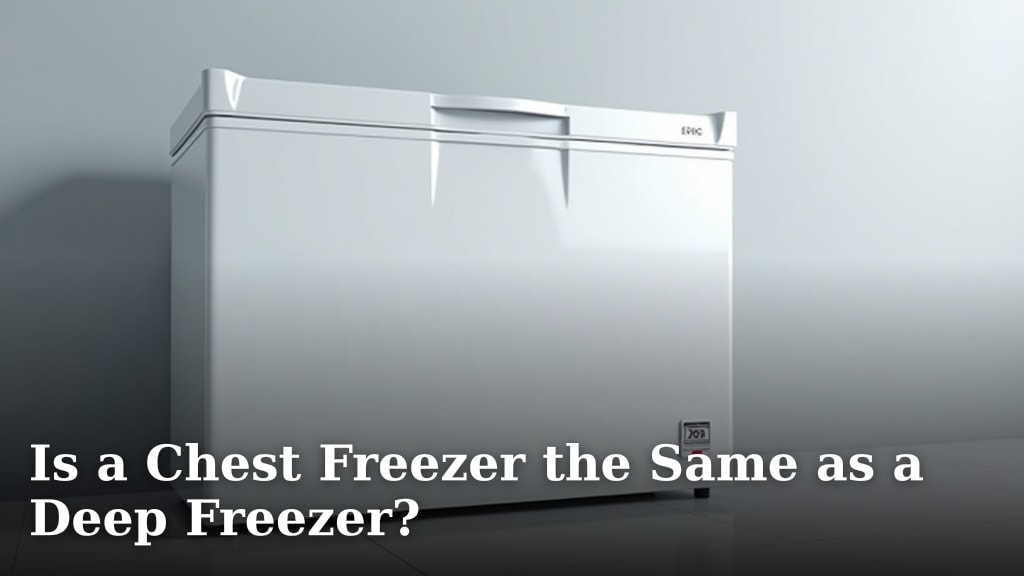
Yes, a chest freezer is the exact same thing as a deep freezer. There is no difference in the appliance itself. Both terms describe a freezer that opens from the top and has a large, open storage space inside.
The confusion comes from the different names. We found that people use “chest freezer” and “deep freezer” interchangeably. This happens because both refer to the same type of standalone freezer unit, separate from a refrigerator.
- A chest freezer and a deep freezer are the same appliance.
- The names are used interchangeably by stores and manufacturers.
- Both are box-like freezers with a lid on top.
- They are known for being energy efficient and affordable.
- These freezers are great for storing bulk food or seasonal items.
Below, we’ll clear up any remaining questions you have. We’ll walk through the key features, common sizes, and what to look for if you’re ready to buy.
Understanding Chest Freezers and Deep Freezers
So, the simple answer is yes. A chest freezer and a deep freezer are just two names for the same boxy appliance. Think of it like a sofa and a couch. Both words point to the same piece of furniture. This causes confusion for many shoppers at the store.
The terms are used interchangeably by manufacturers and retailers. We found product listings on major retail websites using both labels for the exact same model. This is purely a matter of language, not a difference in how the freezer works or what it does.
Why Two Different Names for the Same Thing?
Language can be funny like that. Sometimes, a description of an object sticks just as well as its formal name. For this appliance, both names are descriptive.
The Origin of “Chest Freezer”
The name “chest freezer” comes from its shape and how it opens. It resembles a large, rectangular chest or trunk. You lift the lid on top, and the storage area is a deep, open cavity. This is its most recognizable feature.
The Origin of “Deep Freezer”
The term “deep freezer” highlights the appliance’s primary function. It freezes food deeply and maintains a very low temperature. The “deep” part also refers to the large, unpartitioned storage space you lower food into. It’s a functional description, not a structural one.
Key Features You’ll Find in Every Model
Regardless of the name on the box, all these units share a core set of features. These characteristics make them a popular choice for many homes and small businesses.
- Top-Opening Lid: The hinged lid stays open on its own, allowing for hands-free loading.
- Large, Open Compartment: The interior is one big space, perfect for bulk items.
- High Energy Efficiency: Their simple design and top-opening nature help them keep cold air in.
- Manually Defrosted: Most models require you to occasionally turn them off and let ice melt.
- Affordable Price Point: They typically cost less than upright freezers of the same capacity.
Comparing Chest Freezers to Other Freezer Types
While “chest” and “deep” describe the same thing, it’s helpful to know how they differ from other freezers. The main comparison is with the common upright freezer.
| Feature | Chest / Deep Freezer | Upright Freezer |
|---|---|---|
| Door Style | Lid opens from the top | Door swings open from the front |
| Storage Style | Large, open bin (like a trunk) | Shelves and door bins (like a fridge) |
| Energy Use | Generally more efficient | Can be less efficient due to cold air falling out |
| Organization | Items are stacked; may require digging | Items are visible and easy to reach |
| Floor Space | Uses more horizontal floor space | Uses more vertical space, less floor space |
We found that energy efficiency guidelines often note that chest freezers can use 10-25% less energy than similar-sized upright models (Energy Star). This is because cold air is heavier than warm air and stays inside when the lid is opened.
What Are the Common Sizes Available?
These freezers come in a range of sizes to fit different needs. Size is measured in cubic feet, which tells you the total interior space. Choosing the right size depends on your family and storage habits.
Small Chest Freezers (5 to 9 cubic feet)
These compact models are great for apartments, dorm rooms, or as a secondary freezer. They hold about 150 to 300 pounds of food. That’s roughly the equivalent of several large grocery trips or a quarter of a deer.
Medium Chest Freezers (10 to 15 cubic feet)
This is the most popular size for a family freezer. It offers plenty of room for bulk purchases, batch cooking, and seasonal produce. You can store a good amount of meat, vegetables, and pre-made meals here.
Large Chest Freezers (16 to 25+ cubic feet)
For serious bulk storage, hunters, or large families, these are the go-to. They can hold an entire side of beef or an enormous stockpile of frozen goods. Make sure you measure your space carefully; these units are big.
Important Features to Consider When Buying
Once you know the terms are the same, you can focus on what really matters for your purchase. Here are the key factors to evaluate. Think of this as your pre-shopping checklist.
- Capacity: Measure the space where it will go and think about what you’ll store.
- Defrosting Method: Most are manual. A few newer models are “frost-free,” which is more convenient but costs more.
- Energy Rating: Look for the Energy Star label. It can save you money on your utility bills over time.
- Basket Included: A sliding wire basket helps organize smaller items and keeps them from getting lost at the bottom.
- Temperature Alarm: A valuable safety feature that beeps if the internal temperature rises too high, protecting your food.
Manual vs. Frost-Free: Which is Better?
This is a big decision. A manual defrost model is simpler, cheaper, and uses less energy. However, ice builds up on the walls. You’ll need to empty it, unplug it, and scrape the ice every 6-12 months.
A frost-free model automatically prevents ice buildup. It’s more convenient but is also more complex, uses more electricity, and has a higher purchase price. For occasional use, manual is fine. For daily, heavy use, frost-free can be worth the investment.
Best Practices for Organizing and Using Your Freezer
Once you have your freezer, a little organization goes a long way. It prevents food from getting lost and freezer burn. We found that simple systems work best.
Use clear freezer bags or containers. Label everything with the item name and the date it was frozen. This helps you practice the “first in, first out” method, using older food first.
Consider grouping food by category. Put all your meats in one area, vegetables in another. The sliding basket is perfect for smaller, frequently used items like berries or bags of corn.
A Simple Freezer Organization Checklist
- Group items by category (meats, veggies, meals).
- Label every package with contents and freeze date.
- Use the basket for small, everyday items.
- Keep an inventory list on the outside with a dry-erase marker.
- Place older items near the top for easy access.
Maintenance Tips to Keep It Running Well
Proper care will make your freezer last for many years. The main task for a manual model is defrosting. Don’t let ice build up more than ¼ inch thick. It makes the freezer work harder and use more energy.
Keep the lid seal clean. Food bits can stick to the gasket and prevent a tight seal. Wipe it down with a damp cloth regularly. Also, make sure the freezer is level. This ensures the lid closes properly and seals tightly every time.
We found that placing the freezer in a cool, dry spot away from direct sunlight helps its efficiency. If it’s in a hot garage, it will run more often to maintain its temperature.
Conclusion
You now understand that a chest freezer and a deep freezer are the exact same appliance. The terms are used interchangeably, with no difference in design or function. Your key takeaways include their energy efficiency, affordability, and suitability for bulk storage. Focus on choosing the right size and features, like Energy Star ratings or a sliding basket. If you’re ready to take the next step, measure your space and select a model that matches your storage needs. This simple action will help you make a confident, long-lasting purchase.
Frequently Asked Questions
Can I use a chest freezer in a garage or basement?
Yes, you can place a chest freezer in a garage or basement, but keep a few things in mind. Ensure the area is cool and dry to maintain efficiency. Avoid direct sunlight and extreme temperatures, as this can make the freezer work harder and use more energy.
How long do chest freezers typically last?
A well-maintained chest freezer can last for 10 to 20 years. The lifespan depends on usage, defrosting habits, and overall care. We found that regular cleaning and avoiding overloading can help extend its life significantly.
What’s the best way to defrost a chest freezer?
To defrost, unplug the freezer and remove all food. Let ice melt naturally, or use a towel to absorb water. Never use sharp tools to scrape ice, as they can damage the interior. We recommend defrosting when ice buildup reaches about ¼ inch thick.
Are chest freezers good for storing meat long-term?
Yes, chest freezers are excellent for long-term meat storage. Their deep, consistent temperature helps prevent freezer burn. We found that labeling and organizing items can keep meat fresh for up to 12 months, depending on the cut.
Do chest freezers use a lot of electricity?
Chest freezers are generally energy-efficient, especially compared to upright models. Most use less than 200 kilowatt-hours per year, which adds up to modest electricity costs. Look for Energy Star labels to ensure you’re getting the most efficient option for your budget.