Chest Freezer Capacity Chart: What You Should Know
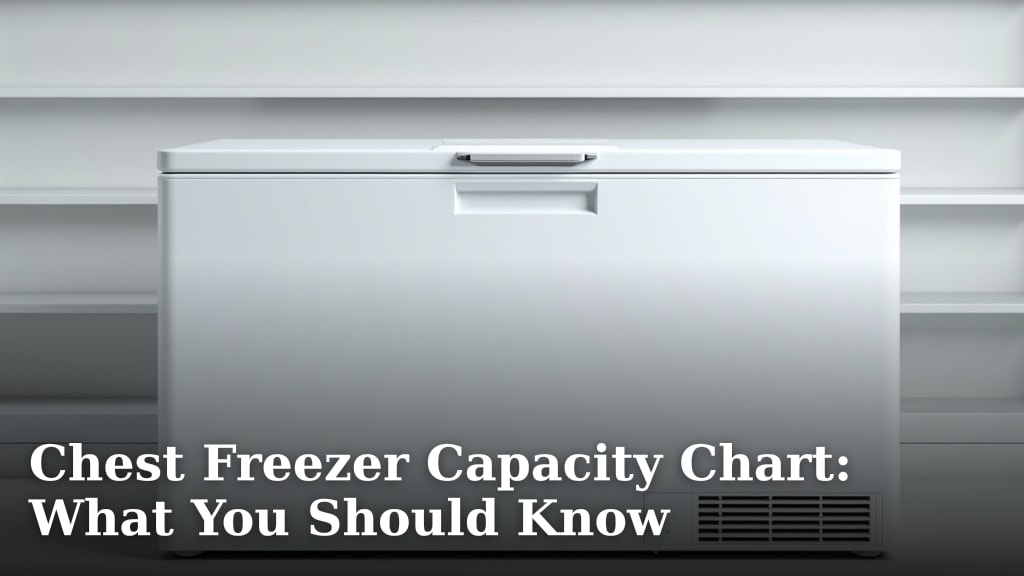
Selecting the right chest freezer capacity is key for your storage needs. Generally, a good rule of thumb is to allow Our guide to chest freezer size can help you determine the best fit.4-5 cubic feet per person for a family. For individuals, 1.5-2 cubic feet is often enough. This helps ensure you have enough space for bulk buys and frozen meals without overbuying.
Understanding chest freezer capacity charts helps you avoid wasted space or buying a freezer that’s too small. We found that capacity is measured in cubic feet, indicating the total internal volume. This metric is essential for comparing different models and figuring out how much food you can realistically store, whether it’s for a busy household or a single person stocking up.
- Chest freezer capacity is measured in cubic feet.
- Allow 4-5 cubic feet per person for families.
- Individuals typically need 1.5-2 cubic feet.
- Match capacity to your household size and shopping habits.
Let’s look at what chest freezer capacity chart details can help you make the best choice for your home. We’ll break down common sizes and what they mean for your frozen food storage.
Understanding Chest Freezer Size and Storage Needs
Choosing the right chest freezer size is all about finding that sweet spot. You want enough room for your frozen goods without wasting energy on a unit that’s too big. We’ve found that thinking about capacity in cubic feet is the easiest way to compare models.
How Much Space Do You Really Need?
Your freezer’s capacity needs depend heavily on your household size and how you shop. Do you love a good bulk buy? Are you a meal prep wizard? These habits directly influence the cubic feet you’ll need.
The Rule of Thumb: Cubic Feet Per Person
Many experts suggest a general guideline for chest freezer capacity. For families or households with multiple people, aiming for 4 to 5 cubic feet per person is often recommended. This gives you ample space for a variety of frozen items.
If you live alone, your needs are likely smaller. For individuals, researchers often point to 1.5 to 2 cubic feet of capacity as a good starting point. This is usually enough for a week’s worth of meals or a few larger frozen items.
Considering Your Shopping Habits
Think about your typical grocery trips. If you often buy frozen vegetables, meats, or prepared meals in bulk, you’ll need more space. Those impulse buys of frozen pizzas or ice cream also take up room! We found that people who shop sales regularly tend to need larger freezers.
Small Households, Big Appetites?
Sometimes, even a small household can have large storage needs. Do you entertain often? Do you hunt or fish and need to store large portions? You might need to bump up your cubic feet allowance beyond the basic guideline.
Chest Freezer Capacity Chart: A Closer Look at Sizes
Chest freezers come in a wide range of sizes, measured by their total internal volume in cubic feet. Let’s break down what those numbers typically mean for your storage potential.
Compact Chest Freezers (Under 5 Cubic Feet)
These are your smallest options. They’re great for very small spaces or for supplementing a refrigerator’s freezer. You might fit a few bags of frozen vegetables, some ice cream, and perhaps a small family pack of chicken. They’re ideal for singles or couples with minimal frozen food storage needs.
Medium Chest Freezers (5 to 12 Cubic Feet)
This is often the sweet spot for many households. A 7 cubic foot freezer, for example, can hold a decent amount of food. It’s large enough for a family of three or four to store a good selection of frozen meals, meats, and bulk purchases. You can likely fit a quarter of a cow or a whole turkey comfortably.
Large Chest Freezers (12+ Cubic Feet)
If you have a large family, serious bulk buying habits, or a need to store game meat, a large chest freezer is what you’ll need. These giants can hold hundreds of pounds of food. They are perfect for those who want to stock up for months at a time. Think of them as your personal frozen food vault!
Matching Capacity to Your Lifestyle: A Quick Guide
To help you visualize, we’ve put together a simple chart. It shows typical capacity ranges and what they might hold. Remember, these are just estimates!
| Approximate Capacity (Cubic Feet) | Ideal For | What It Can Typically Hold (Estimates) |
|---|---|---|
| 1 to 5 | Singles, Couples, Supplementing Fridge Freezer | Ice cream, frozen vegetables, a few meals, small meats |
| 5 to 10 | Small Families (2-3 people), Moderate Bulk Buyers | Multiple family meal packs, larger cuts of meat, bulk vegetables, a whole chicken/turkey |
| 10 to 15 | Medium Families (3-5 people), Regular Bulk Buyers | Quarter cow, multiple large turkeys, extensive meal prep portions, large variety of frozen goods |
| 15+ | Large Families (5+ people), Serious Stock-Pilers, Hunters/Fishers | Half or whole cow, large game harvests, supplies for many months, bulk pantry stocking |
Factors Beyond Cubic Feet to Consider
While cubic feet is the main measure, other things can affect how much you can actually store and use. It’s not just about the raw volume!
Freezer Dimensions and Shape
The external dimensions of a chest freezer are important for placement. You need to ensure it fits in your designated space. The internal shape also matters. A wider, shallower freezer might be easier to organize than a very deep, narrow one.
Usable vs. Total Capacity
Sometimes, the listed capacity is the total internal volume. However, things like the motor housing or ice maker components can reduce the actual usable space. We found that checking reviews for real-world storage capacity can be helpful.
Organization and Accessories
Does the freezer come with baskets or dividers? These can make a big difference in how well you can organize your food. Being able to separate items like meats from vegetables can improve efficiency and prevent cross-contamination. Good organization helps you use every cubic foot wisely.
Making Your Final Choice: A Checklist
Ready to pick the perfect chest freezer? Use this quick checklist to guide your decision:
- Assess your household size and typical food consumption.
- Consider your most frequent shopping habits (bulk vs. weekly).
- Measure your available space for the freezer’s external dimensions.
- Think about the types of food you’ll store most often.
- Check if the freezer includes useful organizational baskets.
- Don’t forget about energy efficiency ratings!
Conclusion
Choosing the right chest freezer capacity comes down to understanding your needs. We’ve seen that roughly 4-5 cubic feet per person works for families, while individuals often need 1.5-2 cubic feet. Consider your shopping habits and whether you stock up on bulk items or prepared meals. Don’t forget to factor in the freezer’s external size and any internal organizers that can boost usability. By matching capacity to your household and lifestyle, you’ll find a chest freezer that perfectly suits your home and keeps your food fresh.
Take a moment to review the capacity chart and your own storage needs. This simple step will help you make a confident purchase and avoid common storage headaches. Happy freezing!
Frequently Asked Questions
How many cubic feet do I need if I live alone?
For individuals, we found that 1.5 to 2 cubic feet of freezer capacity is generally sufficient. This allows enough space for weekly meal prep or stocking up on a few favorite frozen items without overwhelming the unit.
Can a 7 cubic foot freezer fit a quarter of a cow?
A 7 cubic foot chest freezer is often considered a sweet spot for many households. It can typically hold larger cuts of meat, such as a quarter of a cow or a whole turkey, alongside other frozen goods for a family of three or four.
What’s the difference between total and usable freezer capacity?
Total capacity is the entire internal volume of the freezer. Usable capacity refers to the actual space available for food storage, as components like the motor housing can take up some of that internal volume.
Do the baskets in a chest freezer really matter for capacity?
Yes, baskets can significantly improve how you utilize your freezer’s capacity. They help you organize food efficiently, preventing items from getting lost at the bottom and allowing you to use every cubic foot more effectively.
Is it better to buy a larger freezer than I think I need?
It’s often wise to consider slightly more capacity than your immediate needs suggest. This allows flexibility for unexpected bulk purchases, future changes in household size, or increased meal prepping without having to upgrade later.